Simulations
Nodes that run an algorithm as many times as the user sets.
Hydraulic Erosion
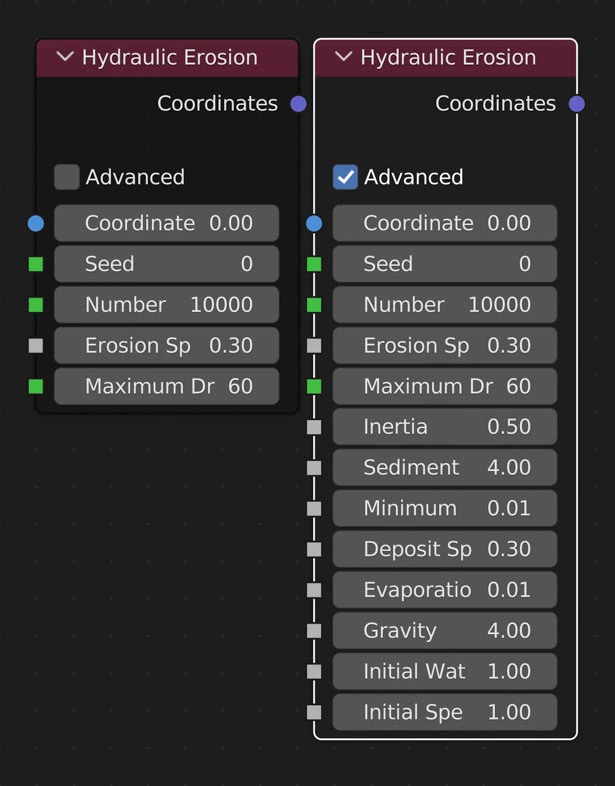
Simulates the effects of rain on terrain.
Processing time is not affected by the terrain's Density Level like other nodes. Mainly the Number of Droplets, and Max Droplet Lifetime increases/decreases speed of processing.
Seed
Randomize the location of all the rain drops. Is NOT stable/consistent.
Number of Droplets
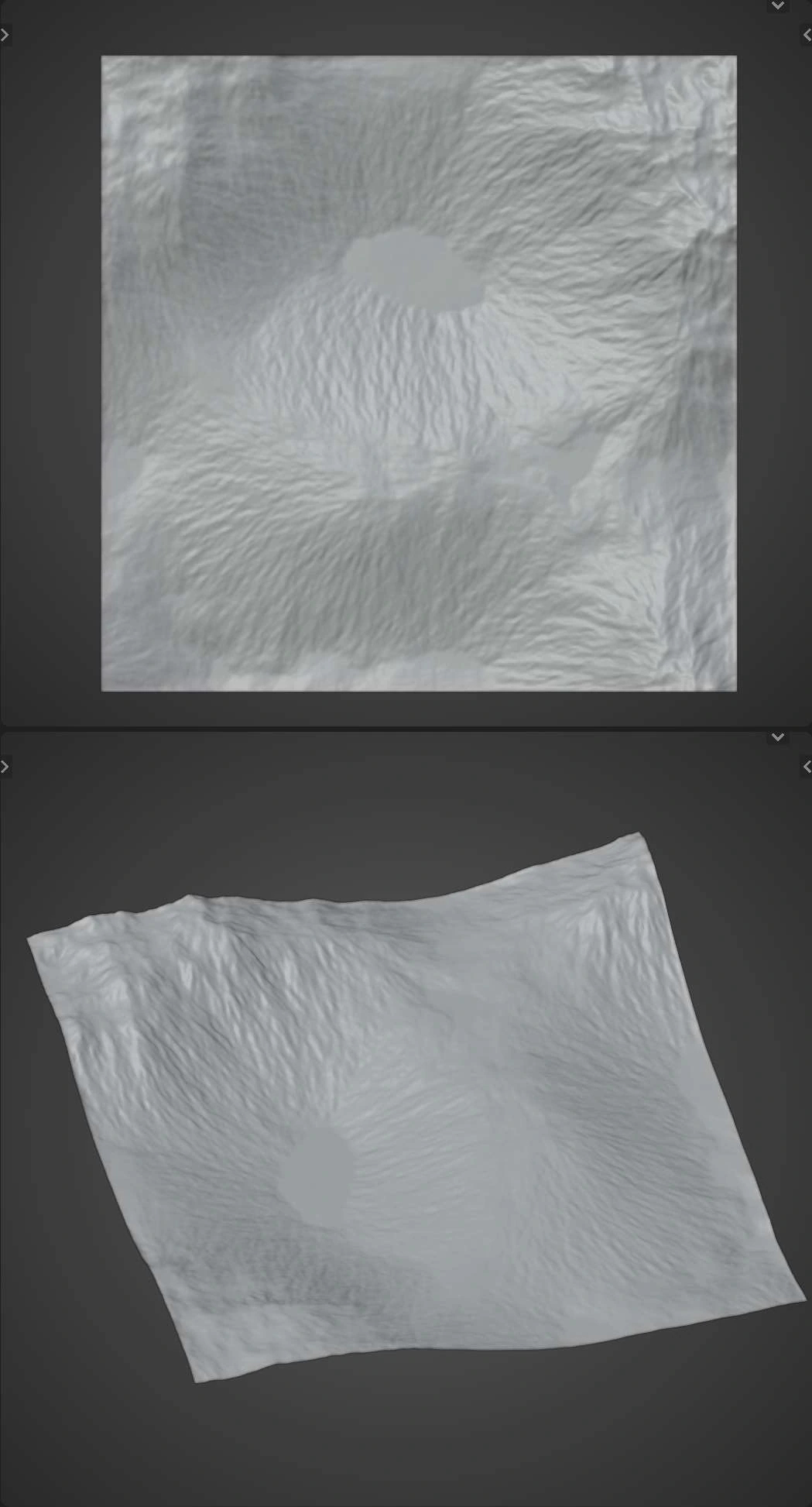
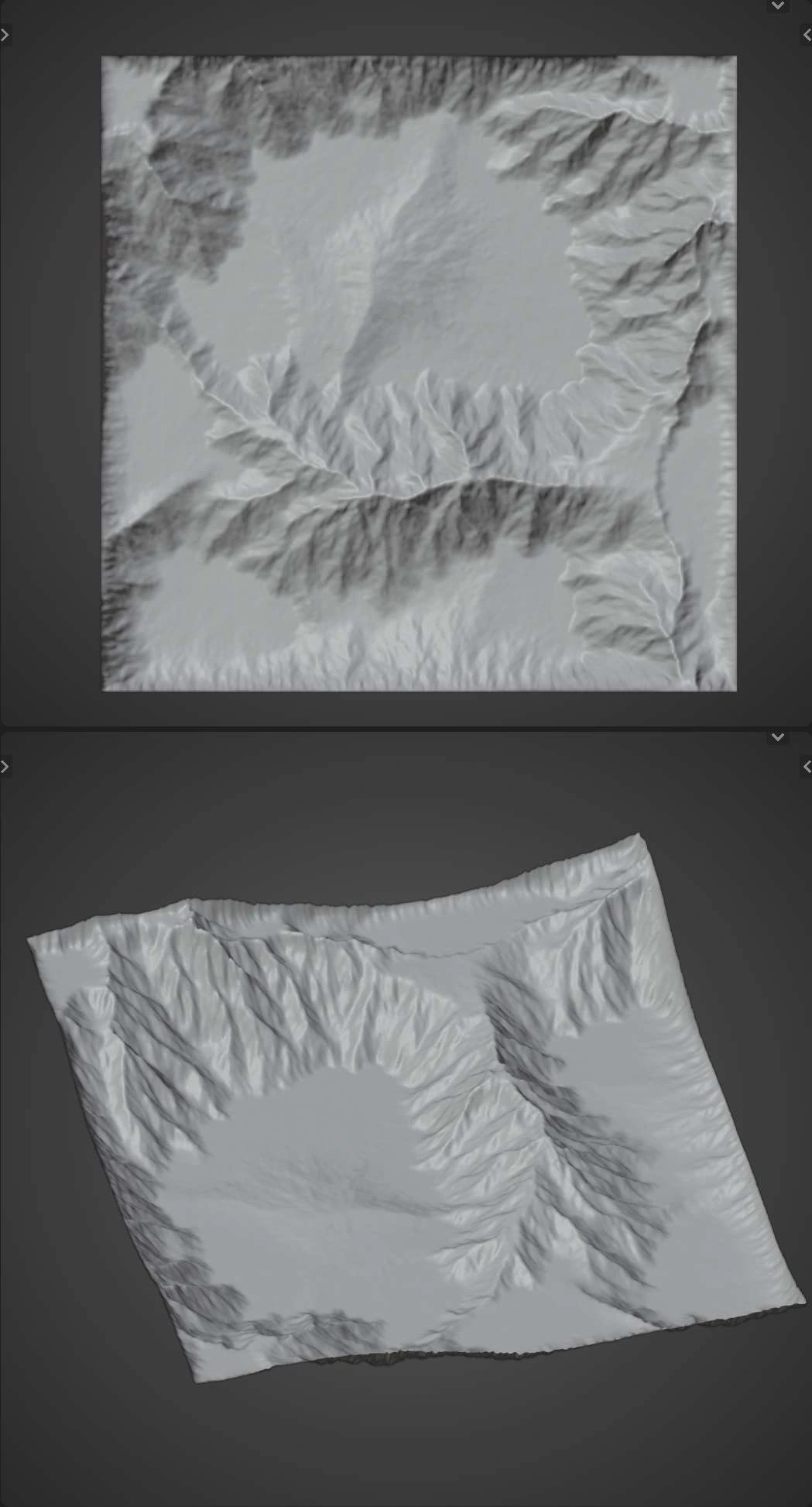
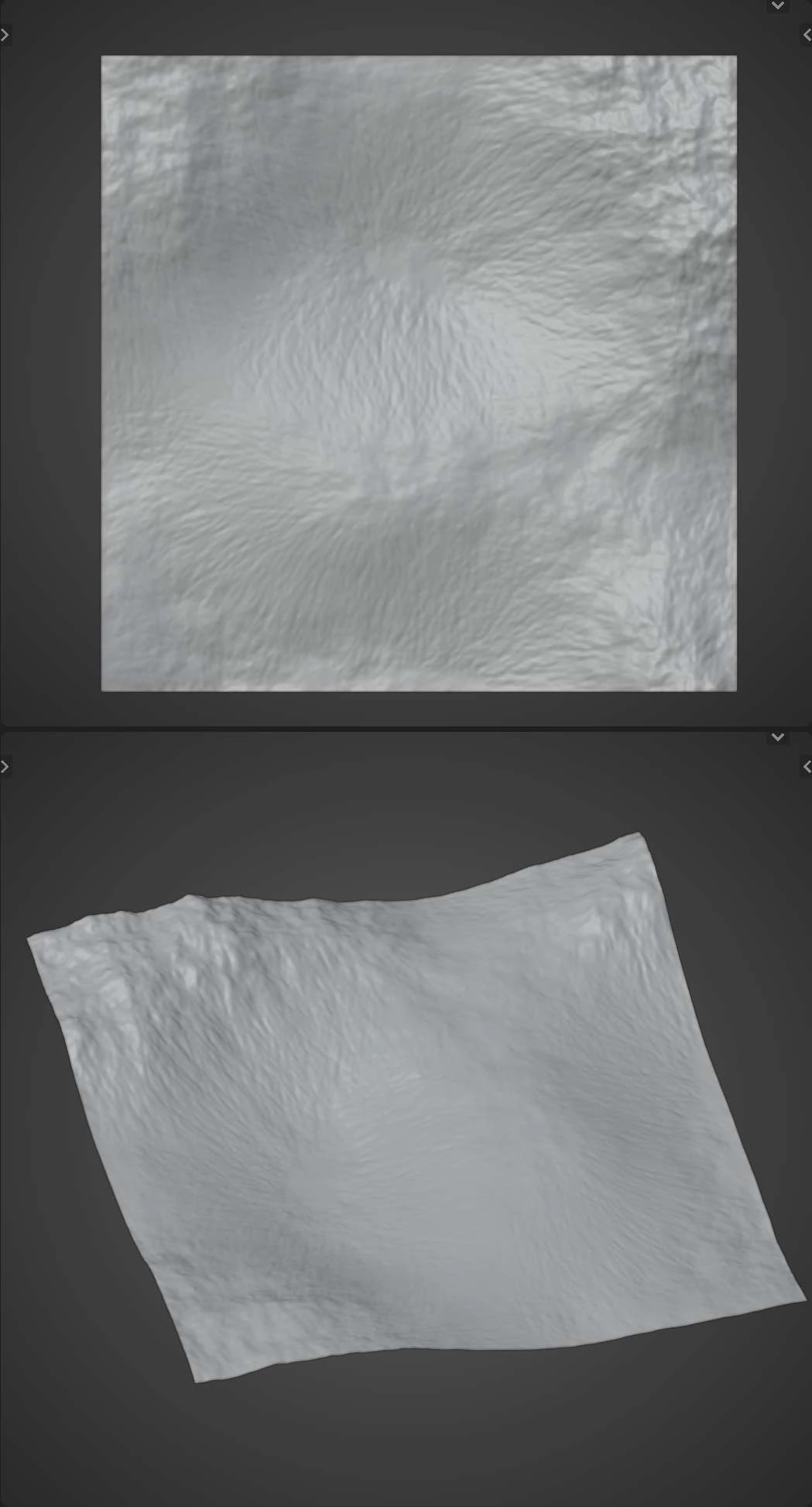
Number of raindrops to simulate. Higher values increase processing time
Erosion Speed
Affects how much sediment to erode (remove) from terrain
Max Droplet Lifetime
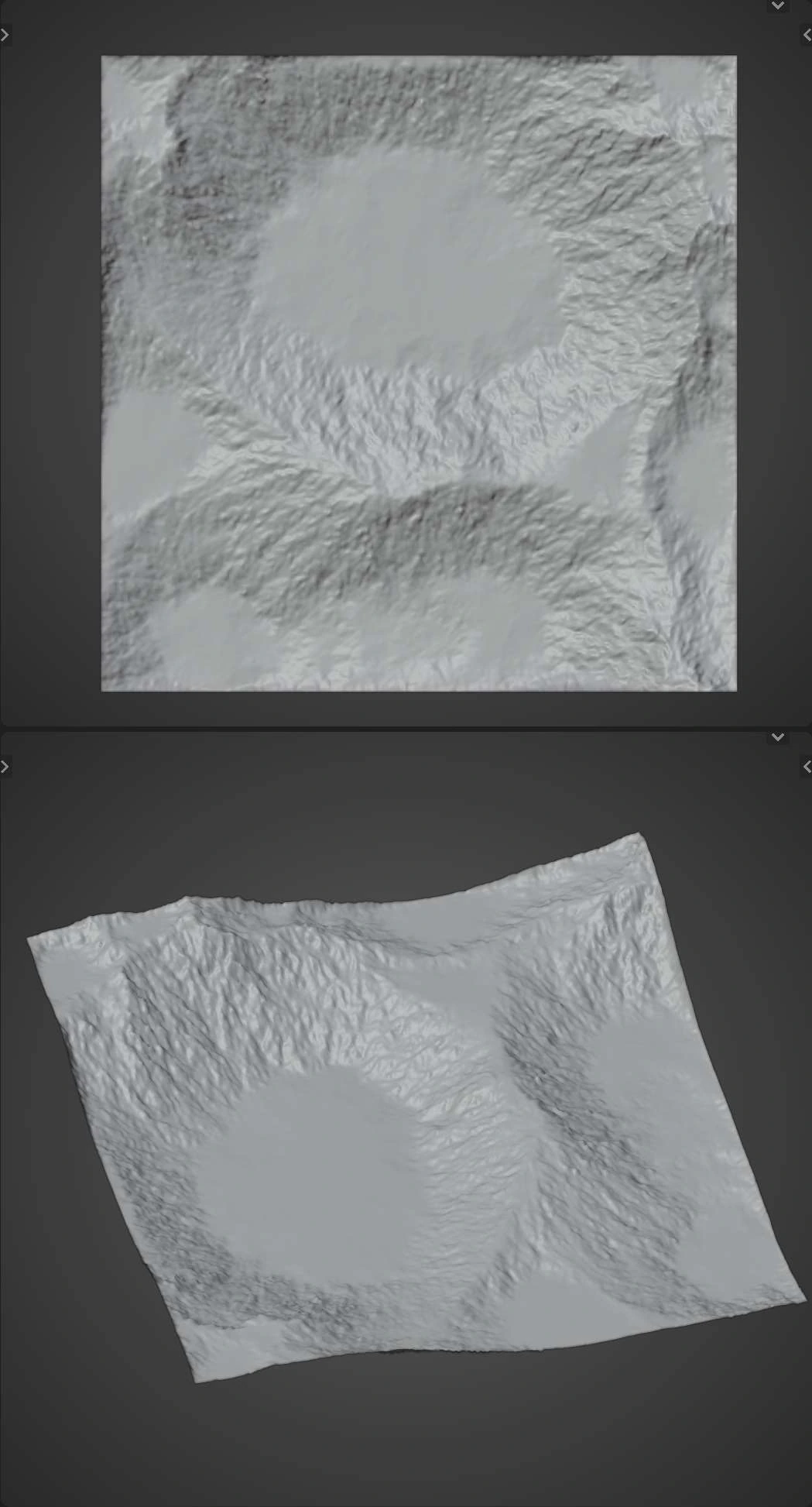
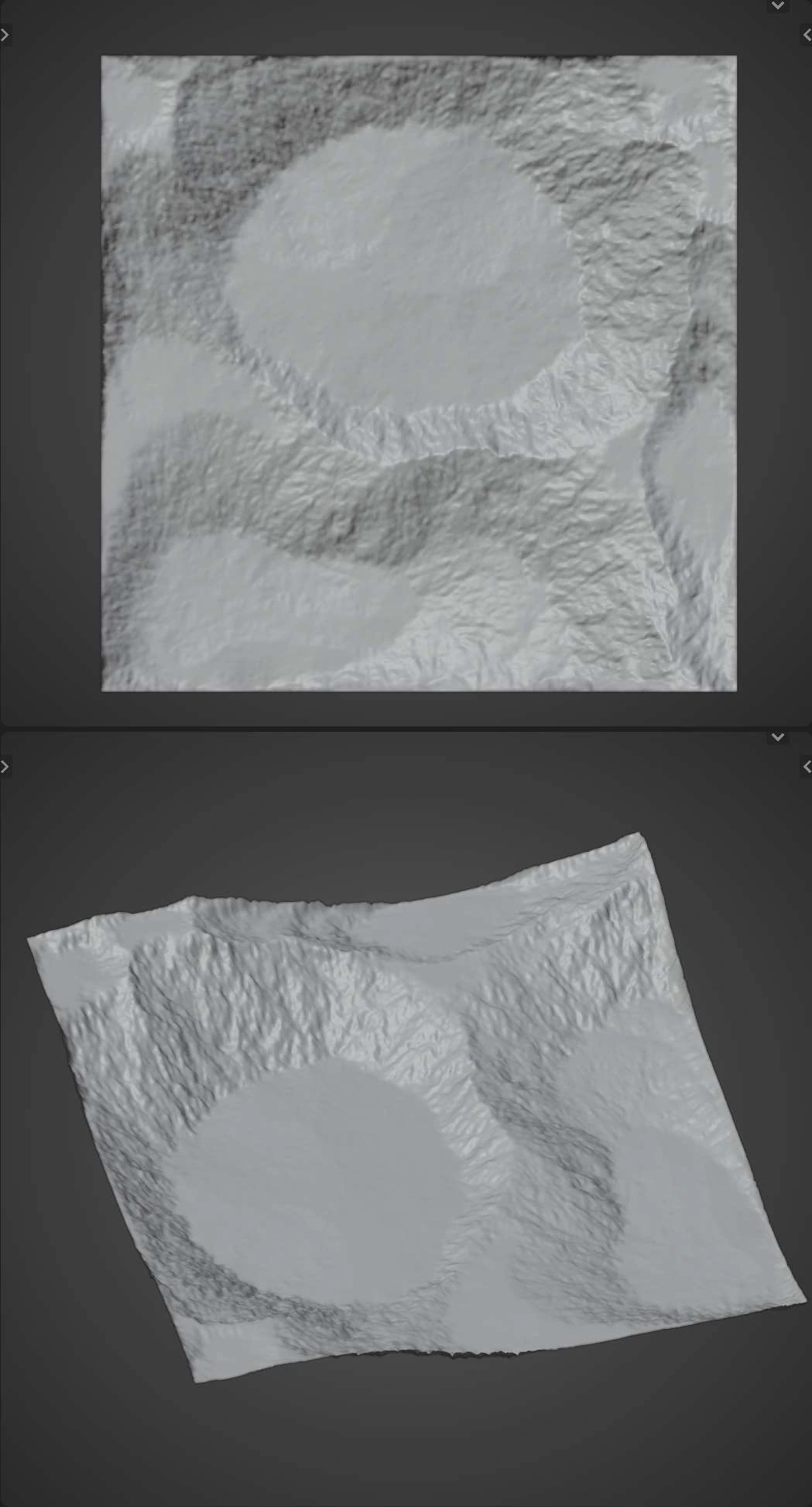
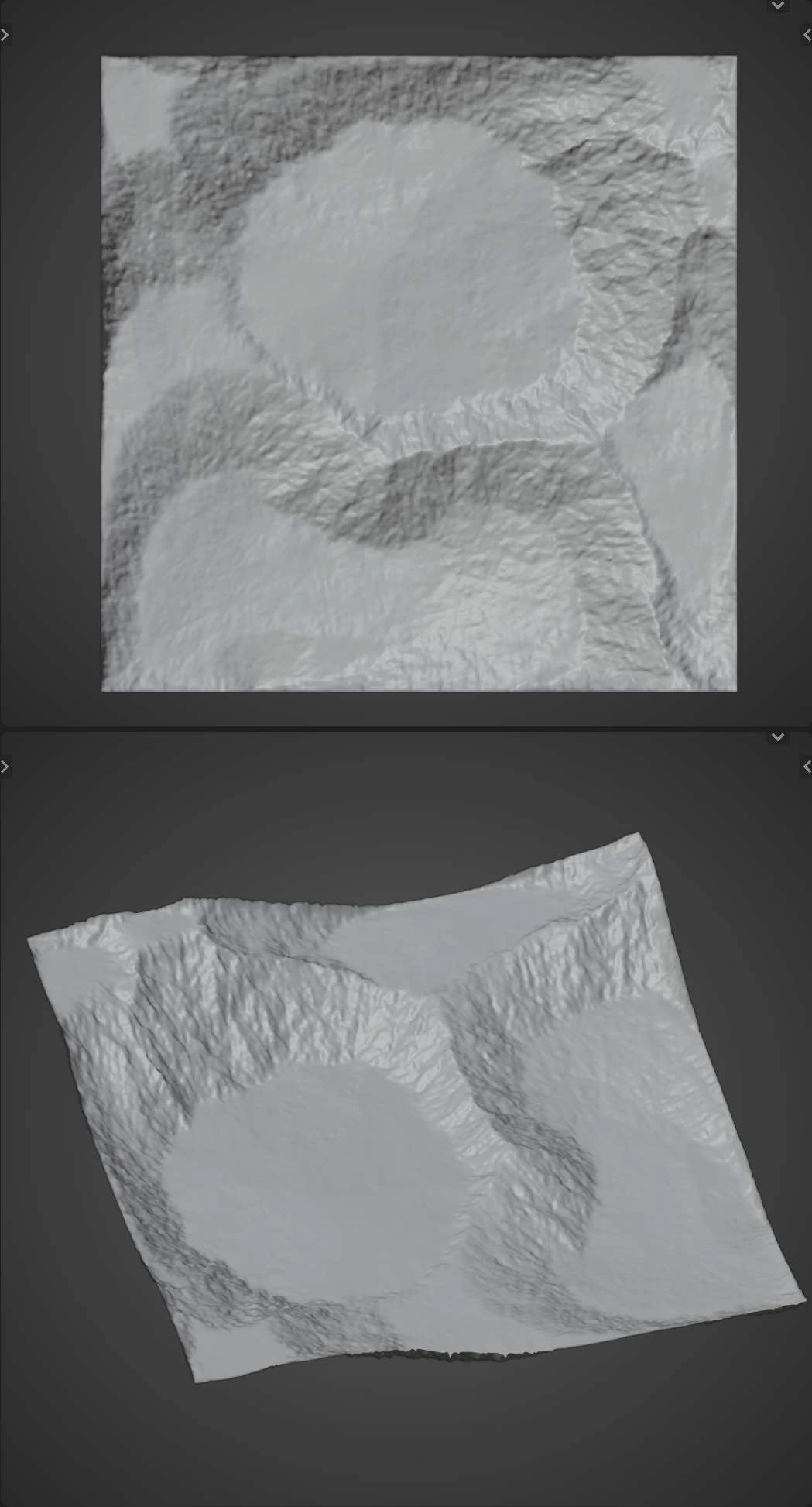
The maximum amount of time (iterations) the droplet has to complete its travel throughout the terrain. Higher values allow for more droplets to complete their paths, though the default value typically is enough. Higher values increase processing time
Advanced
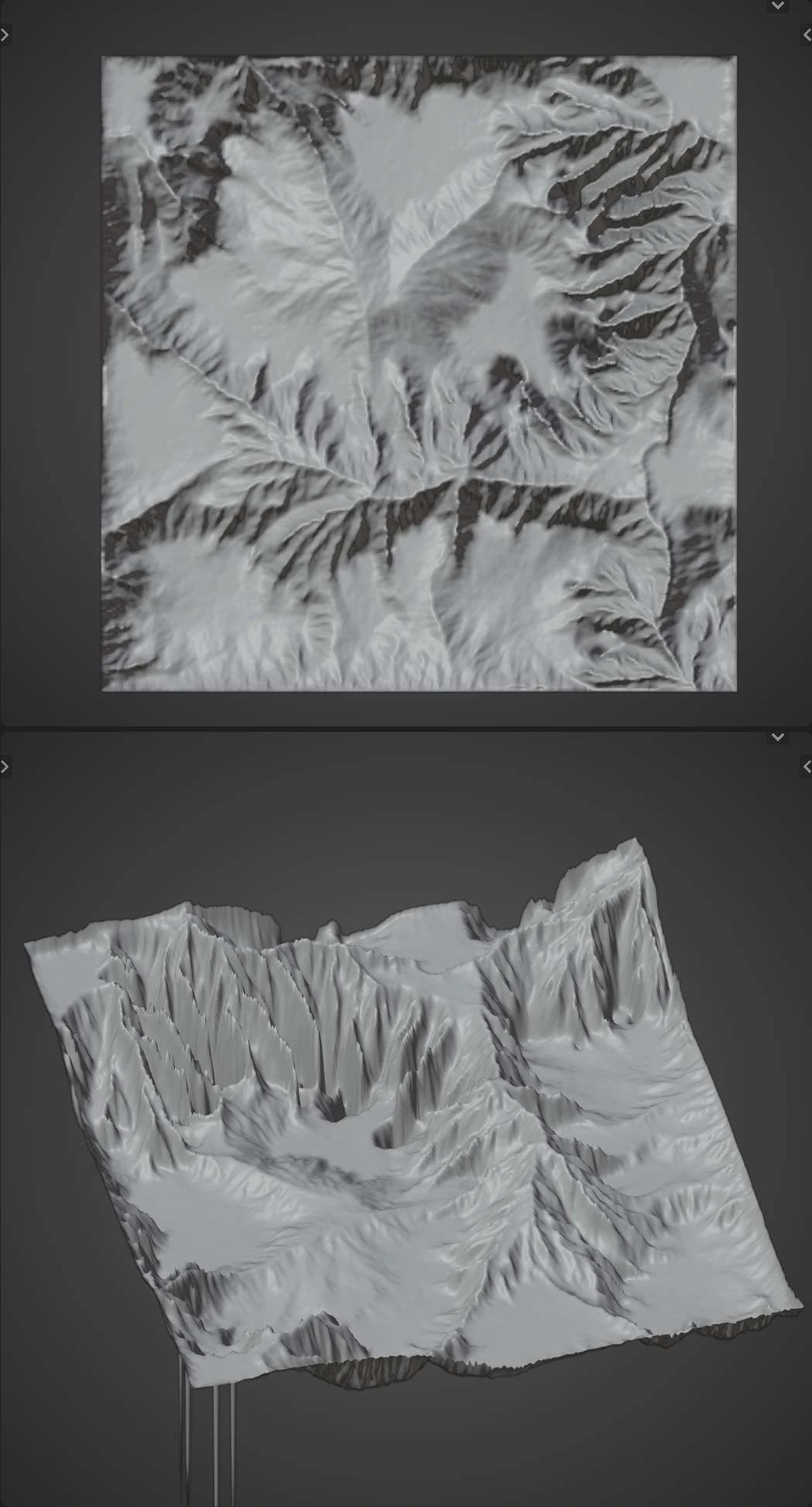
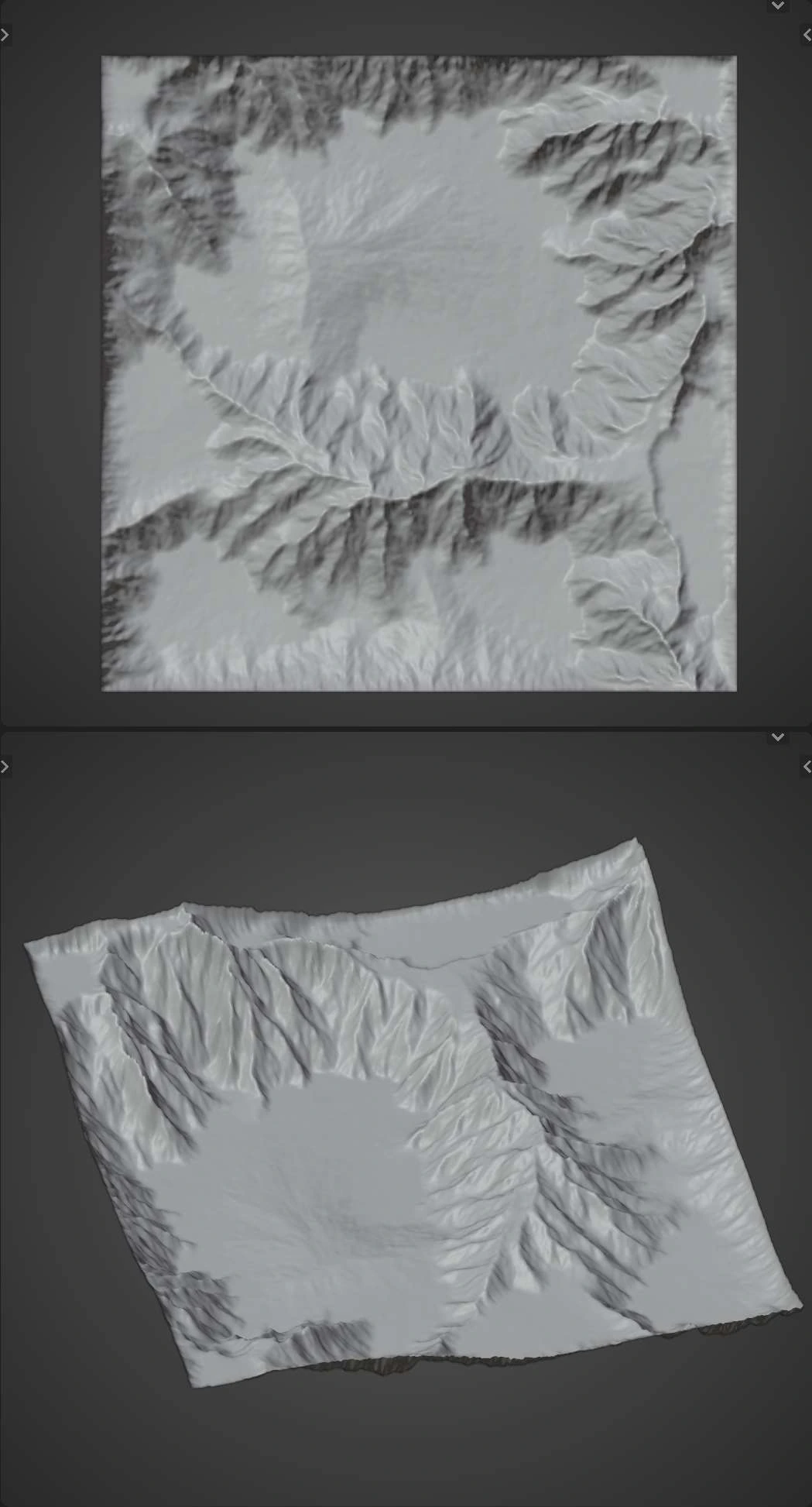
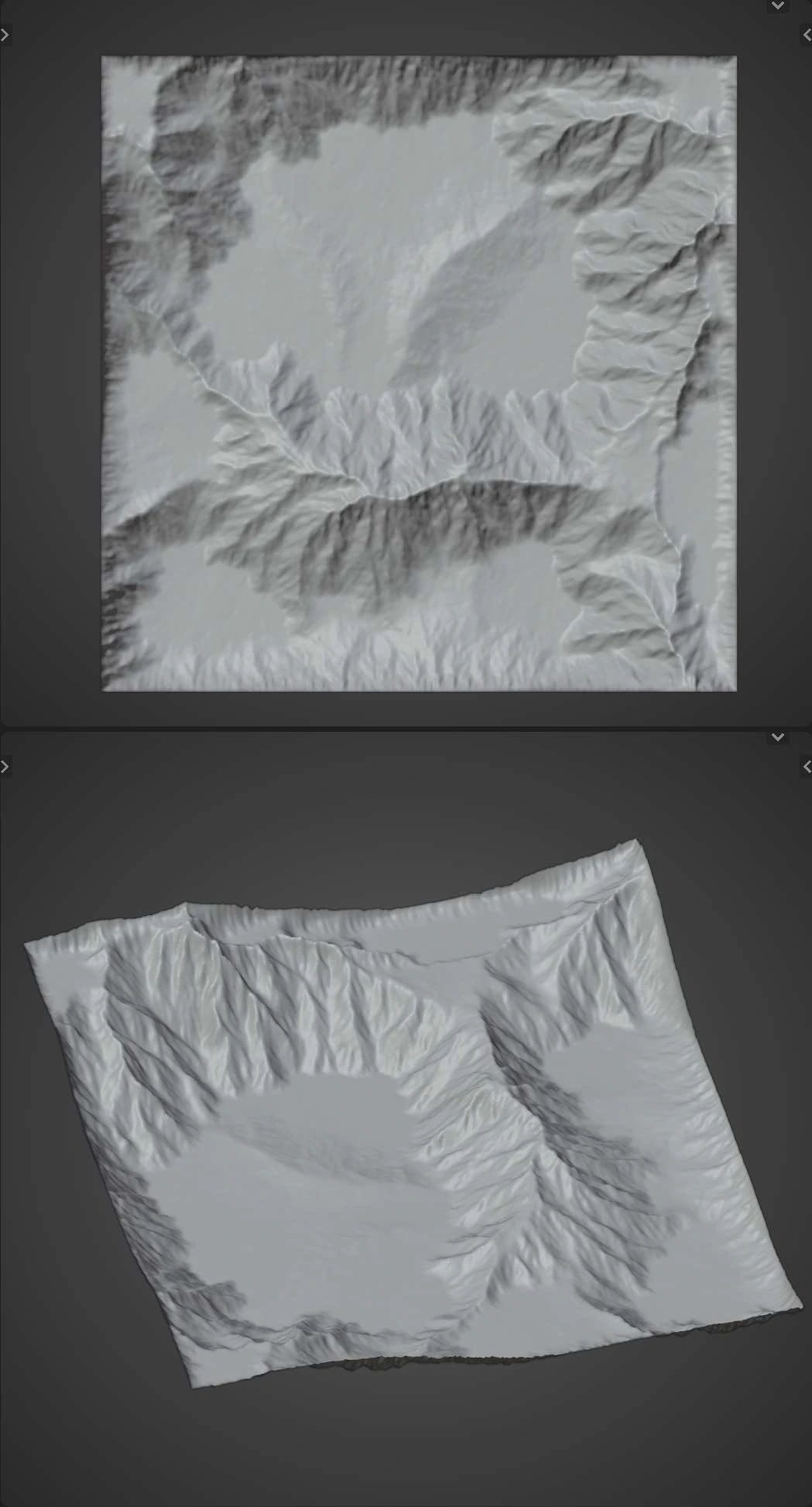
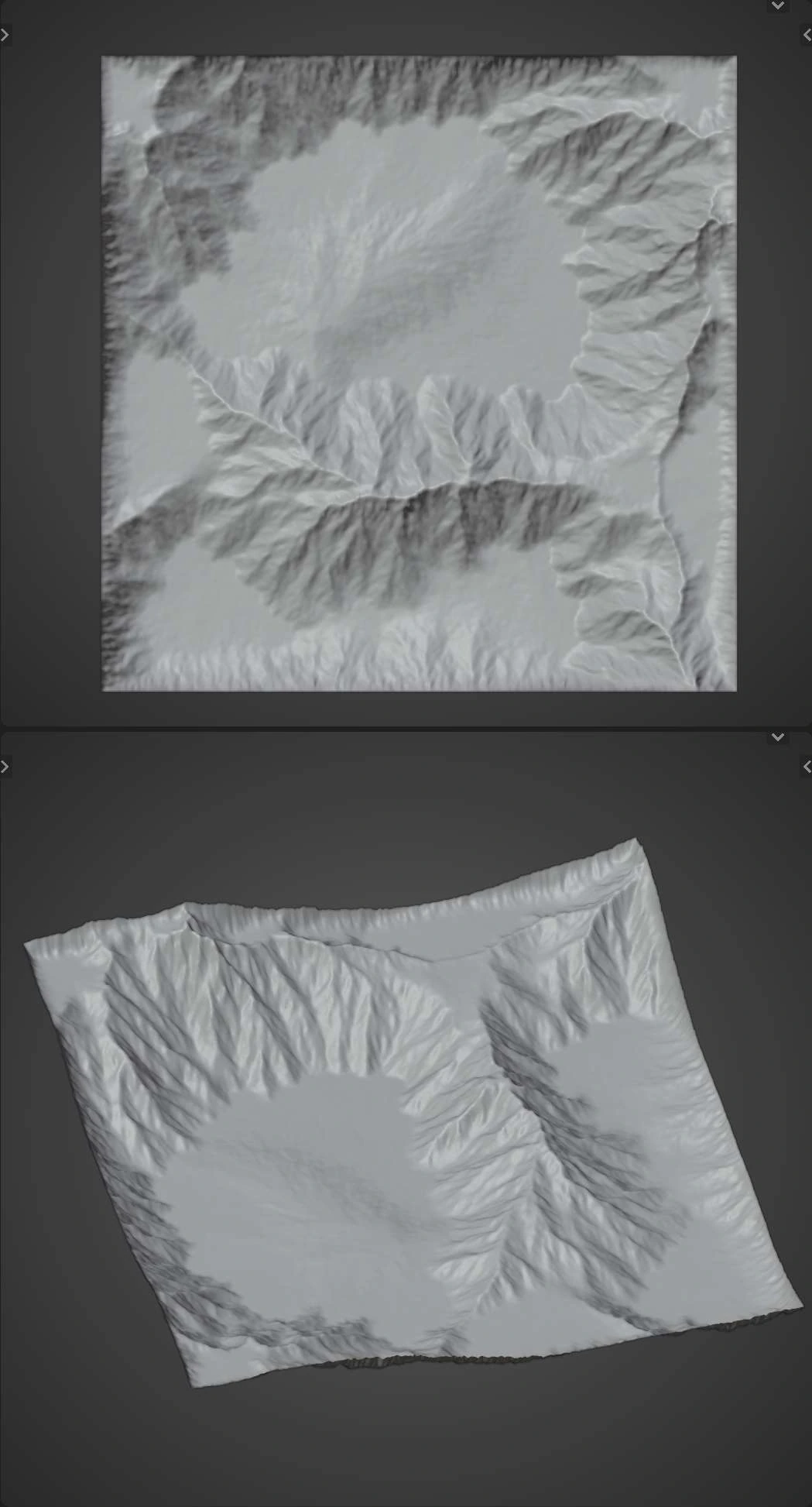
Inertia
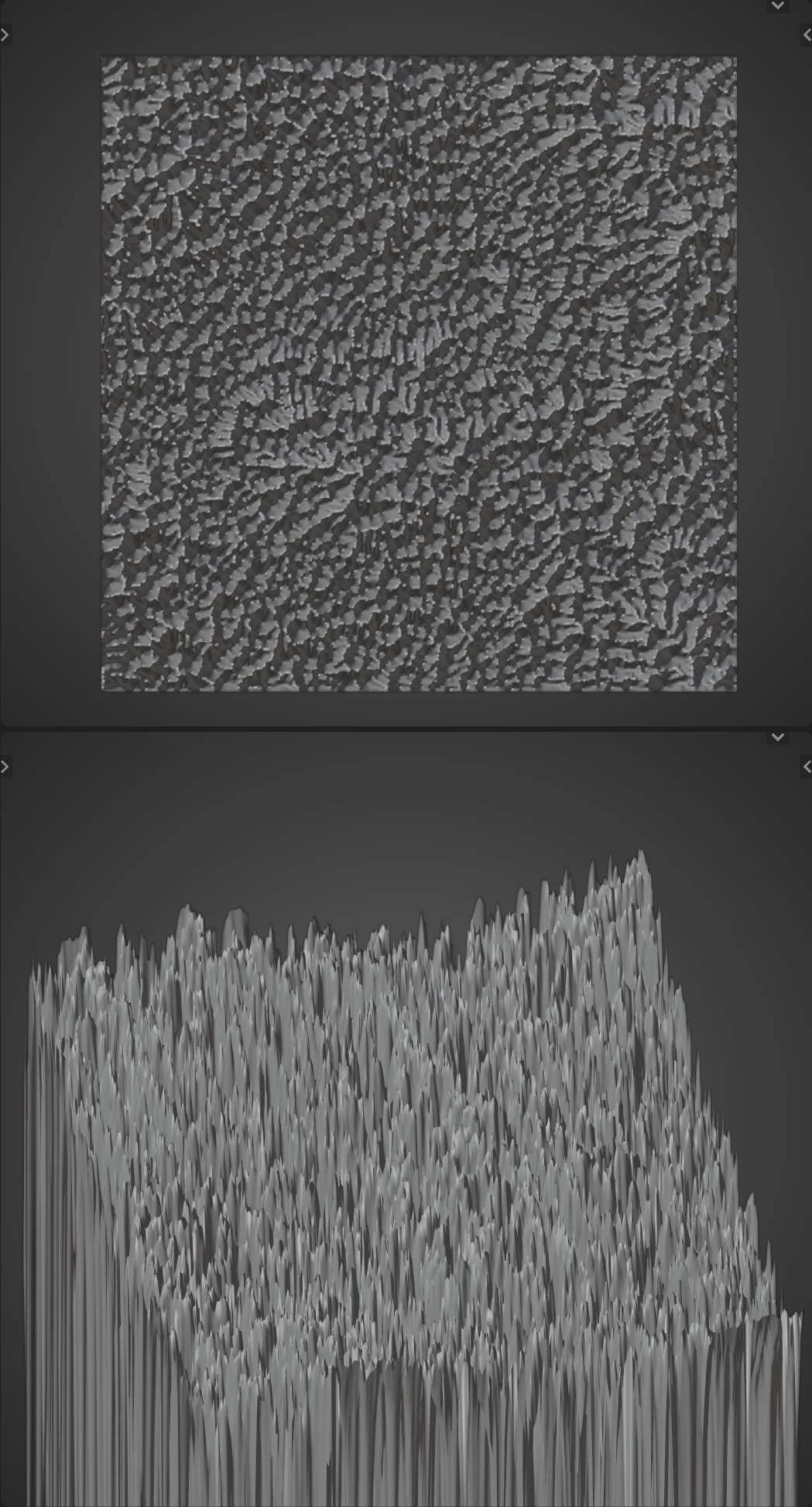
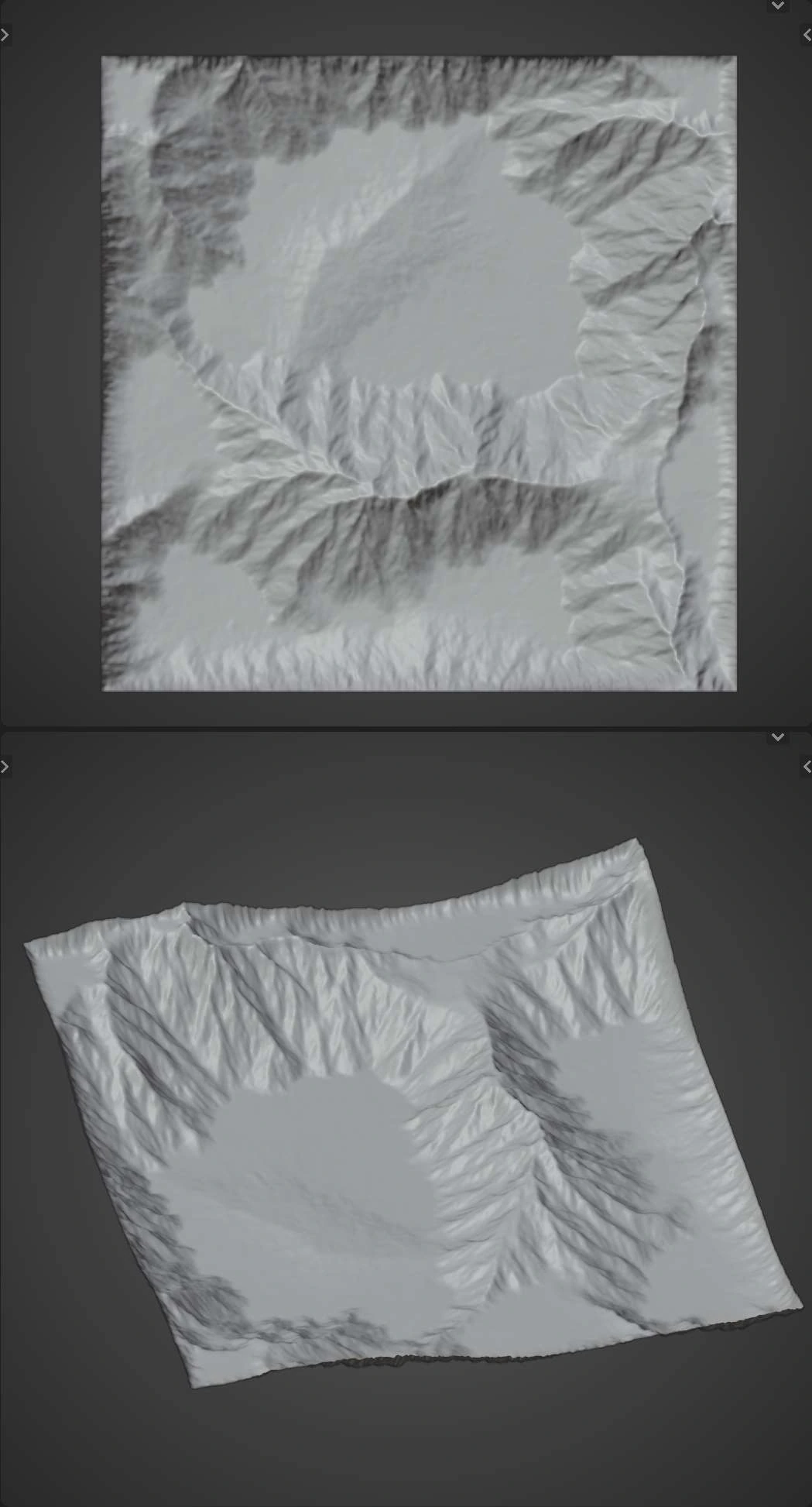
The amount of inertia each drop starts with. Smaller values result in deeper grooves
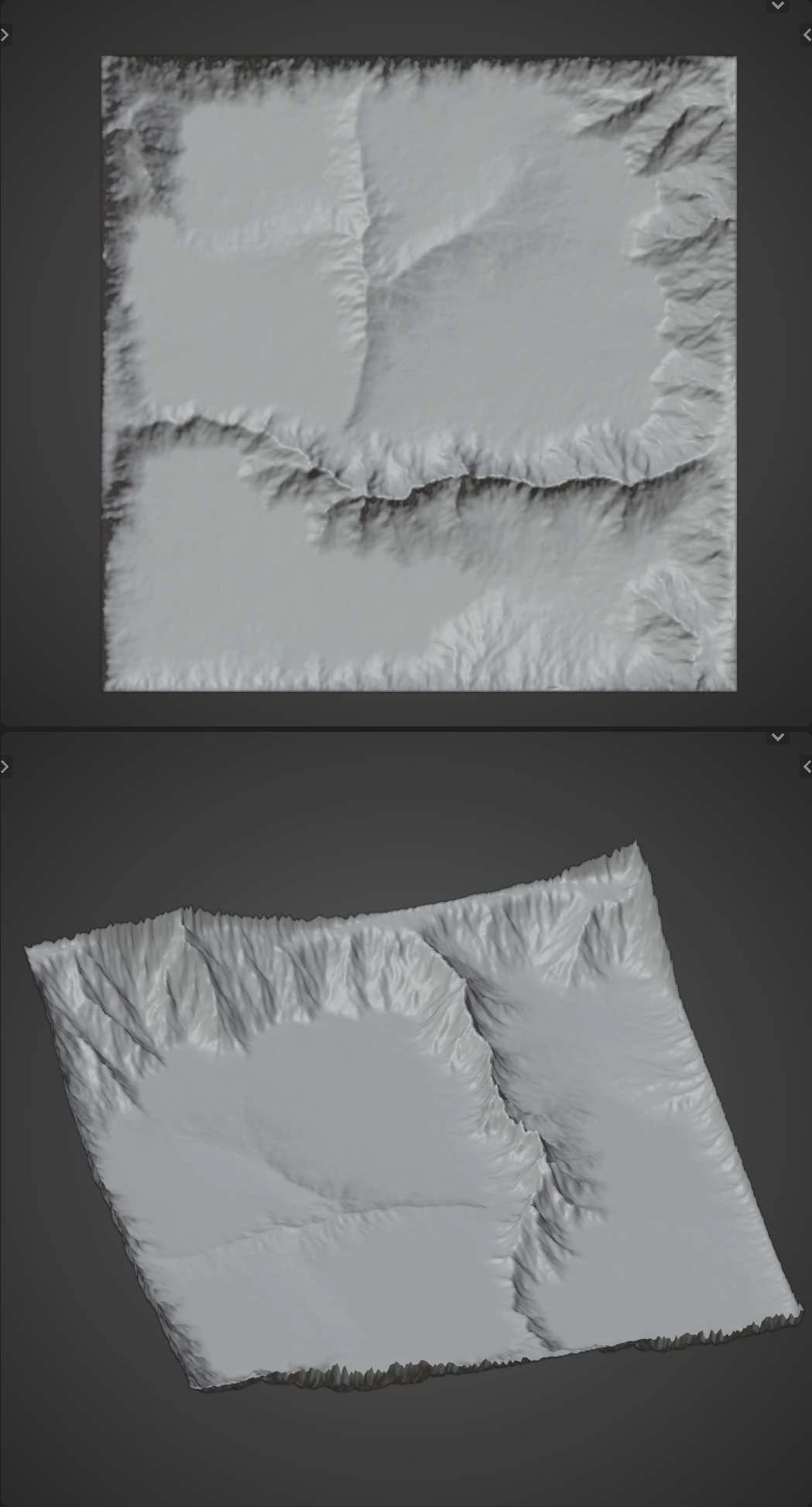
Sediment Capacity Factor
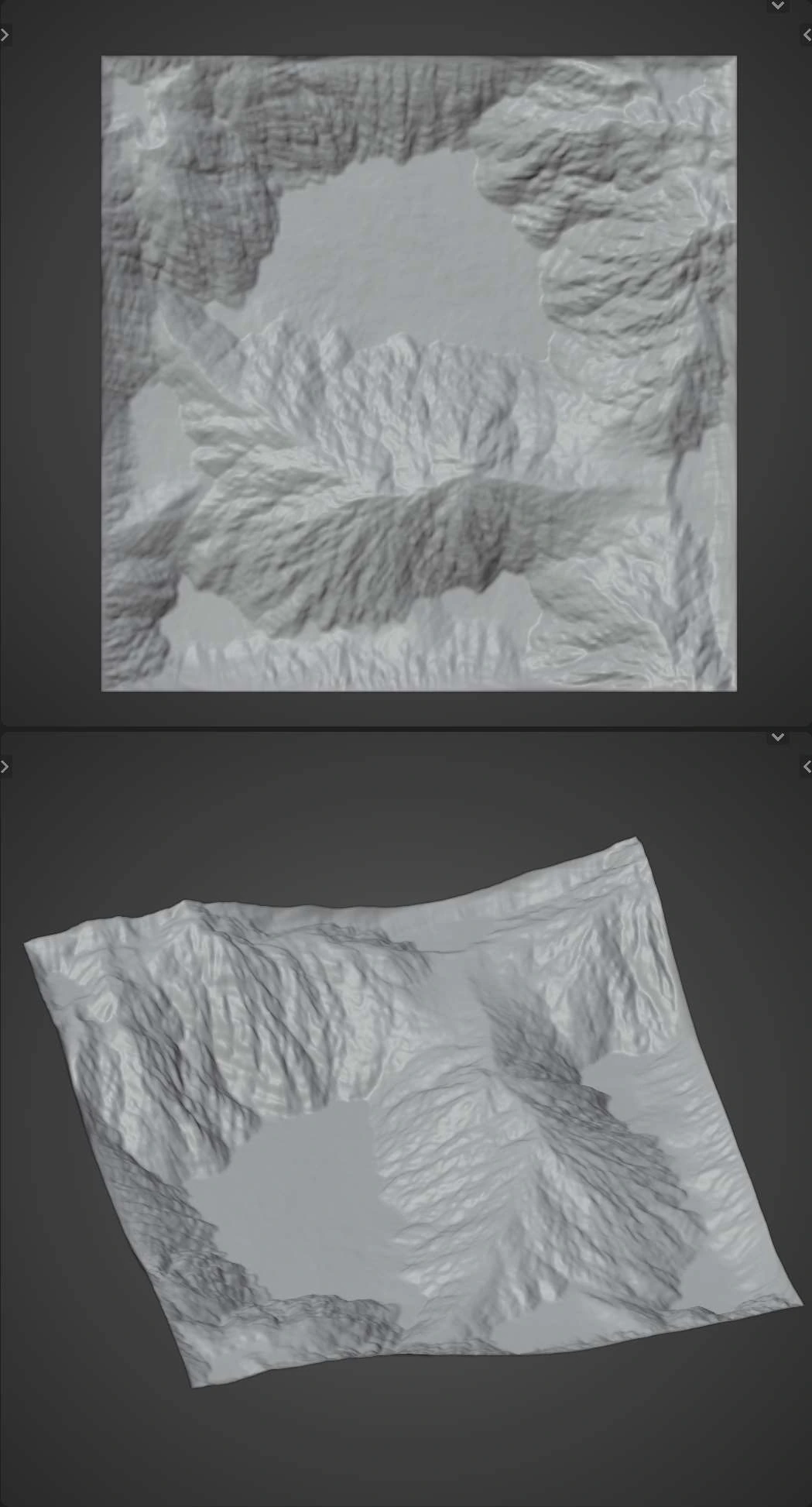
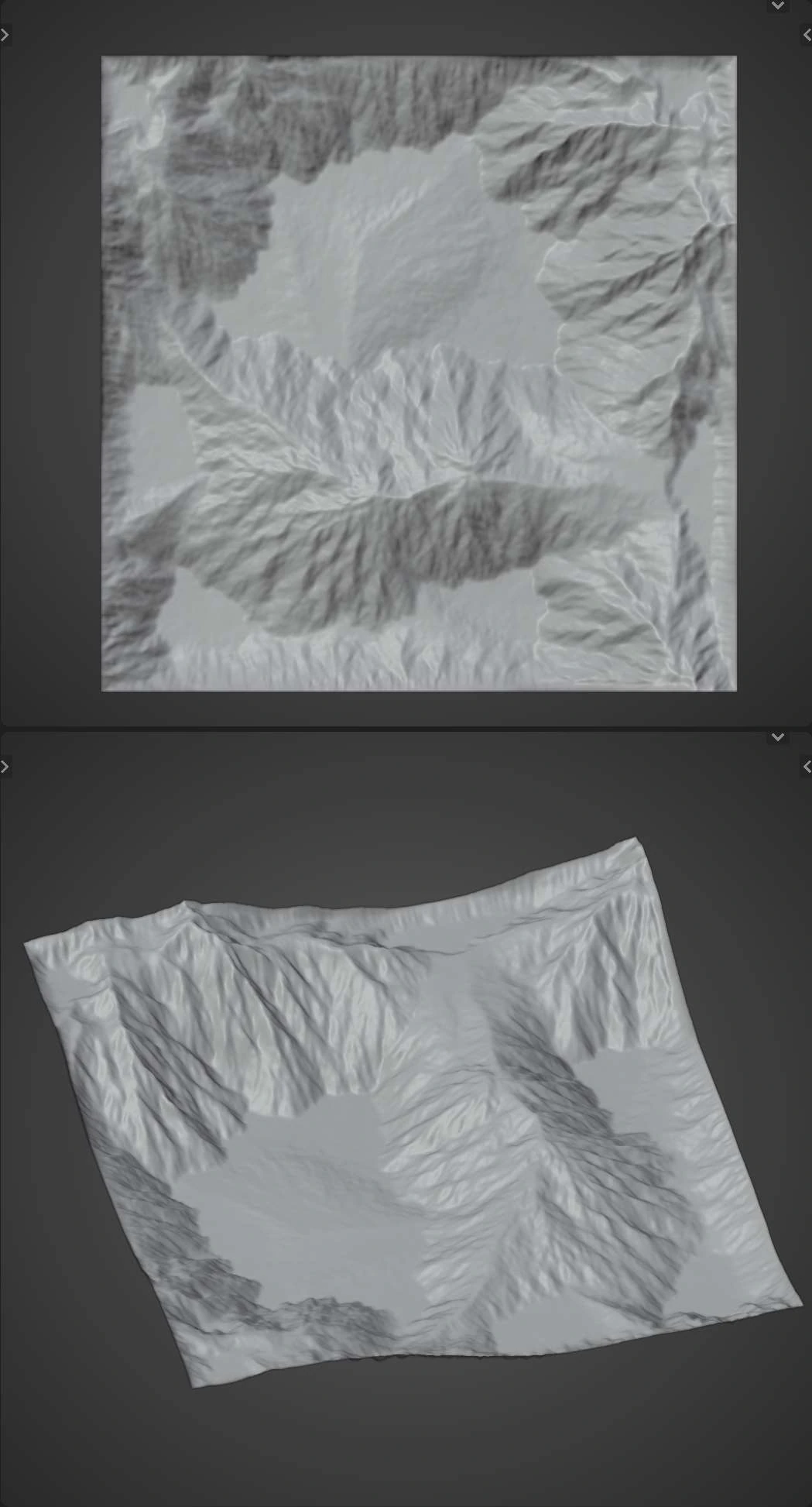
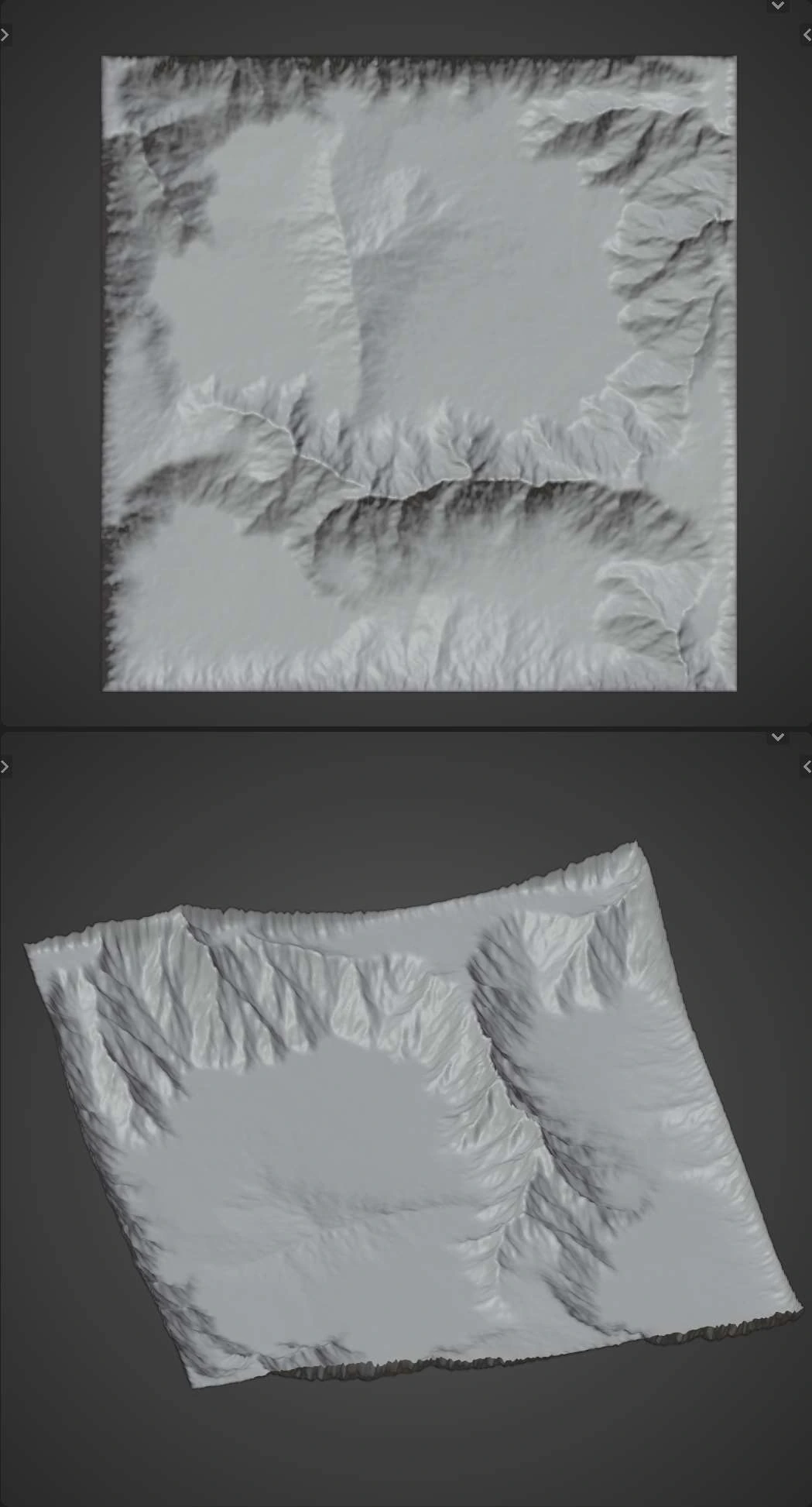
Maximum amount of sediment each droplet can carry at a given time. Higher the faster the droplet is going. When capacity is met, droplet deposits sediment (adds a bit to the terrain)
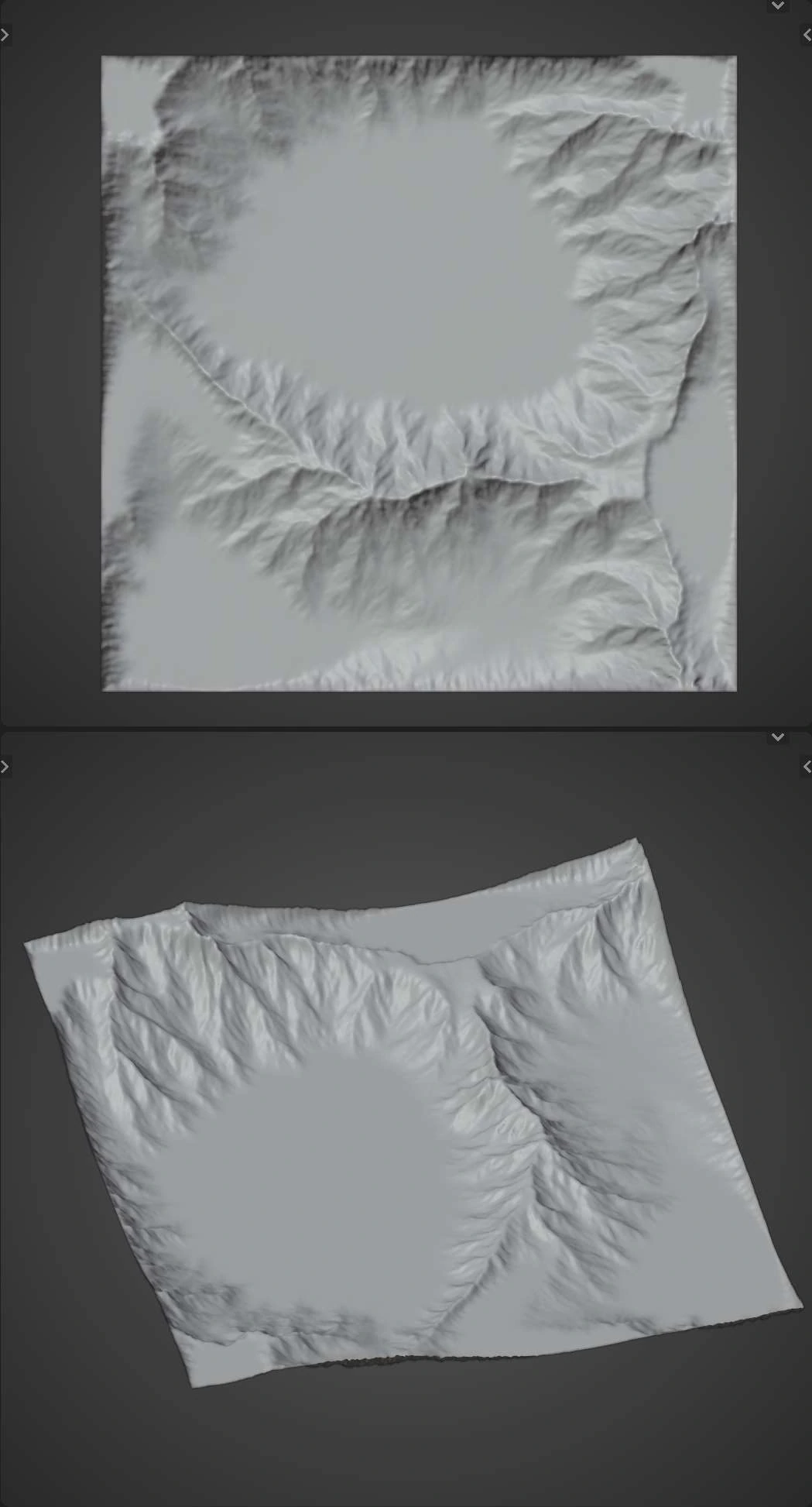
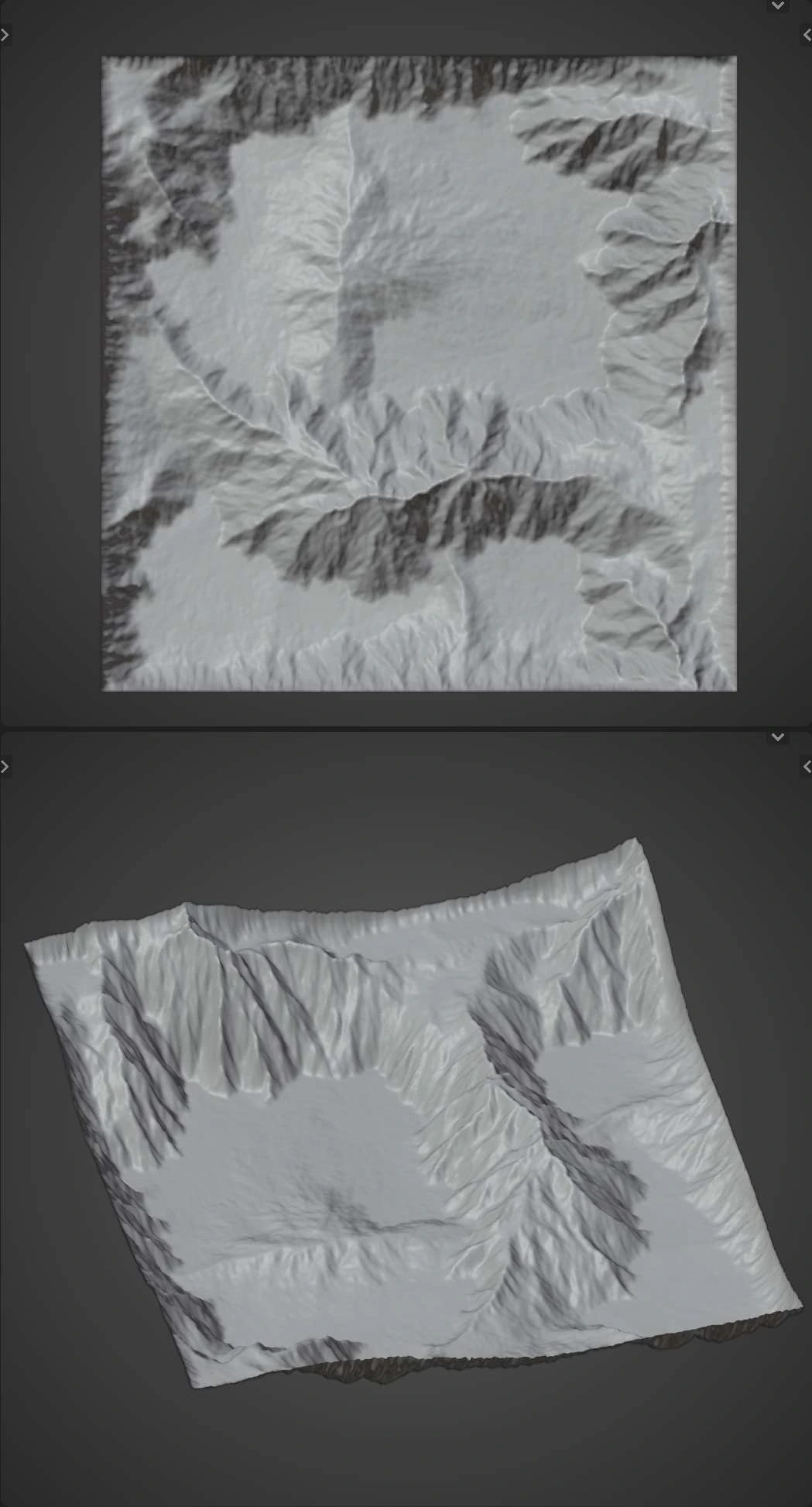
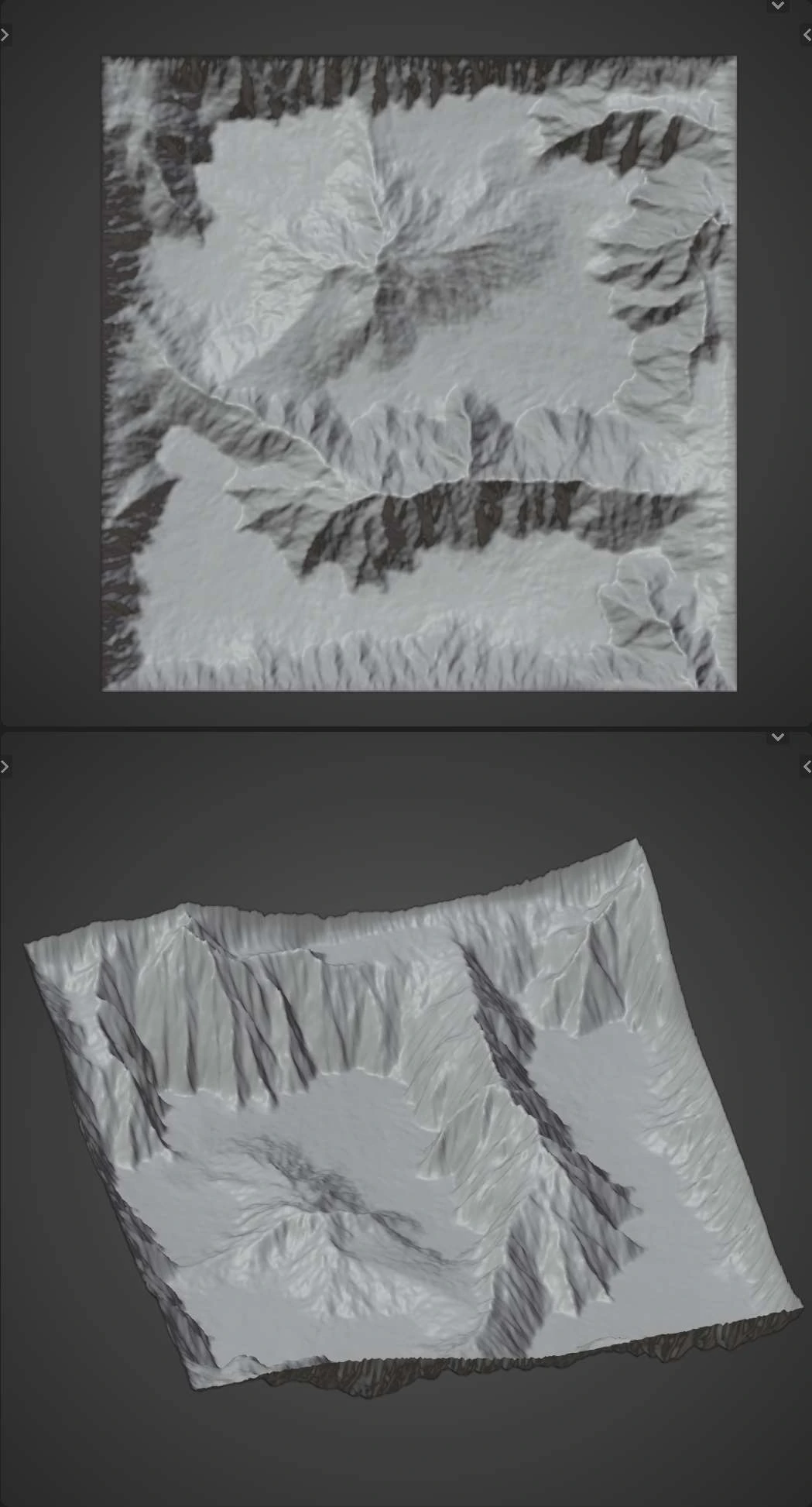
Minimum Sediment Capacity
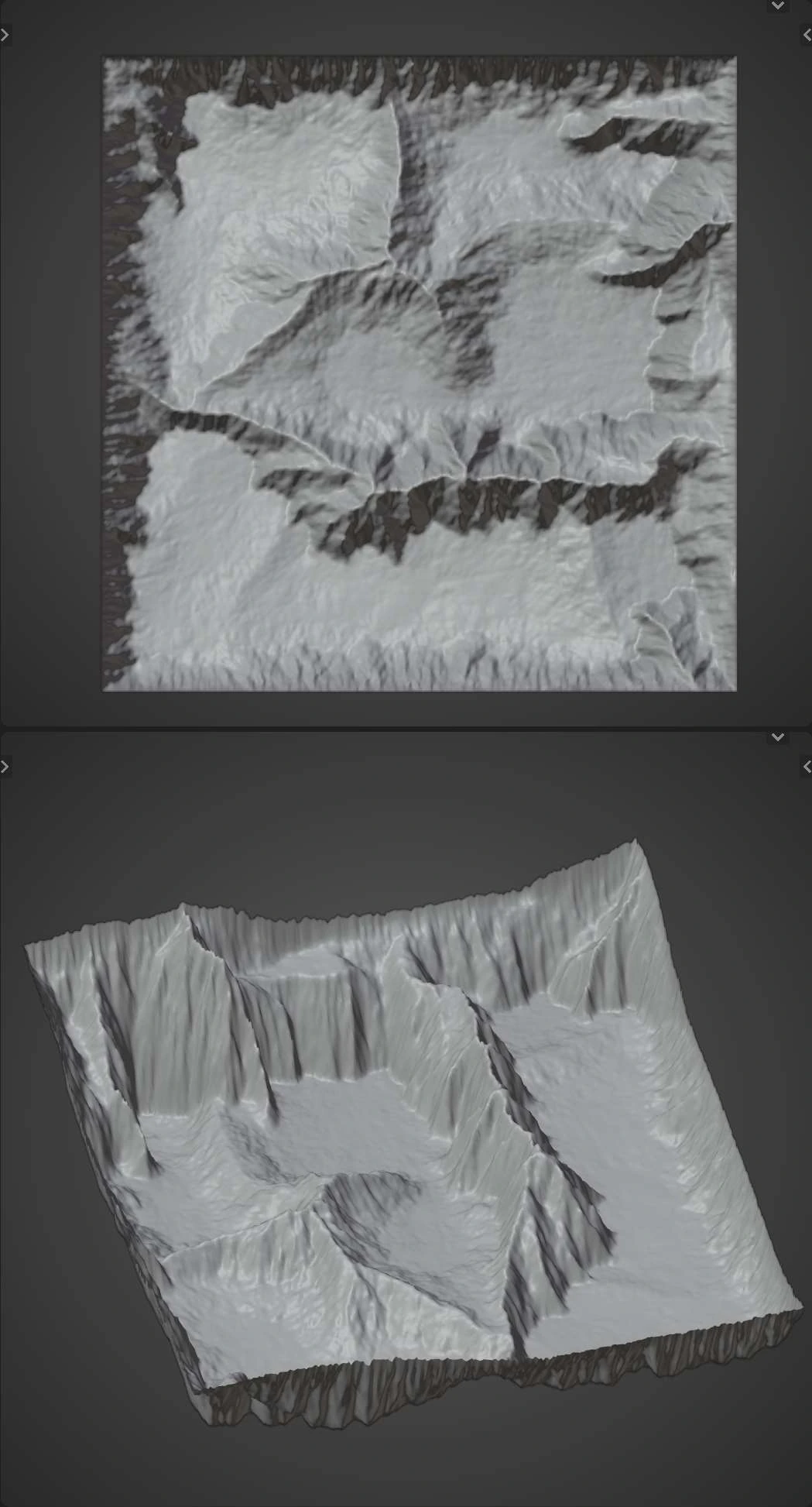
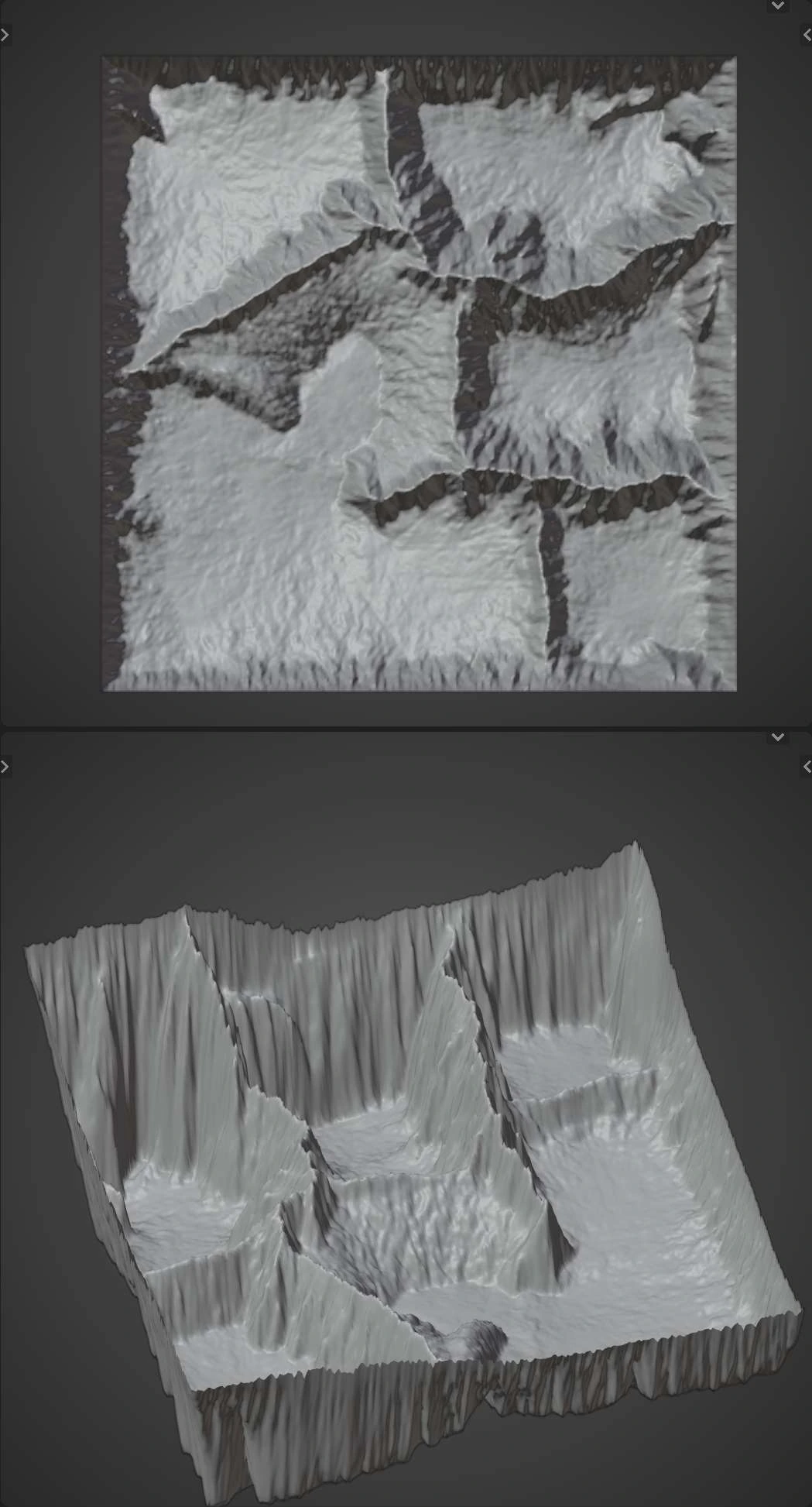
Amount of sediment the droplet will always carry
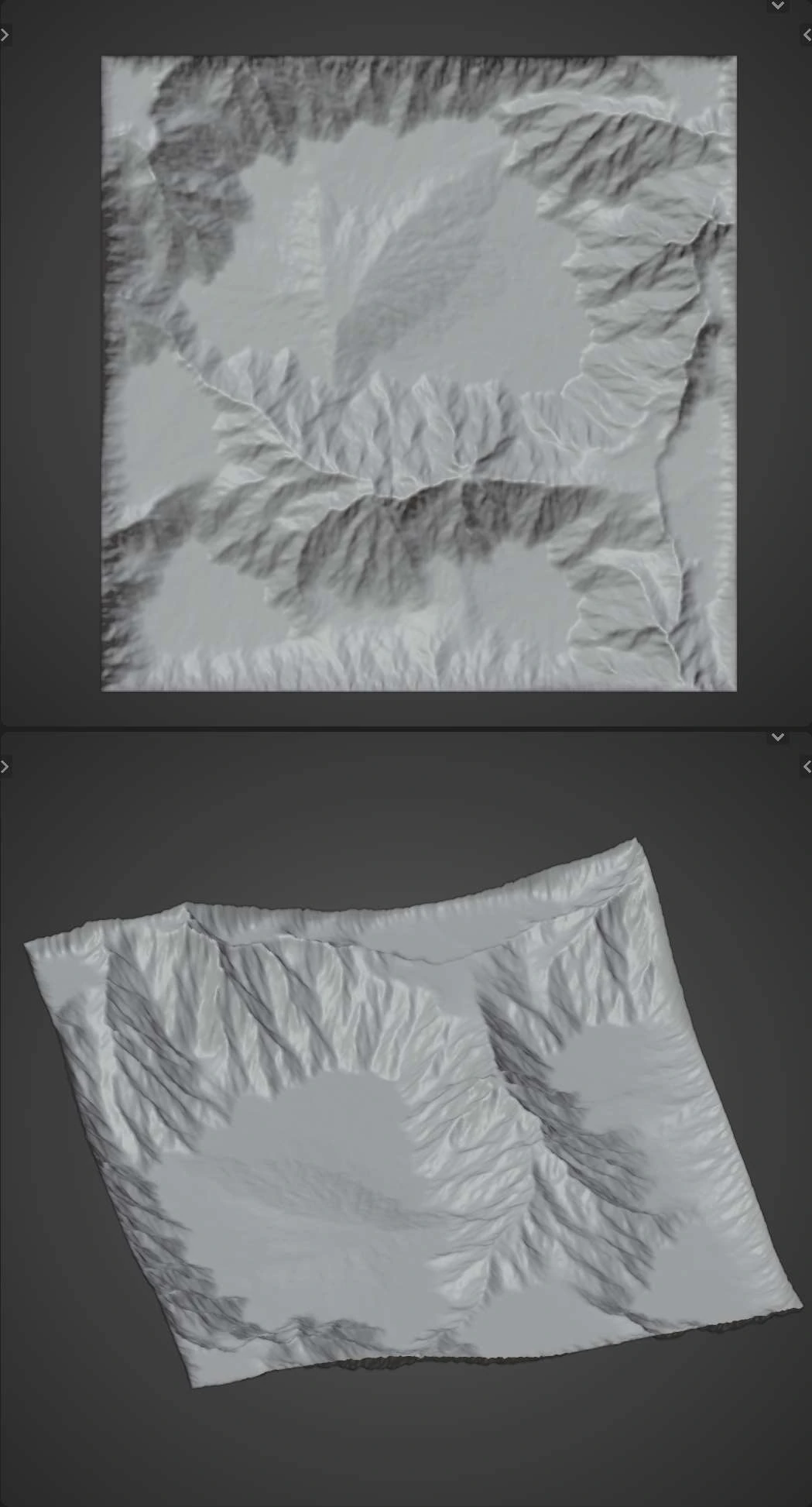
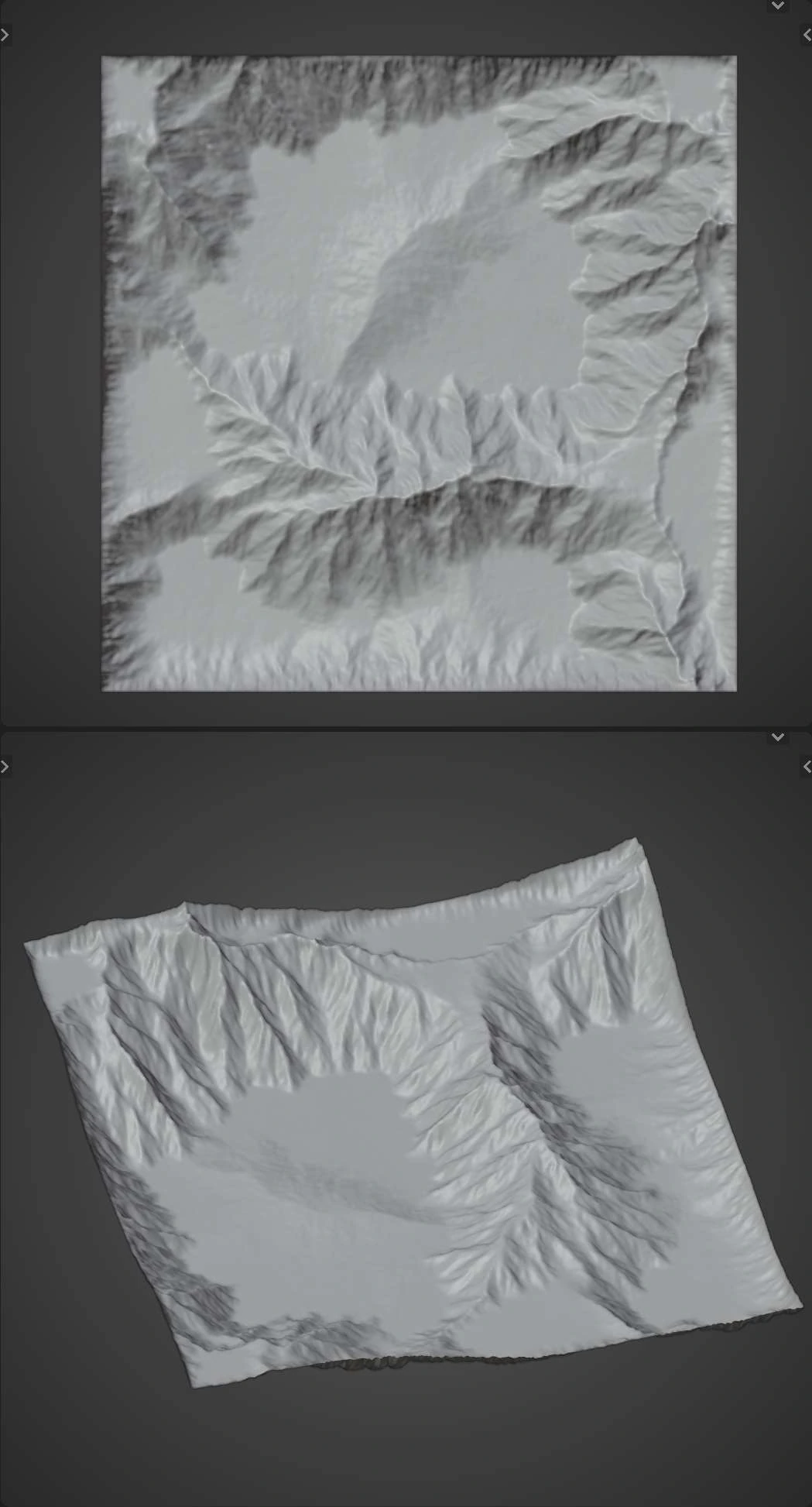
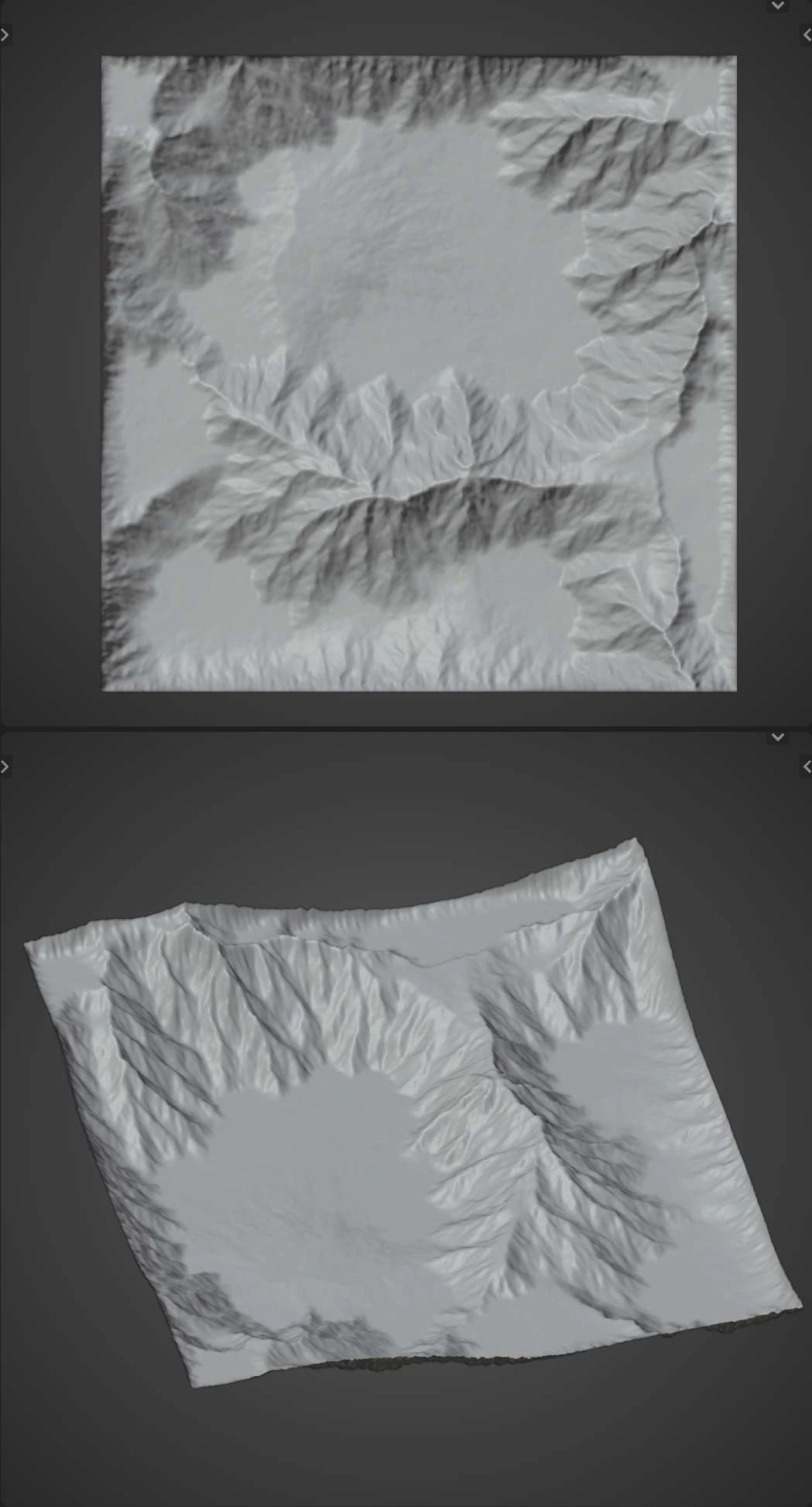
Deposit Speed
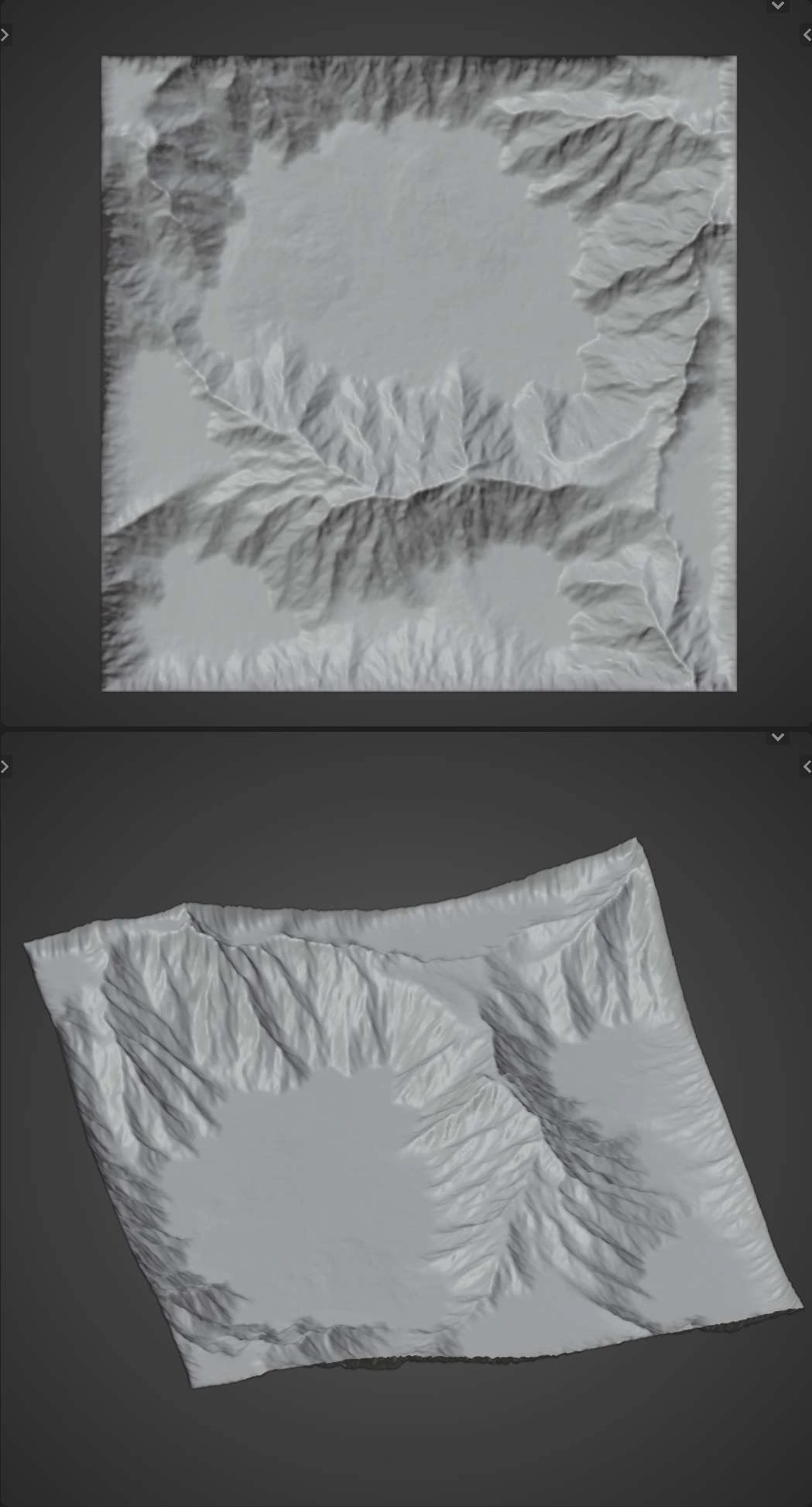
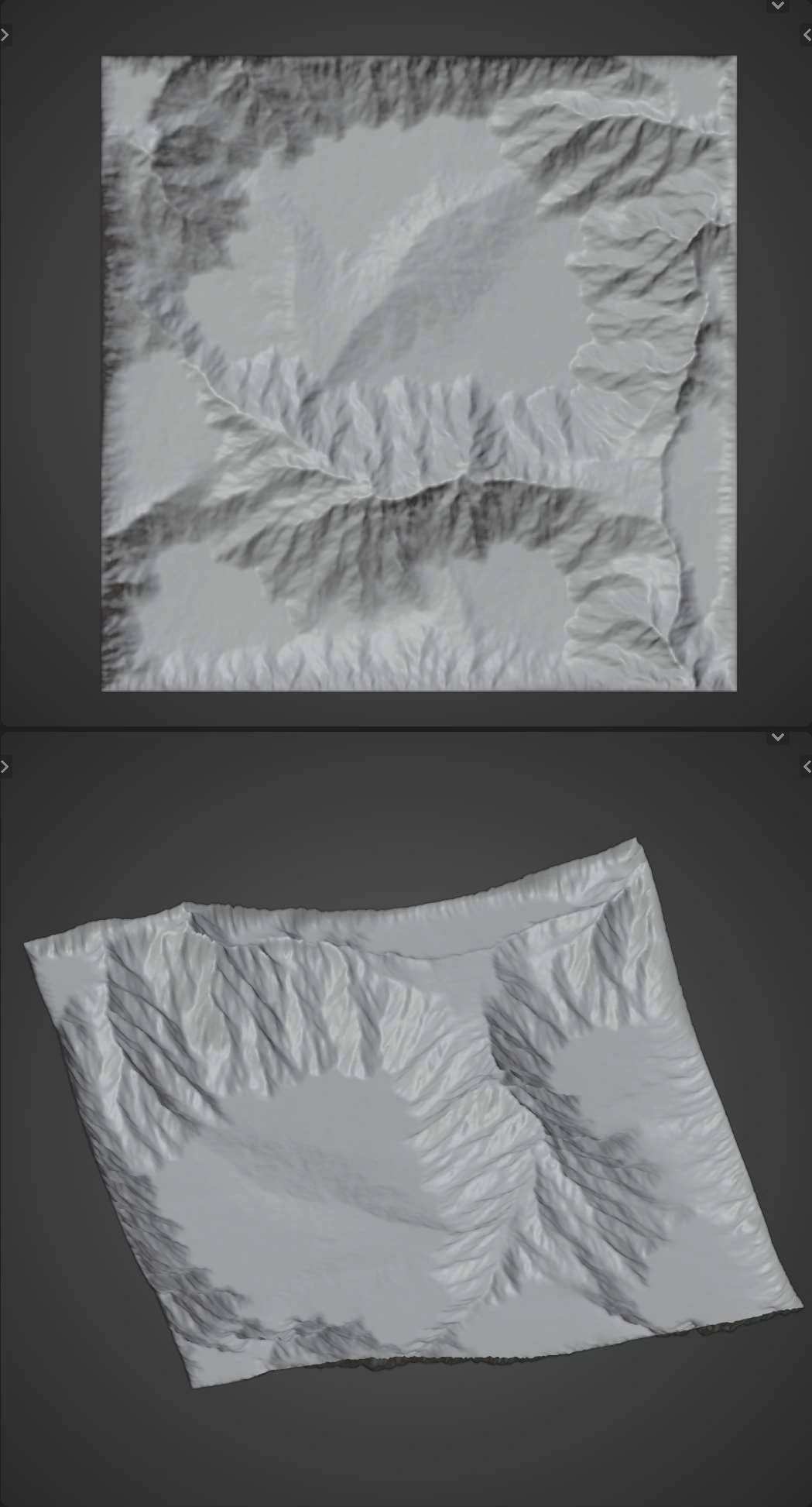
Affects how much sediment to deposit (add) to terrain
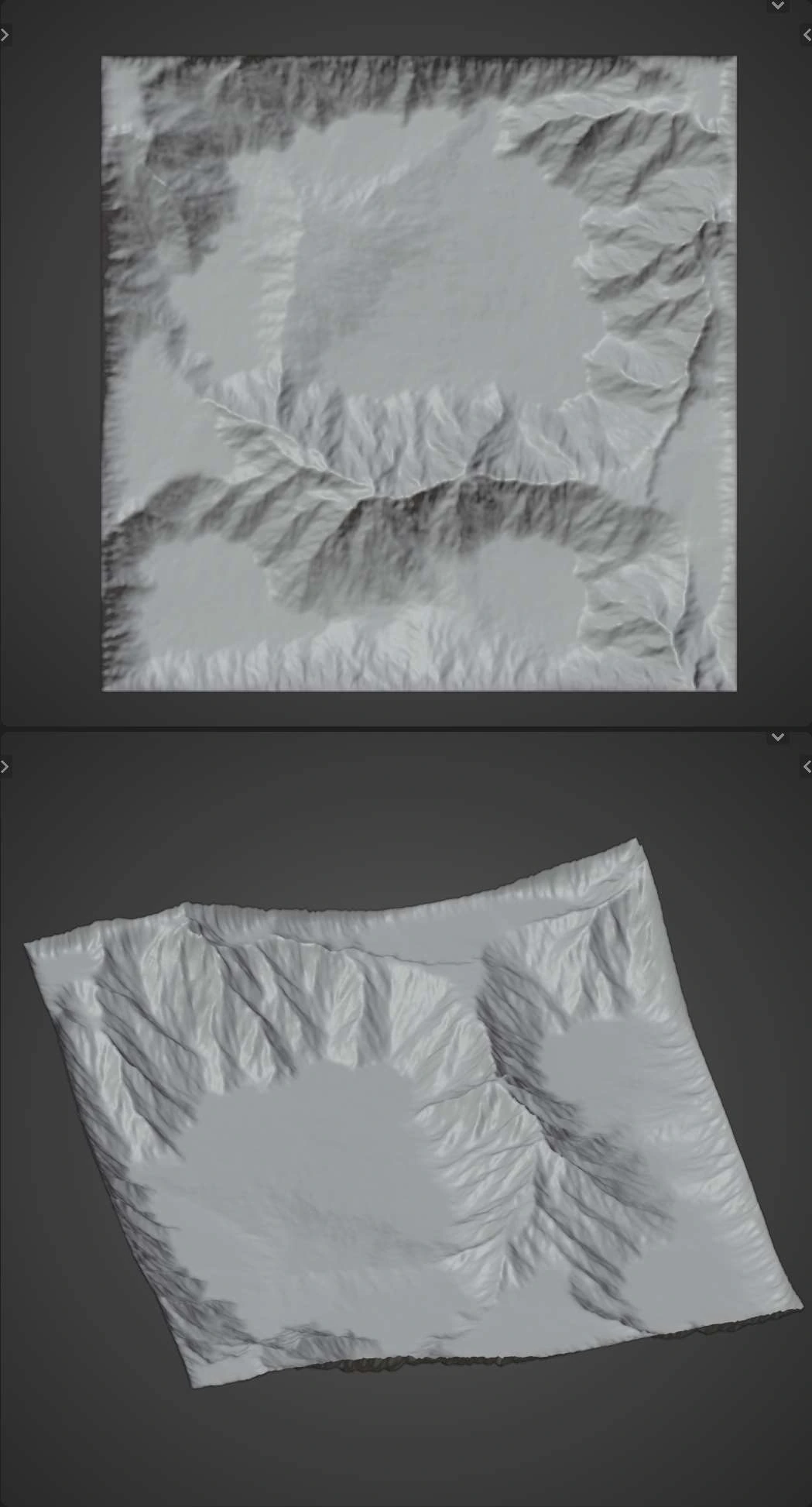
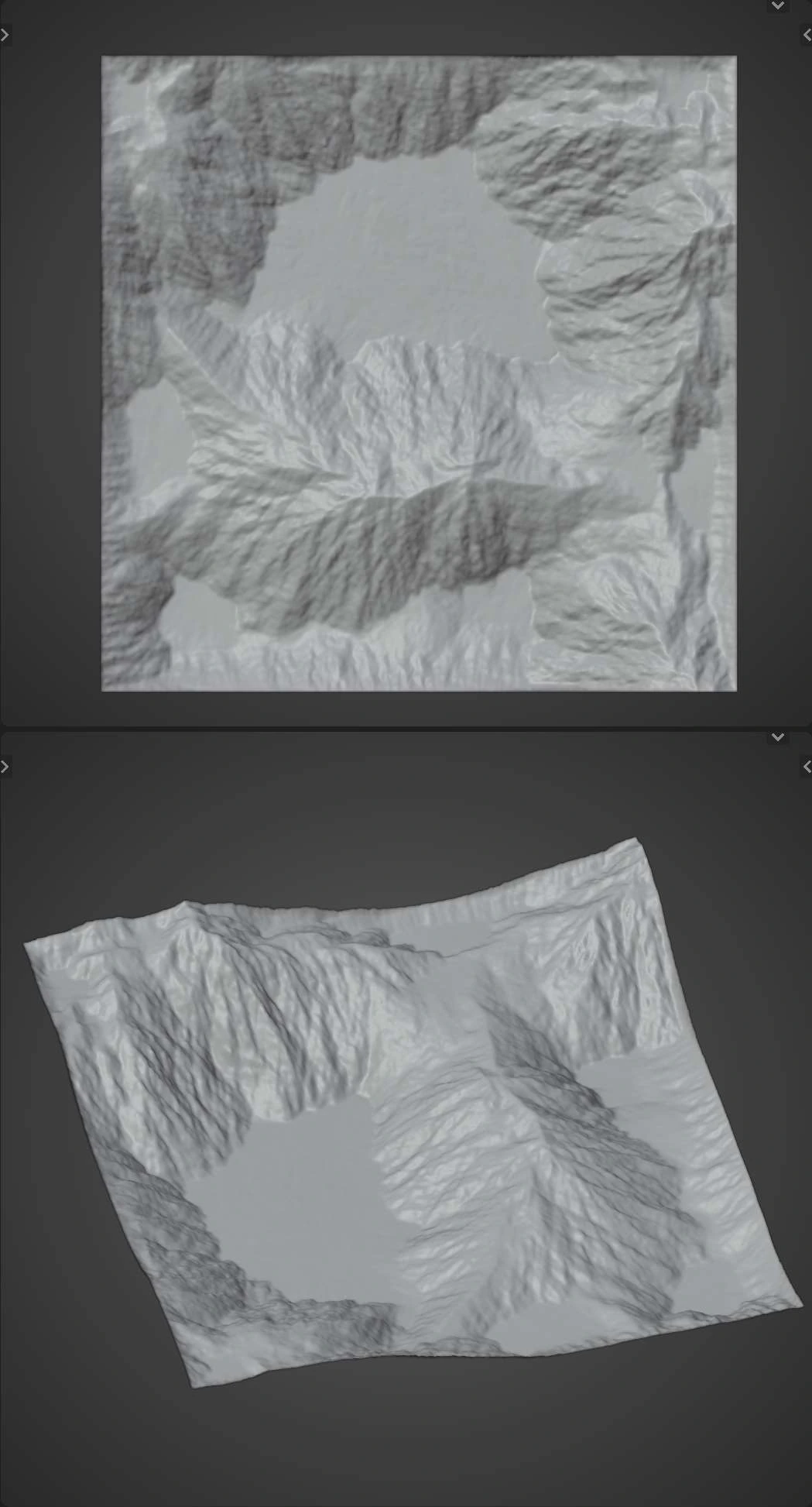
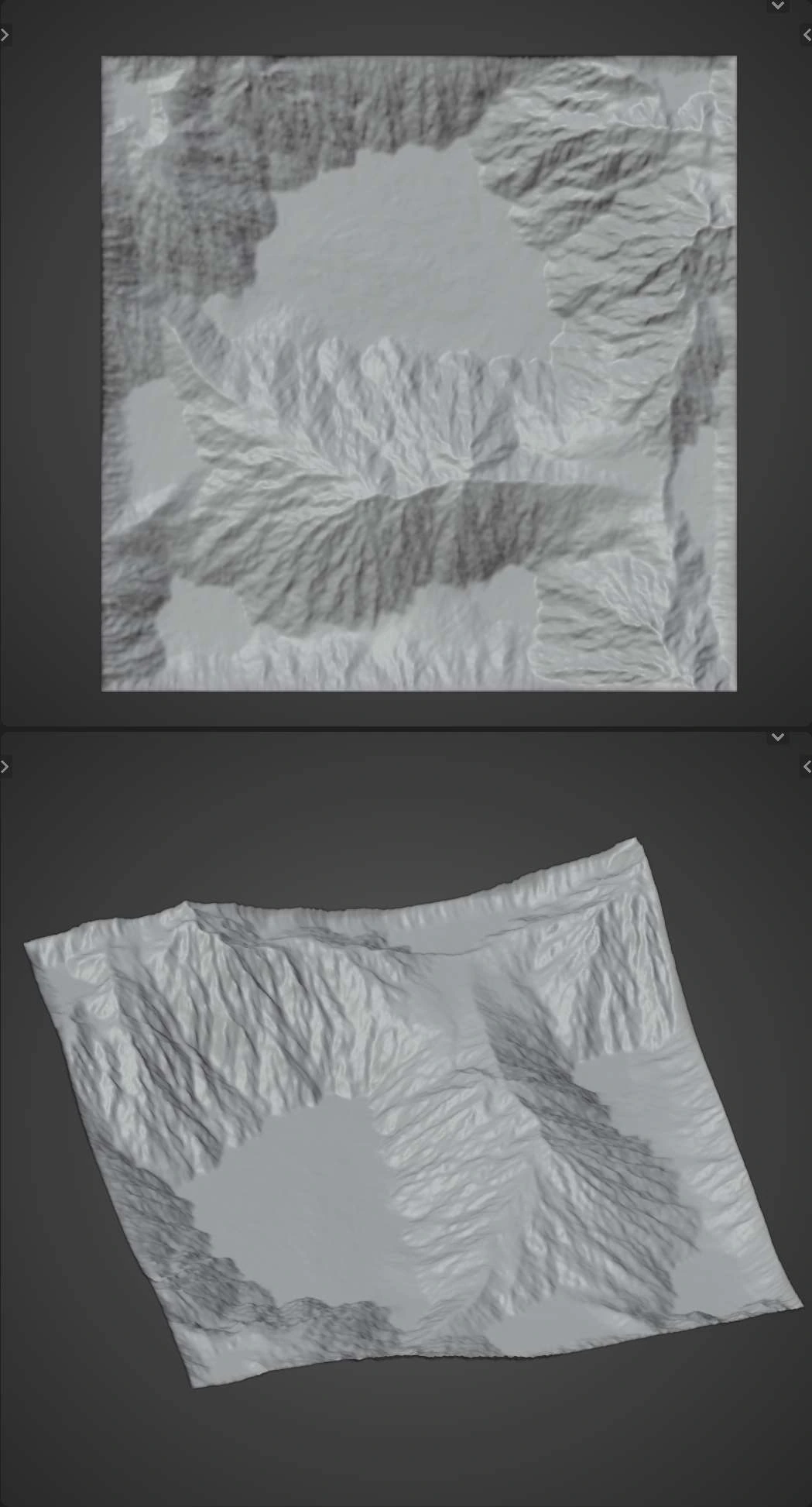
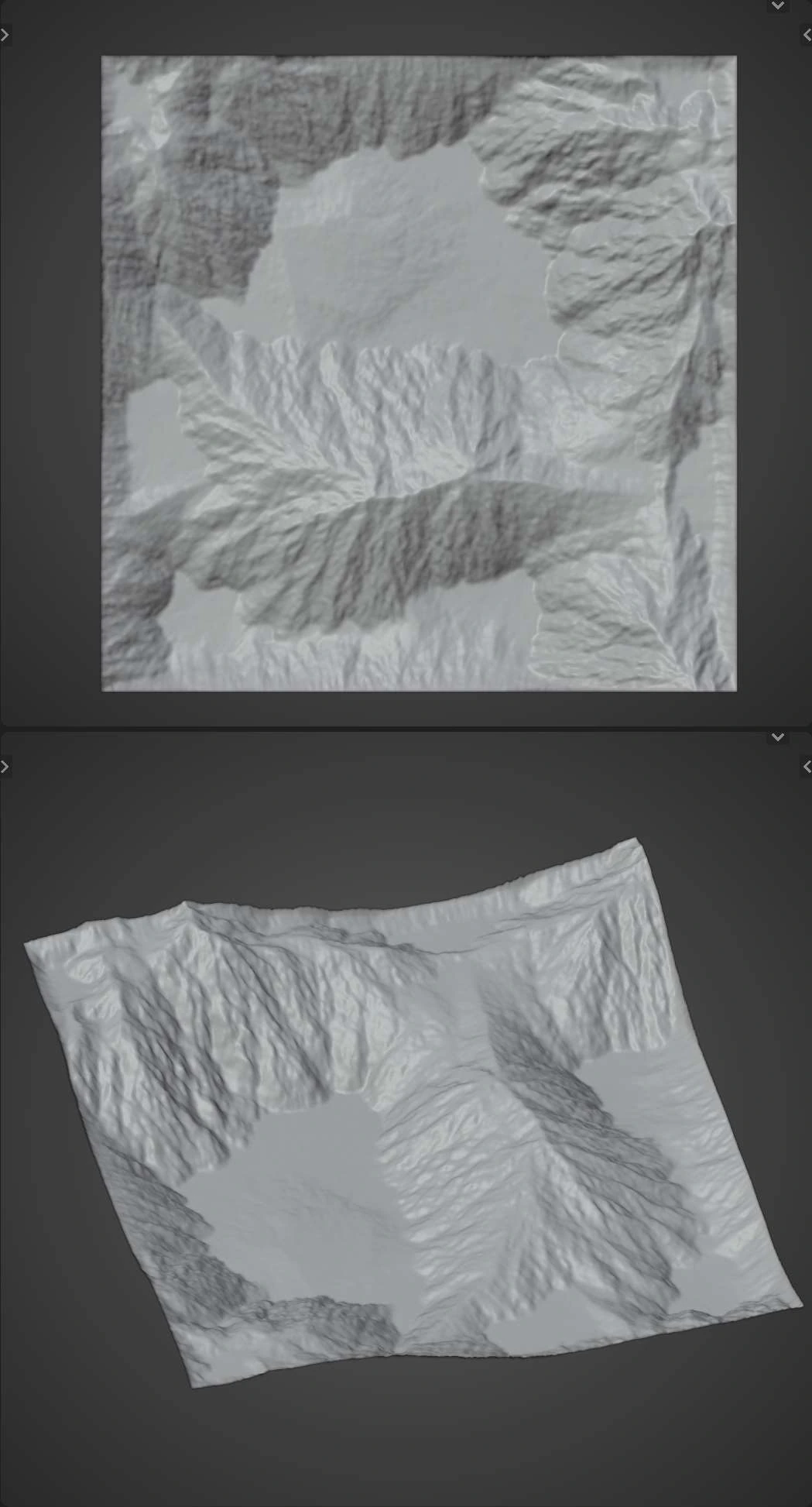
Evaporation Speed
Affects the lifetime of the droplet. Higher values reduce lifetime quicker
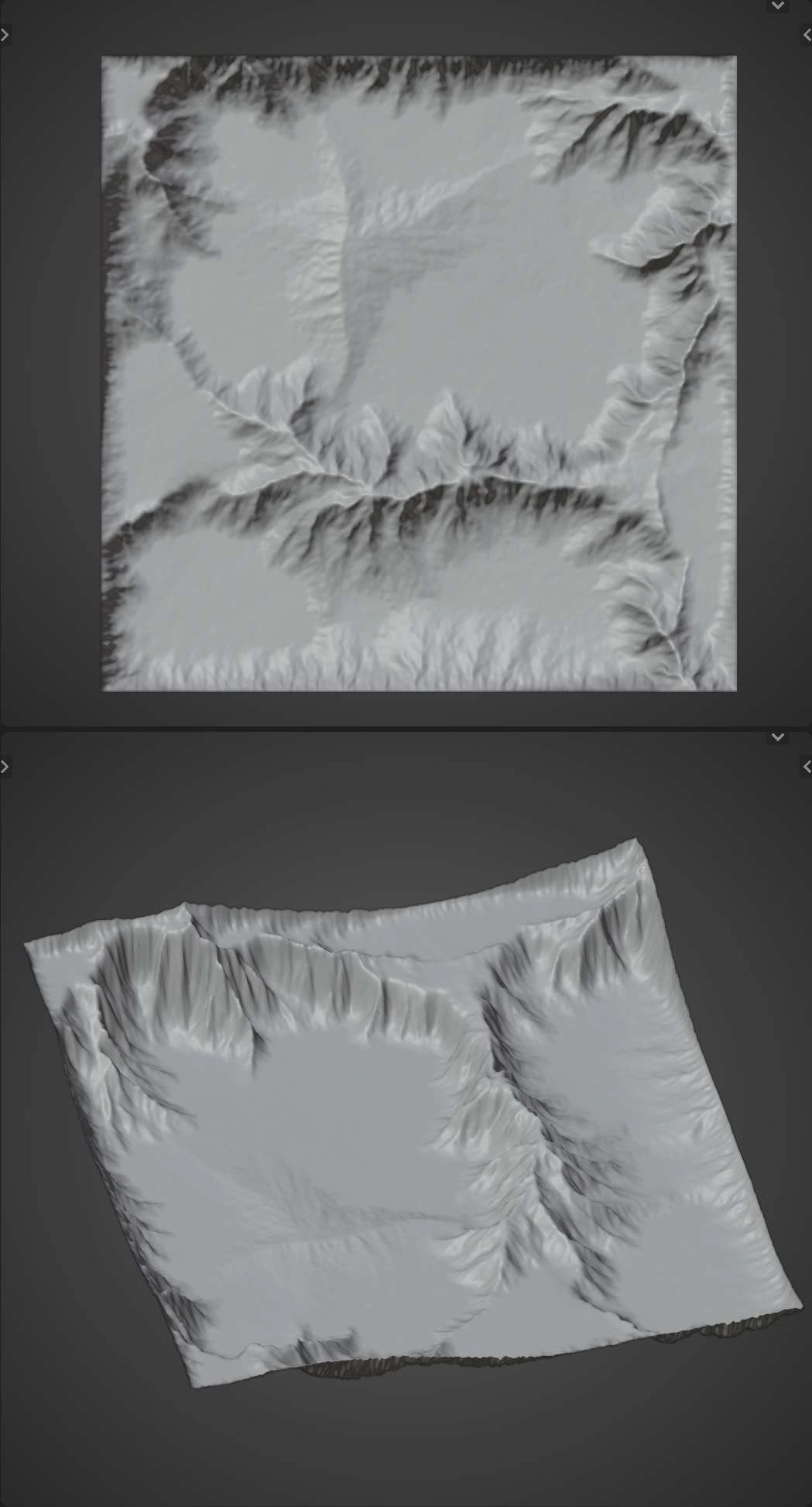
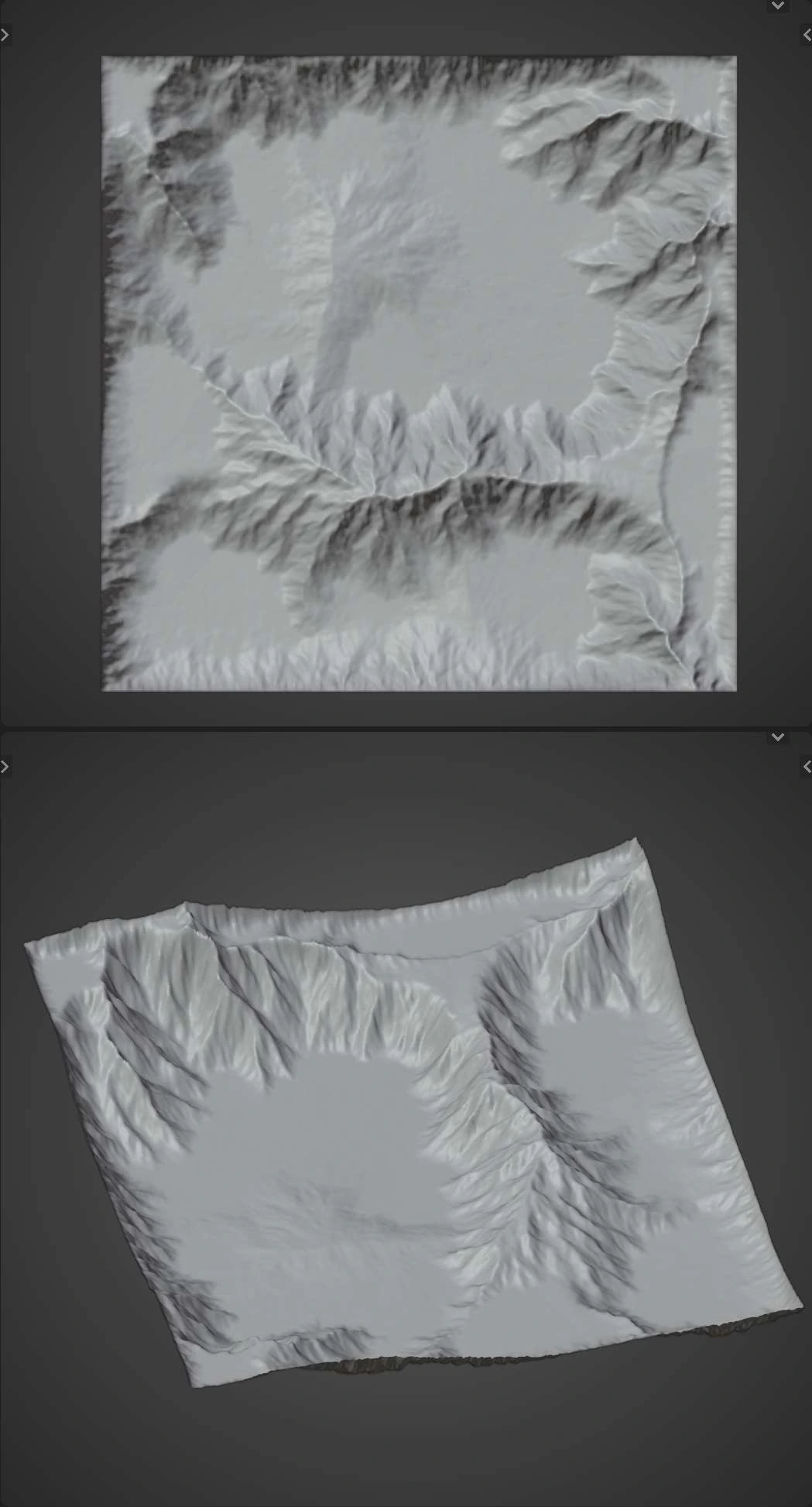
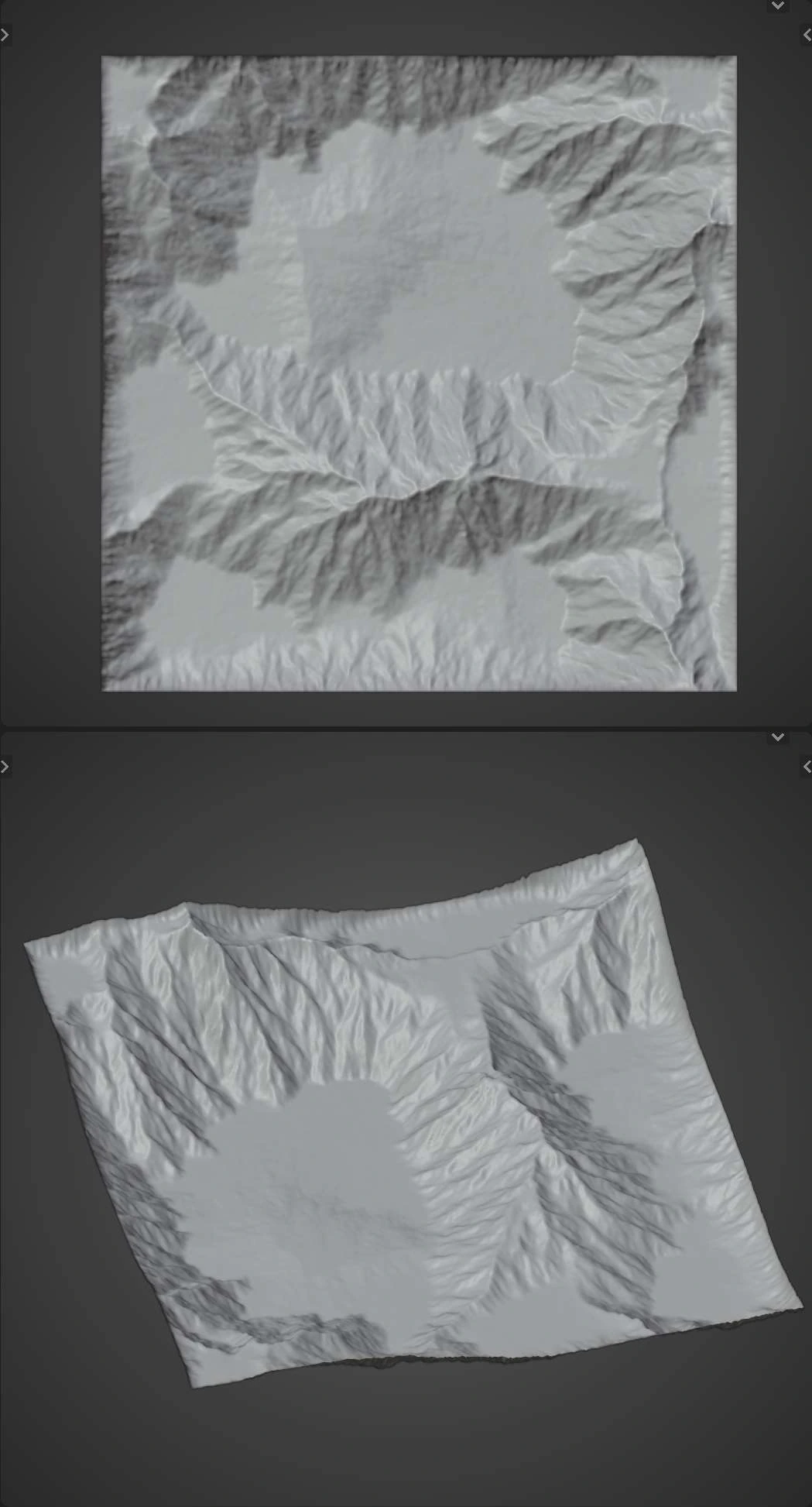
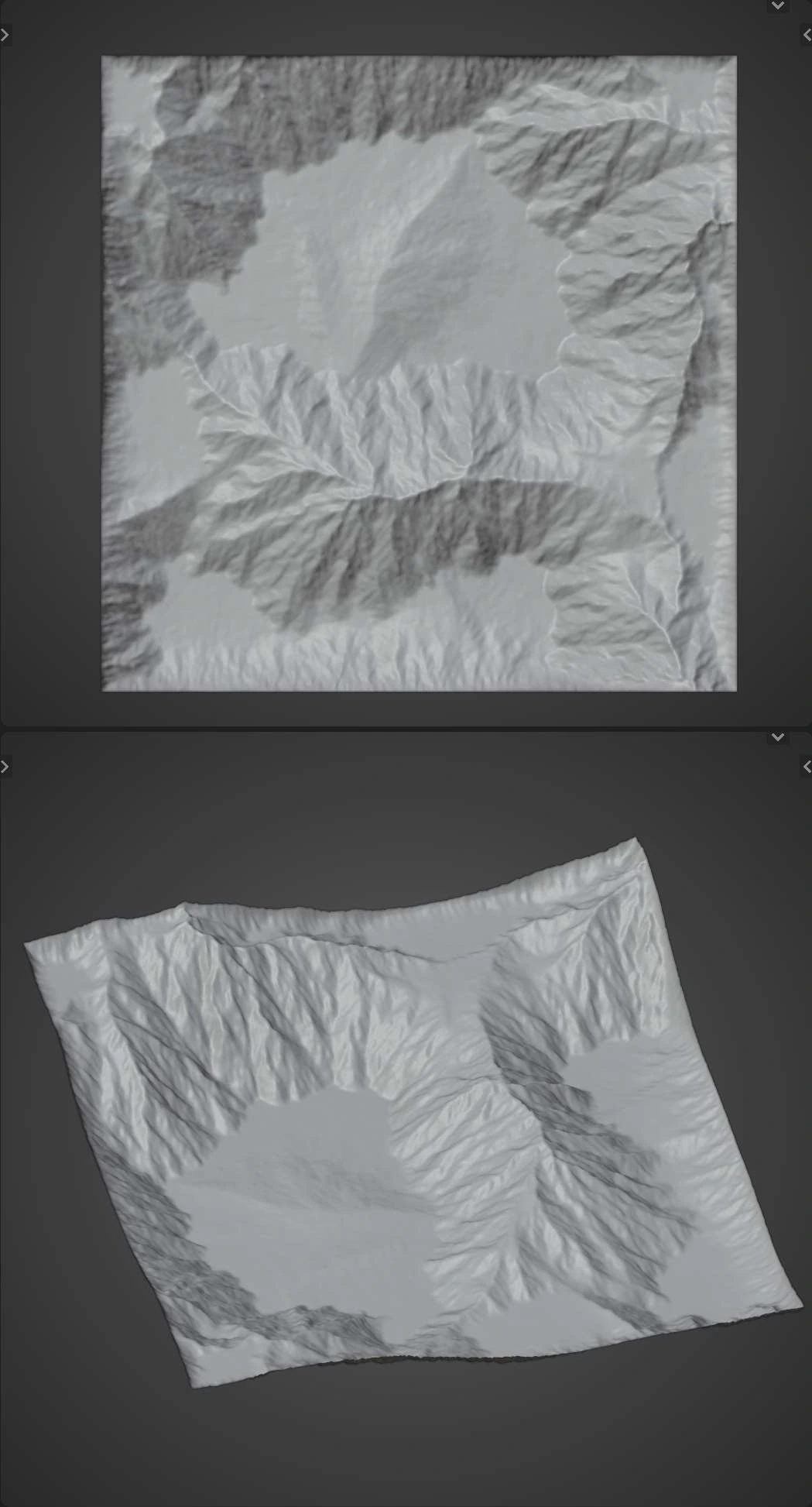
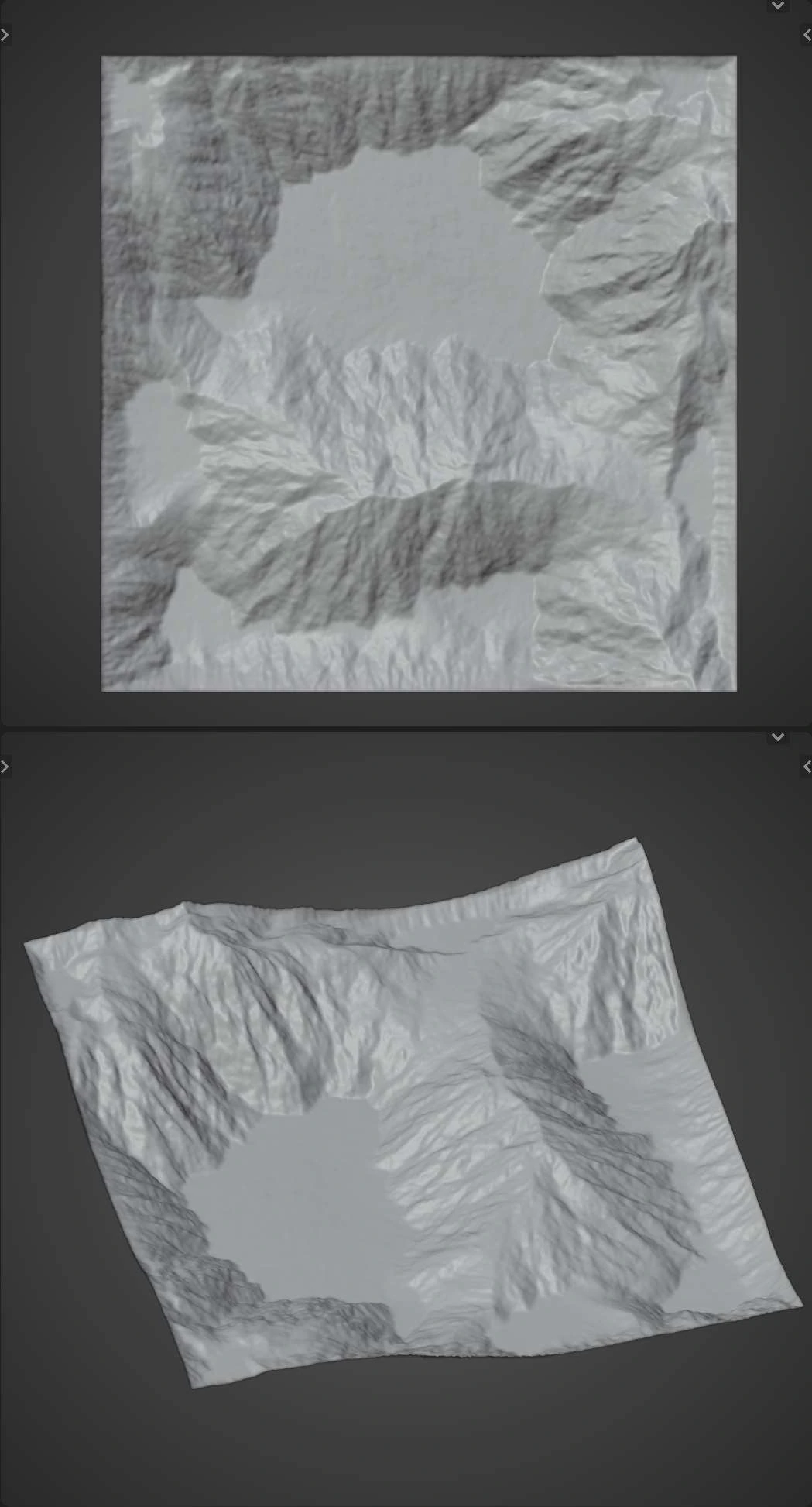
Gravity
Affects the speed of the water droplet.
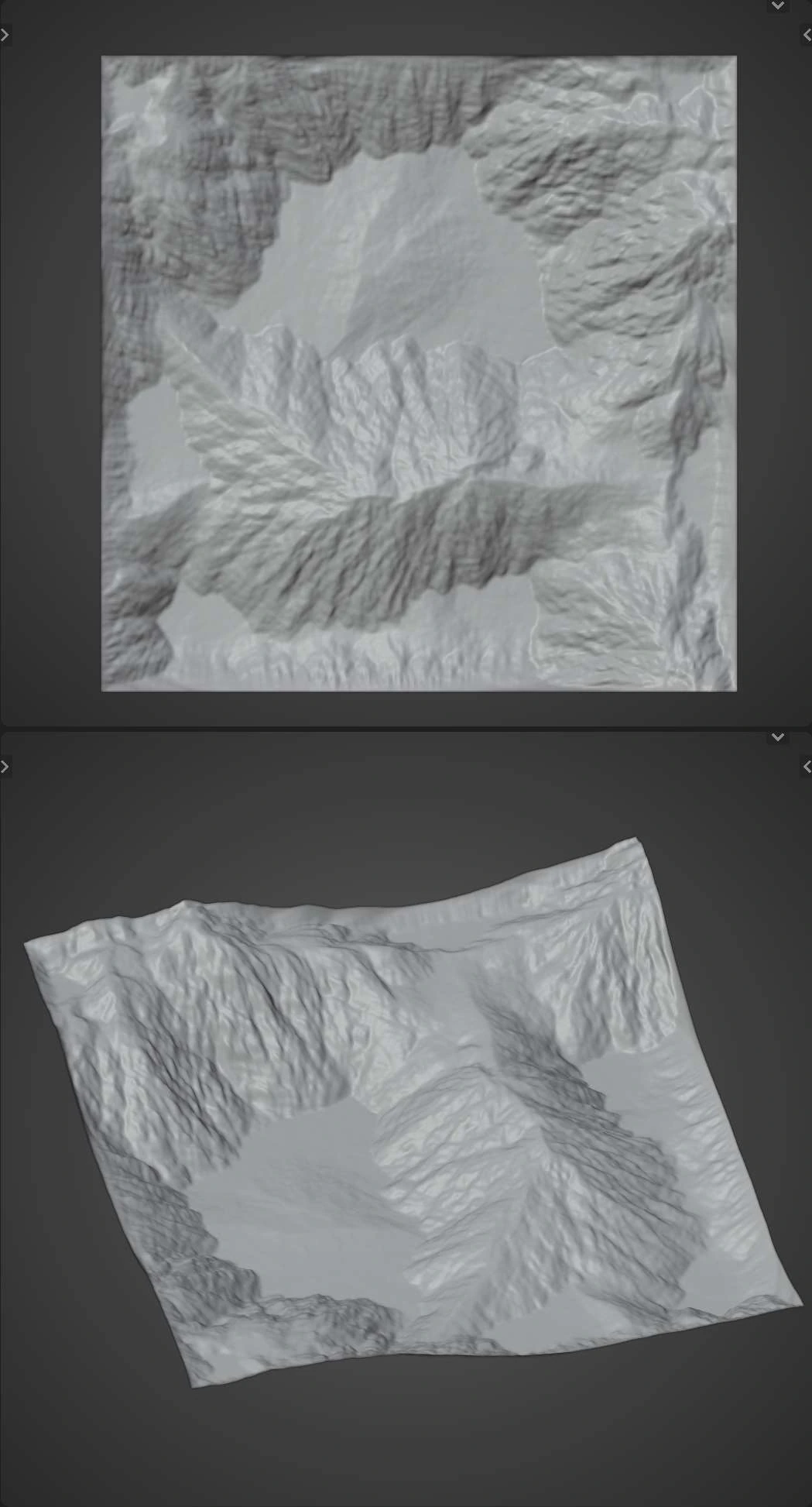
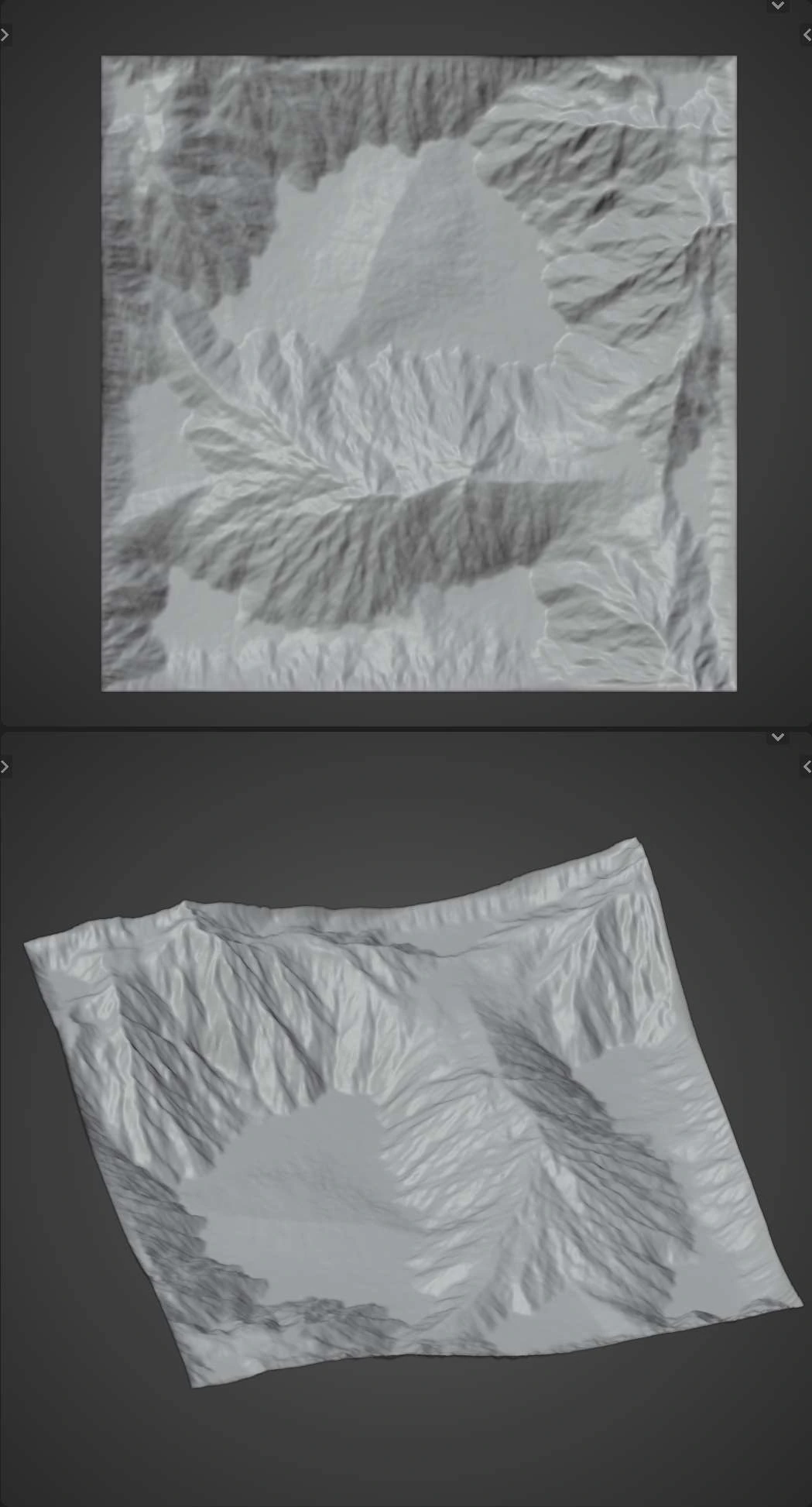
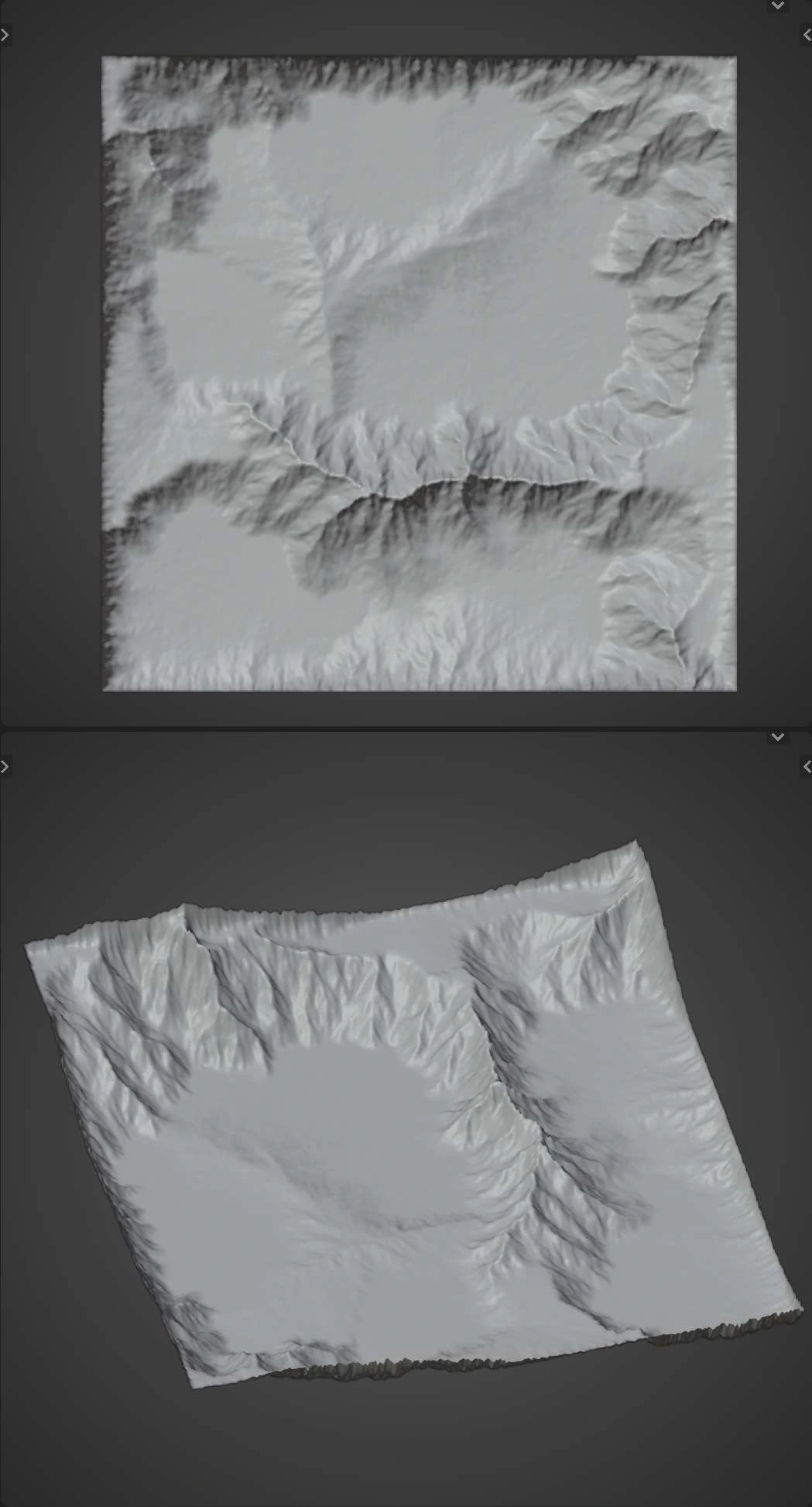
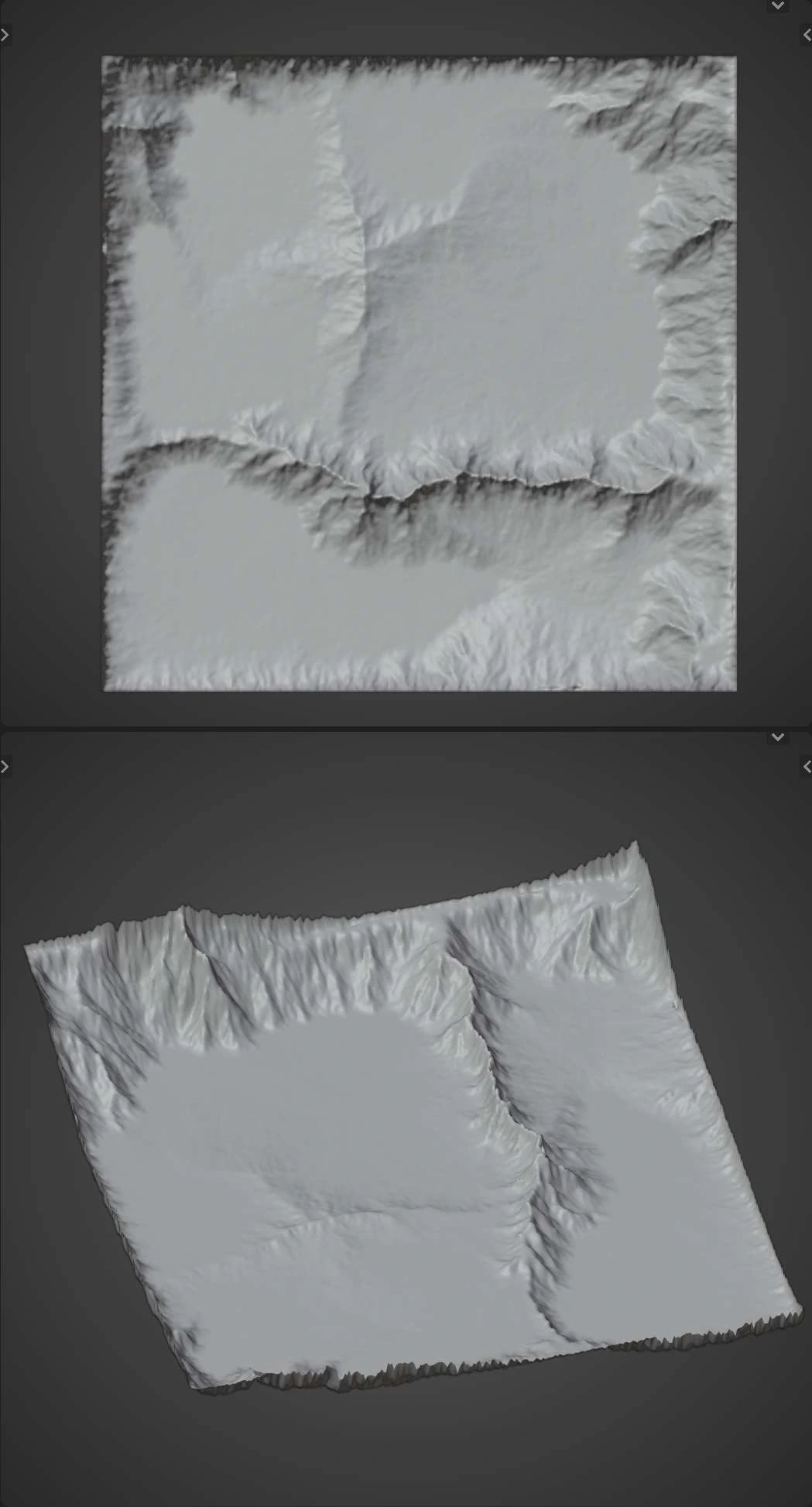
Initial Water Volume
Initial size of each droplet
Initial Speed
Initial speed of each droplet
Example
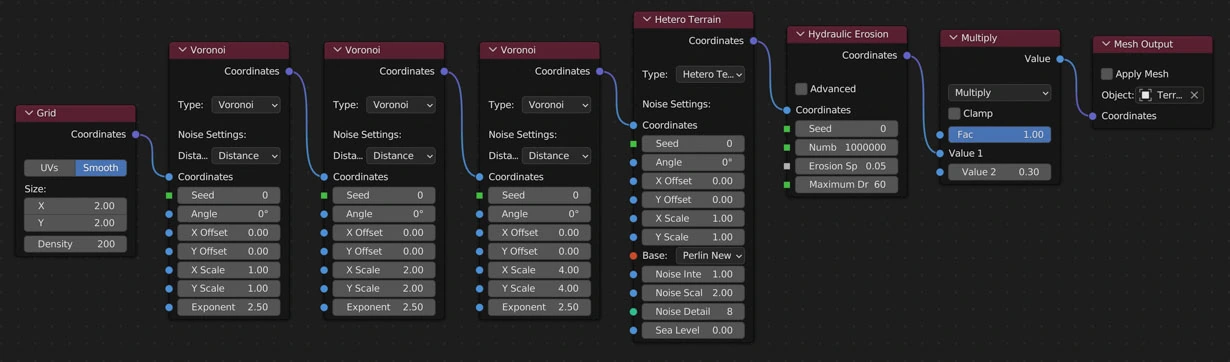
Node Layout
| Base Geometry | After Erosion |
|---|---|
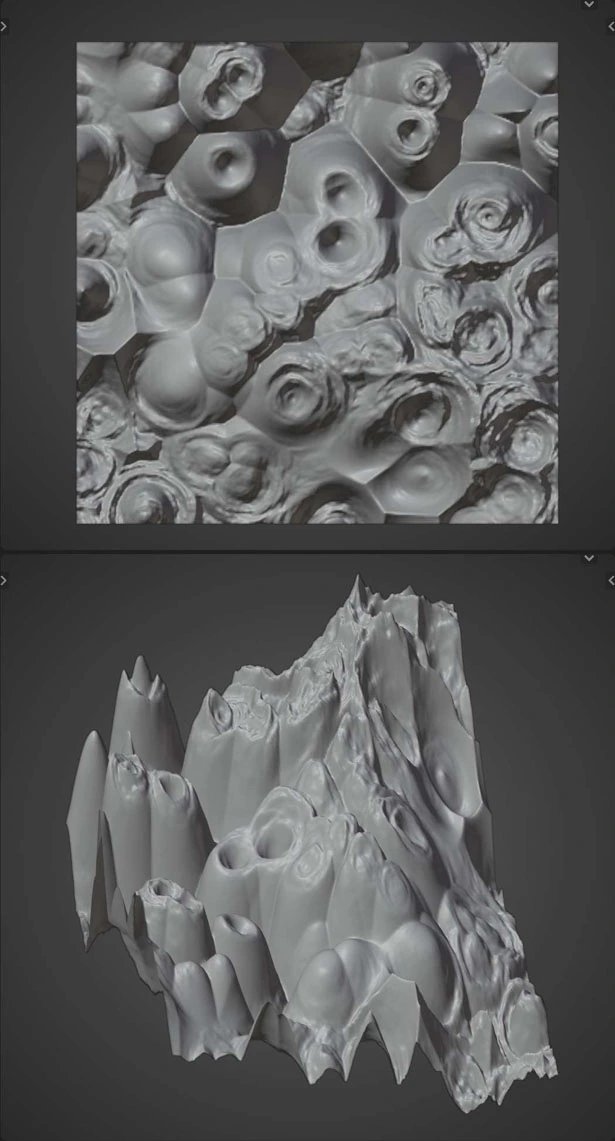 |
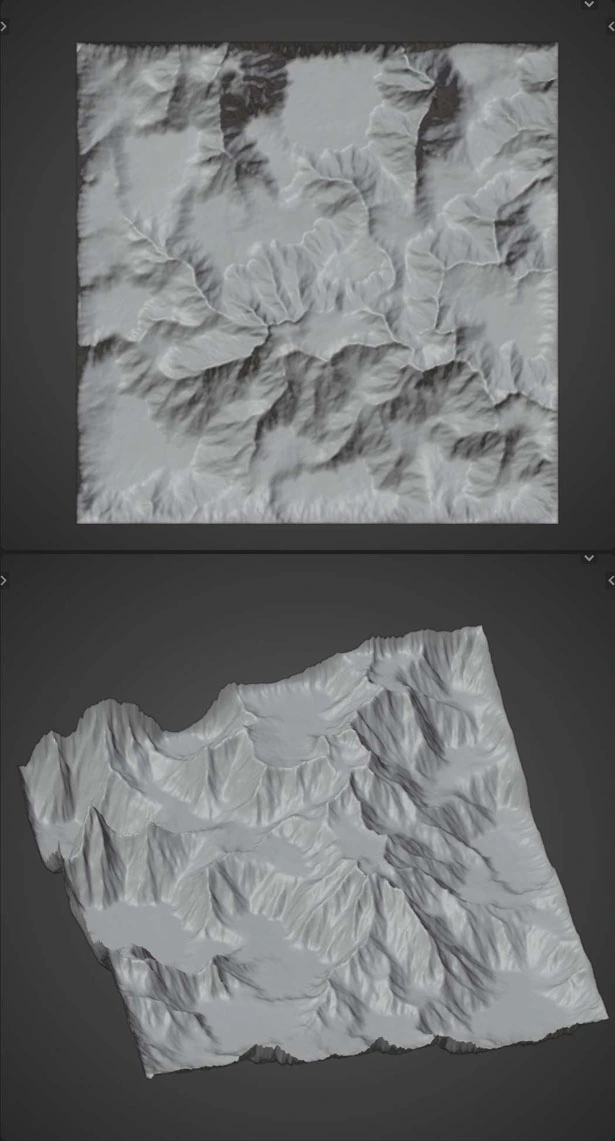 |
Understanding Erosion Settings
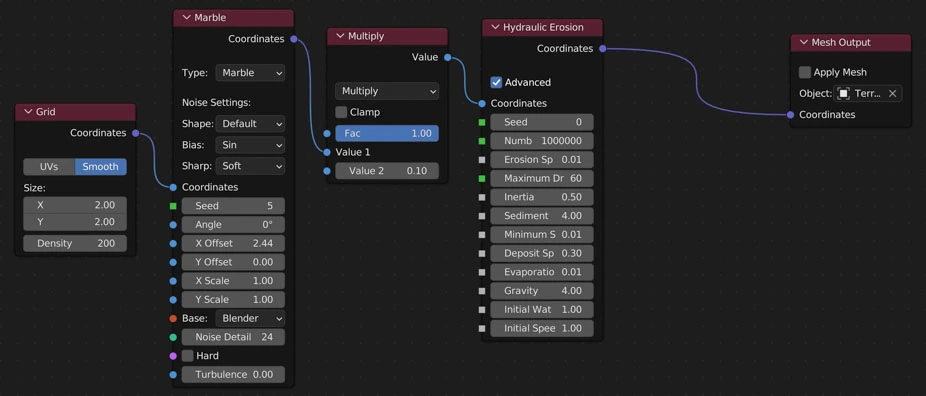
Node Setup
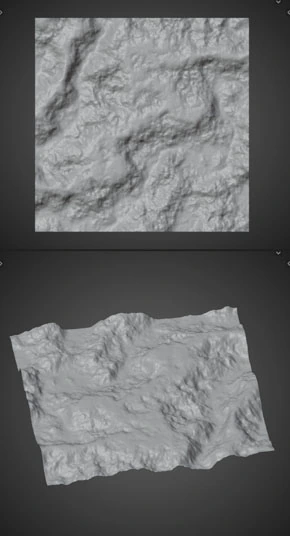
Base Geometry before Erosion
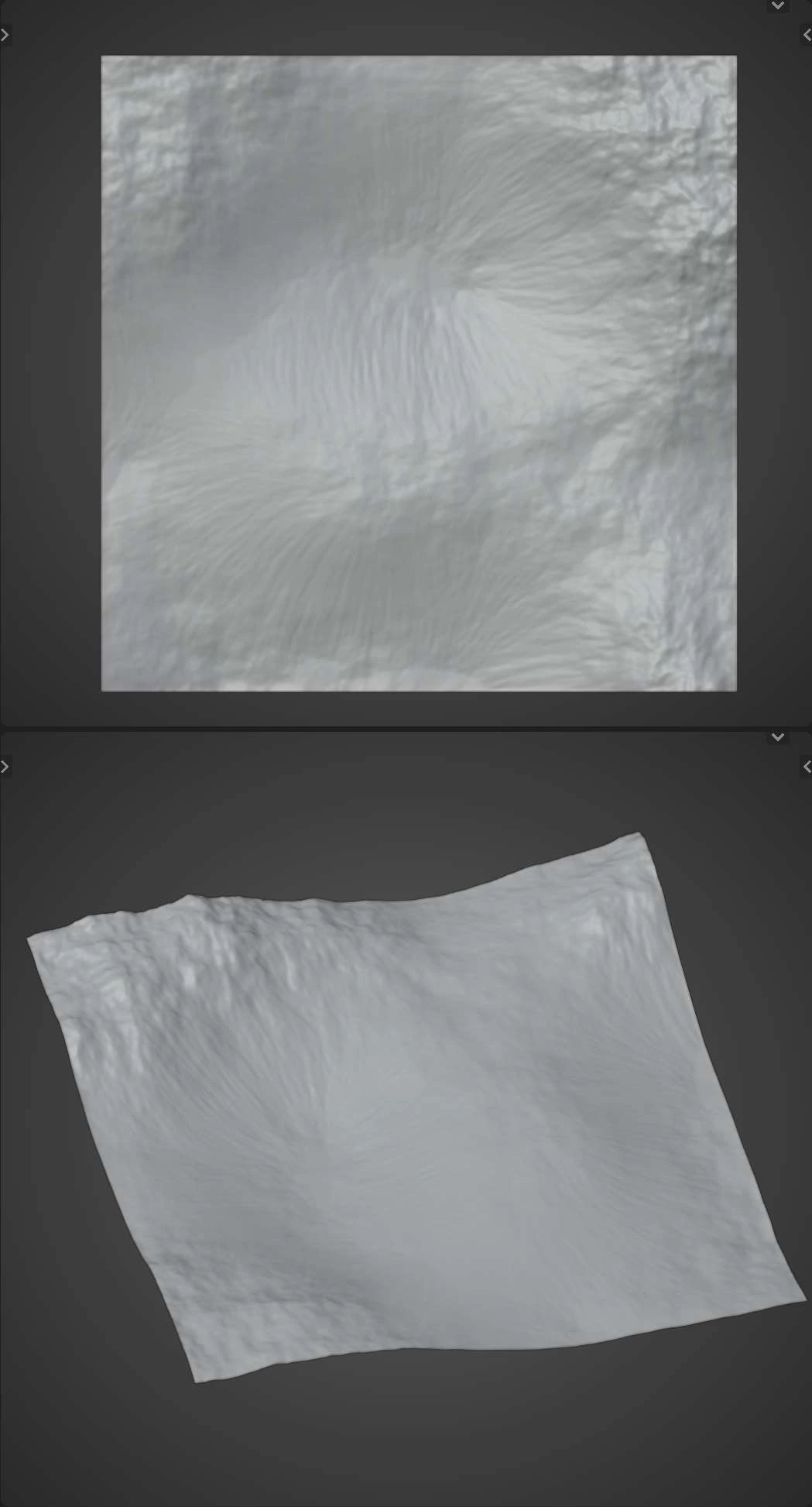
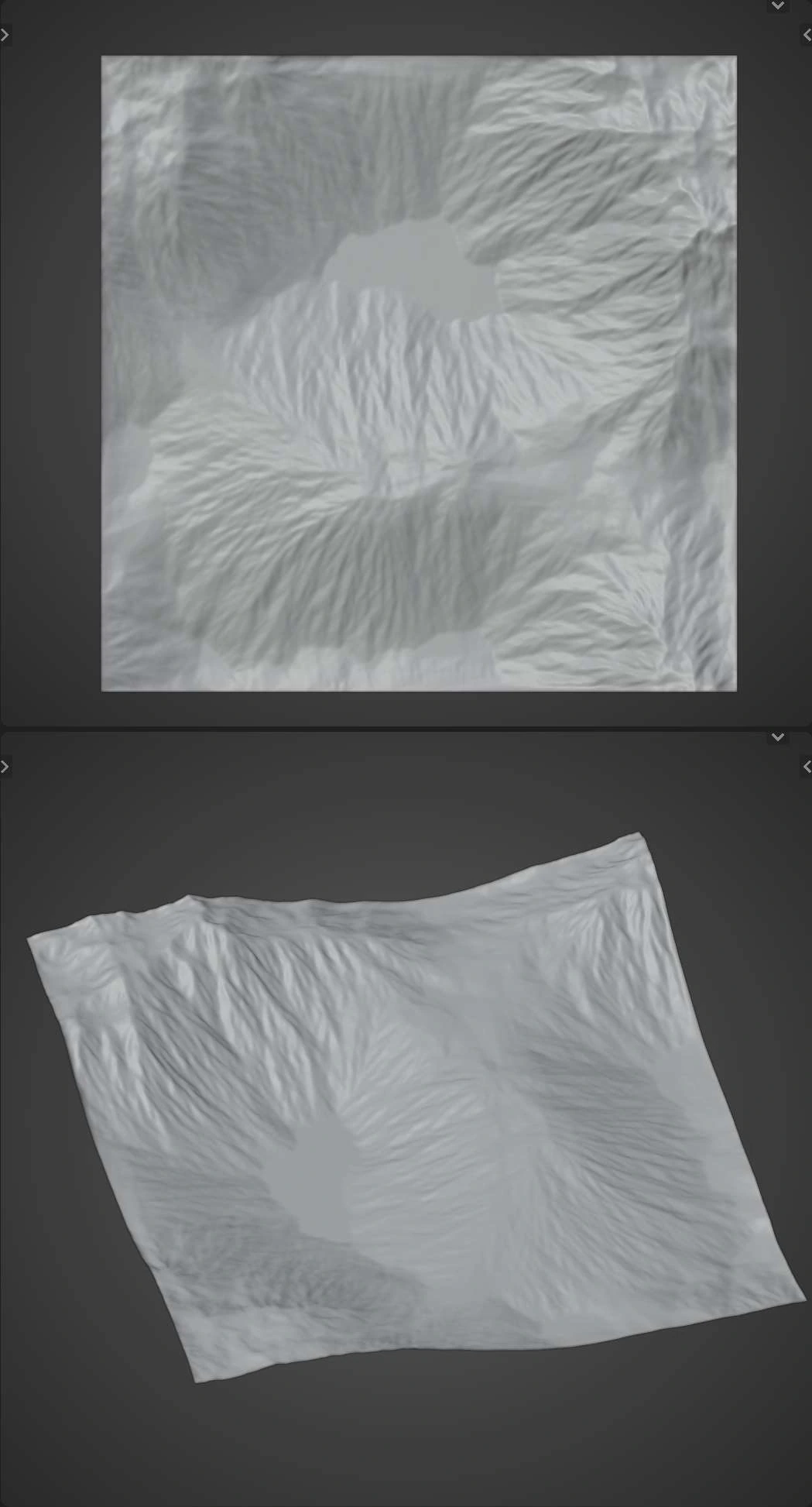
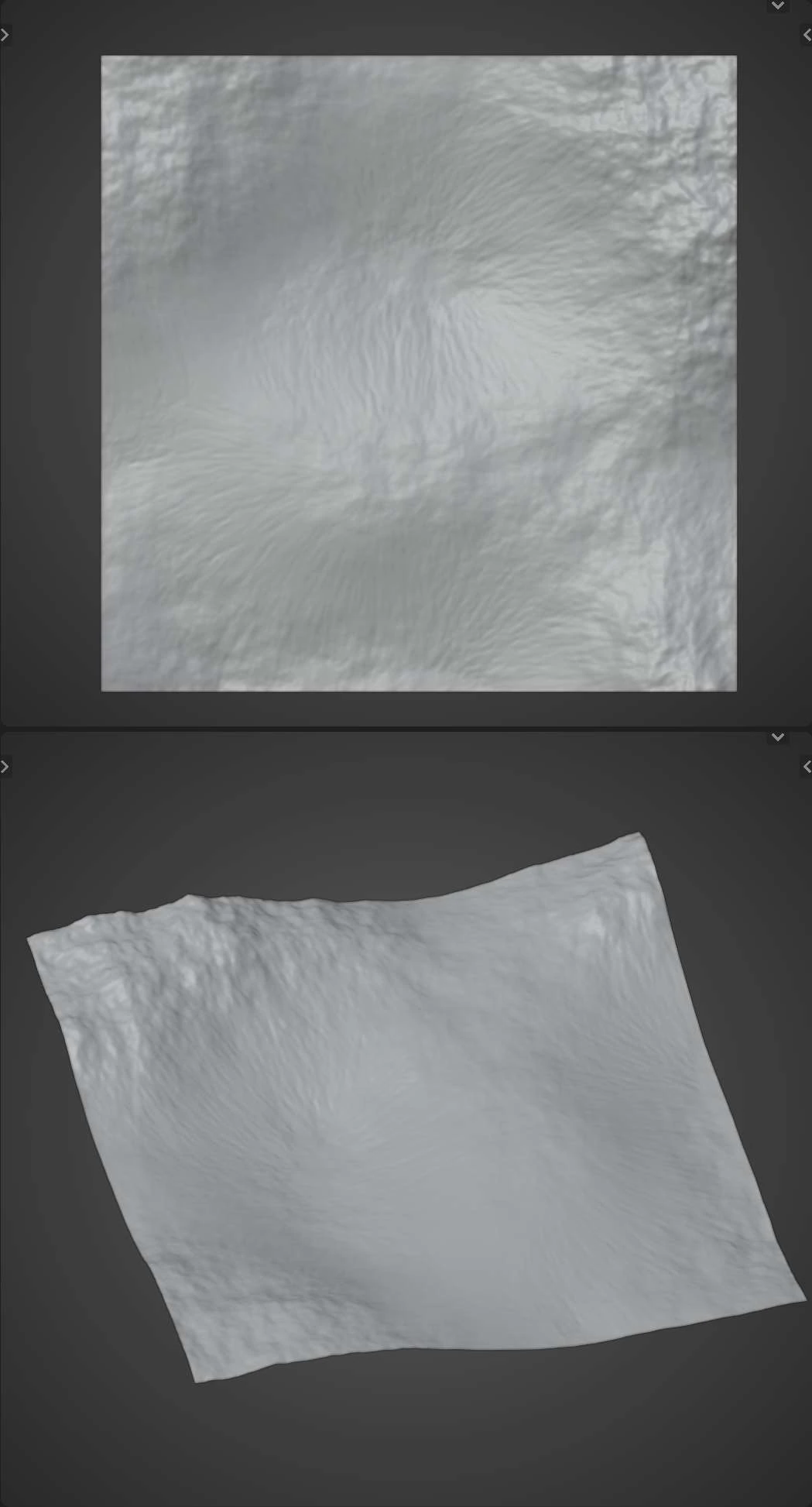
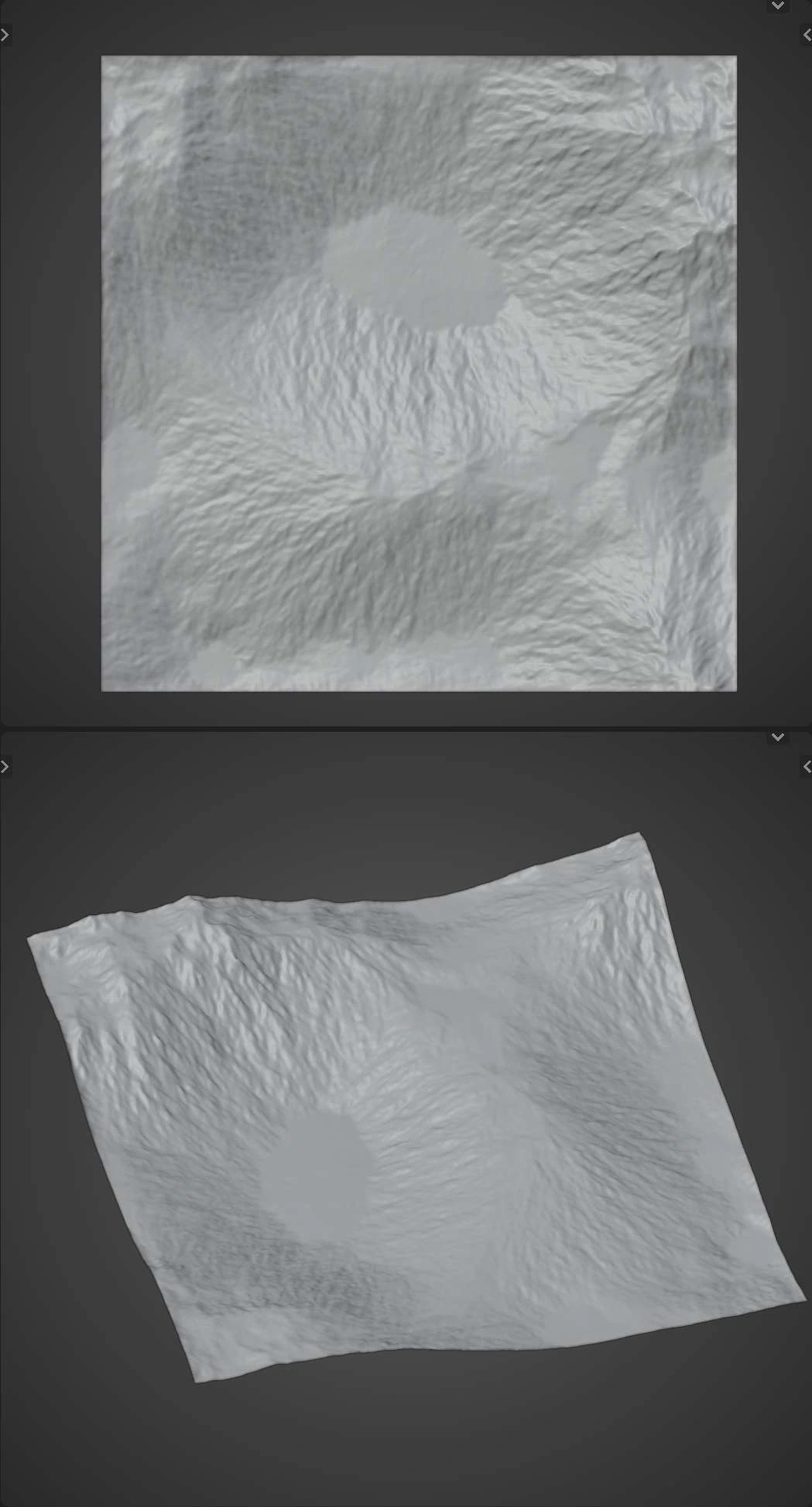
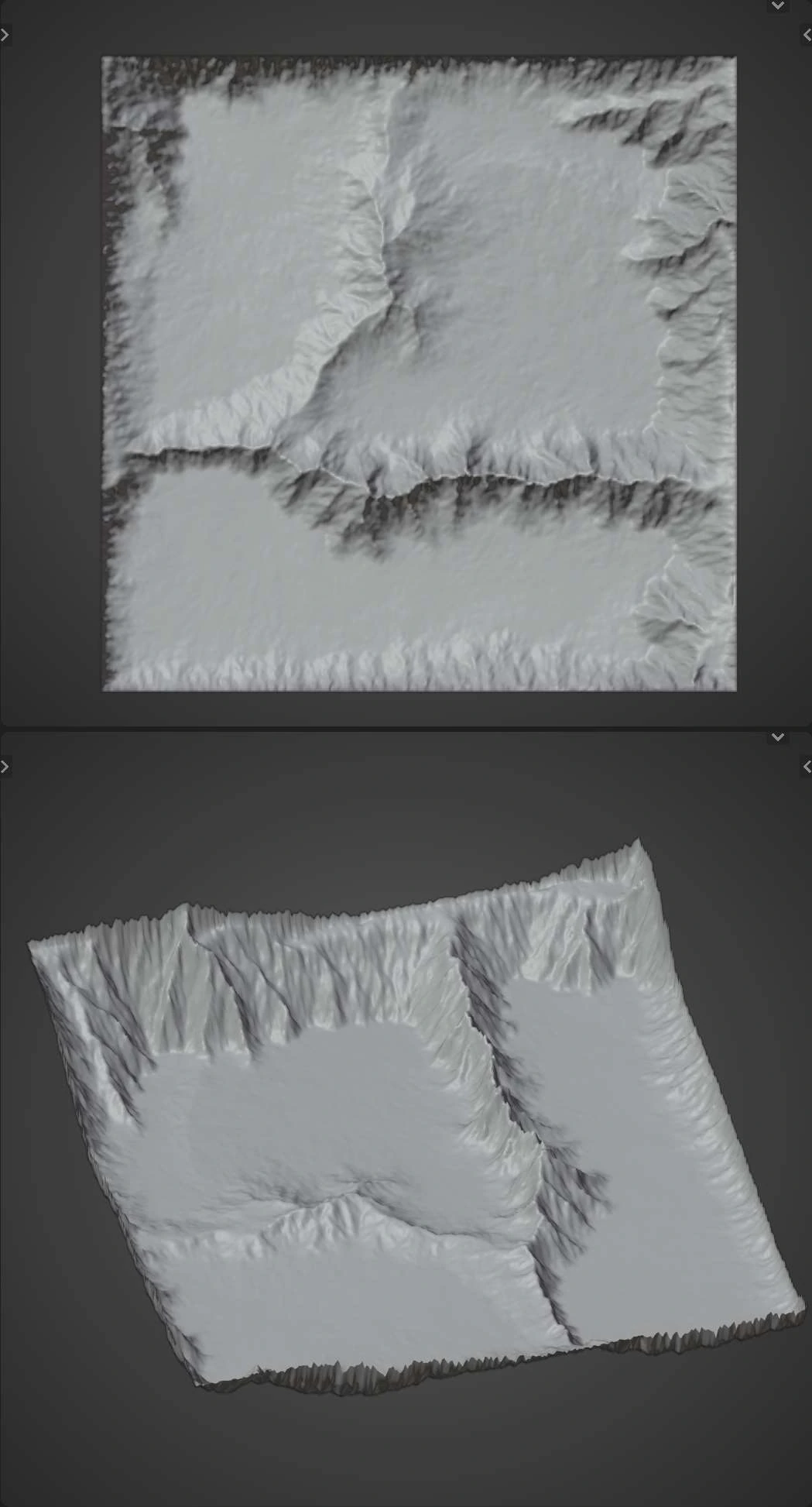
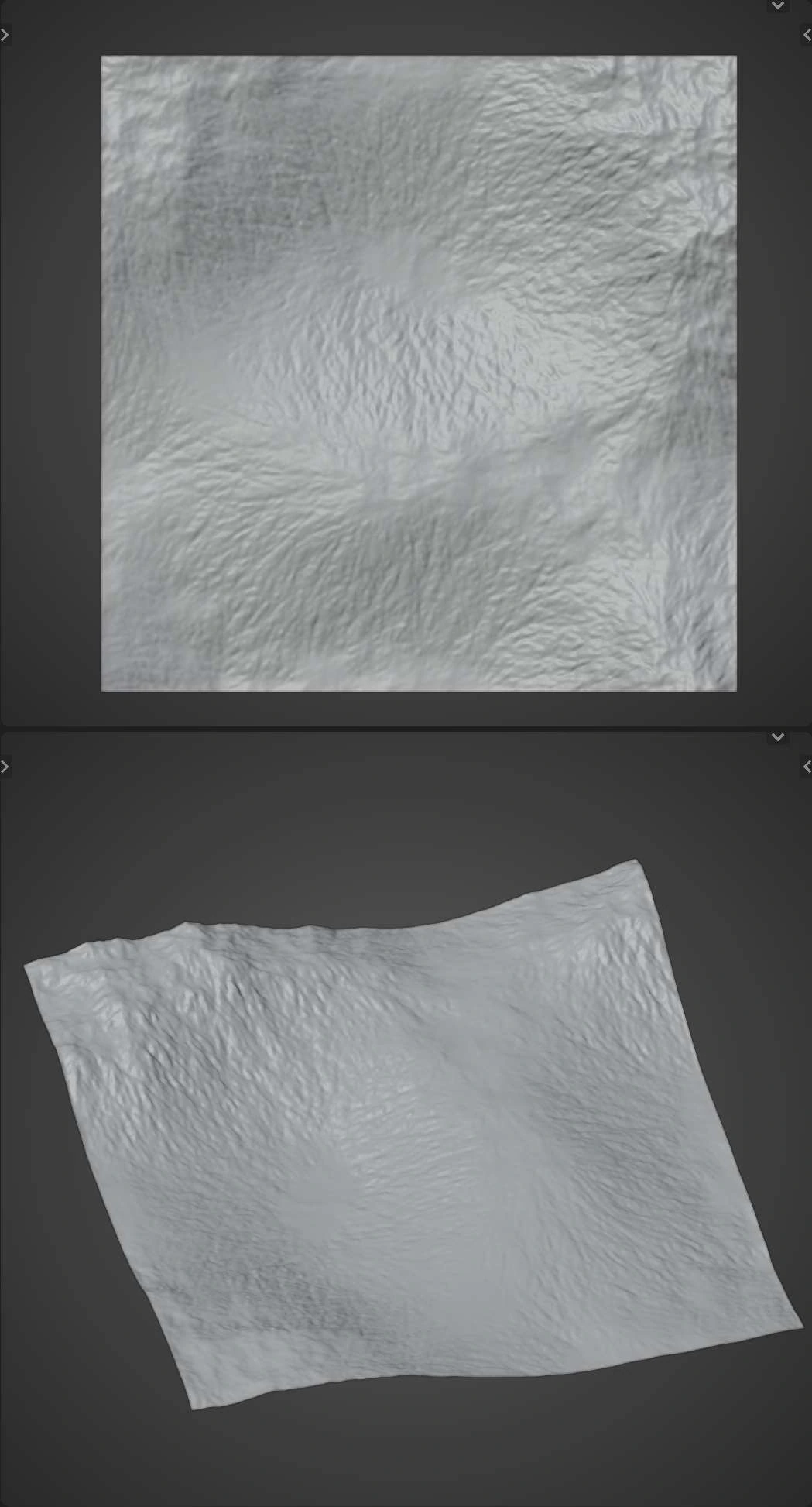
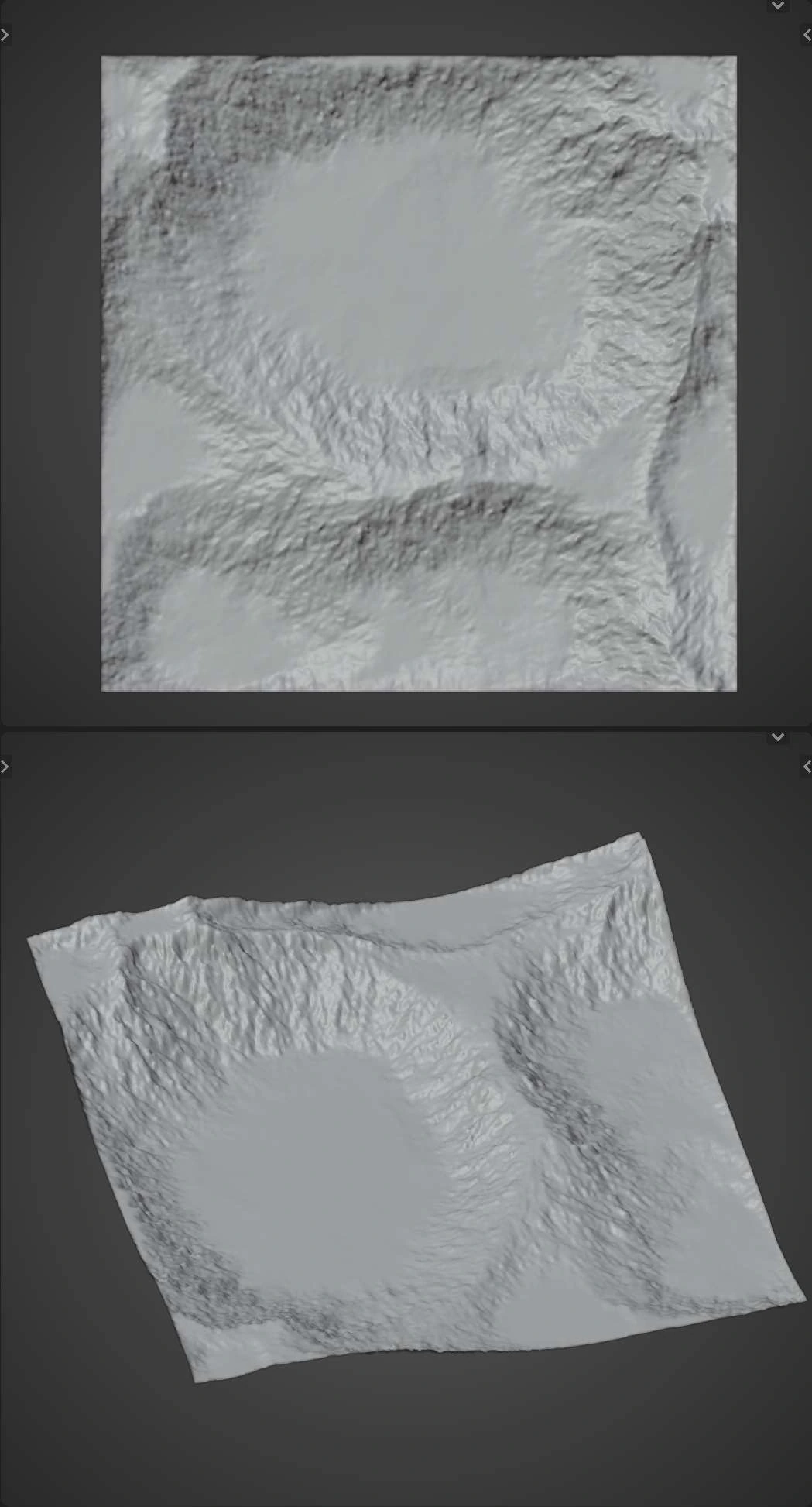
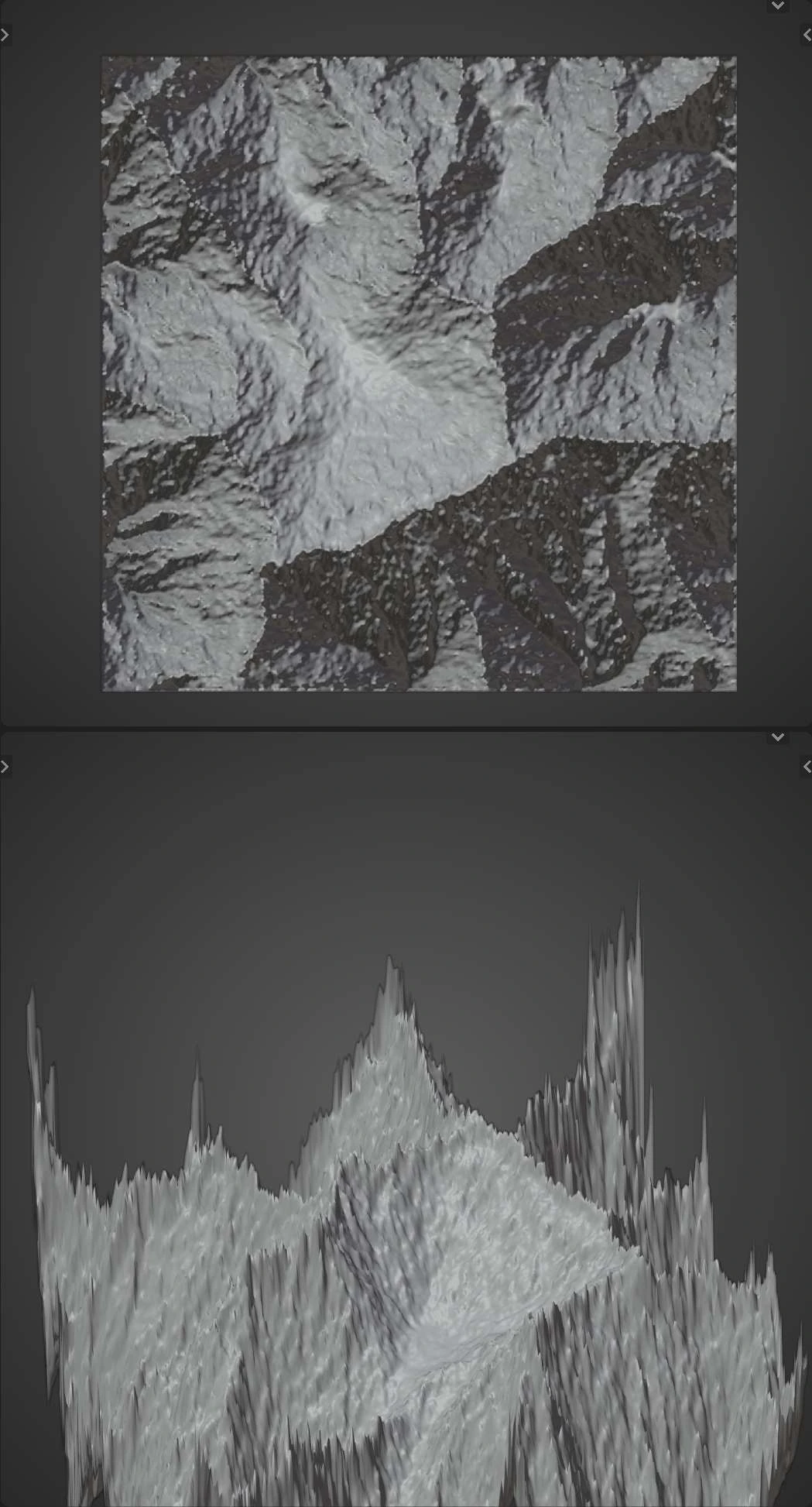
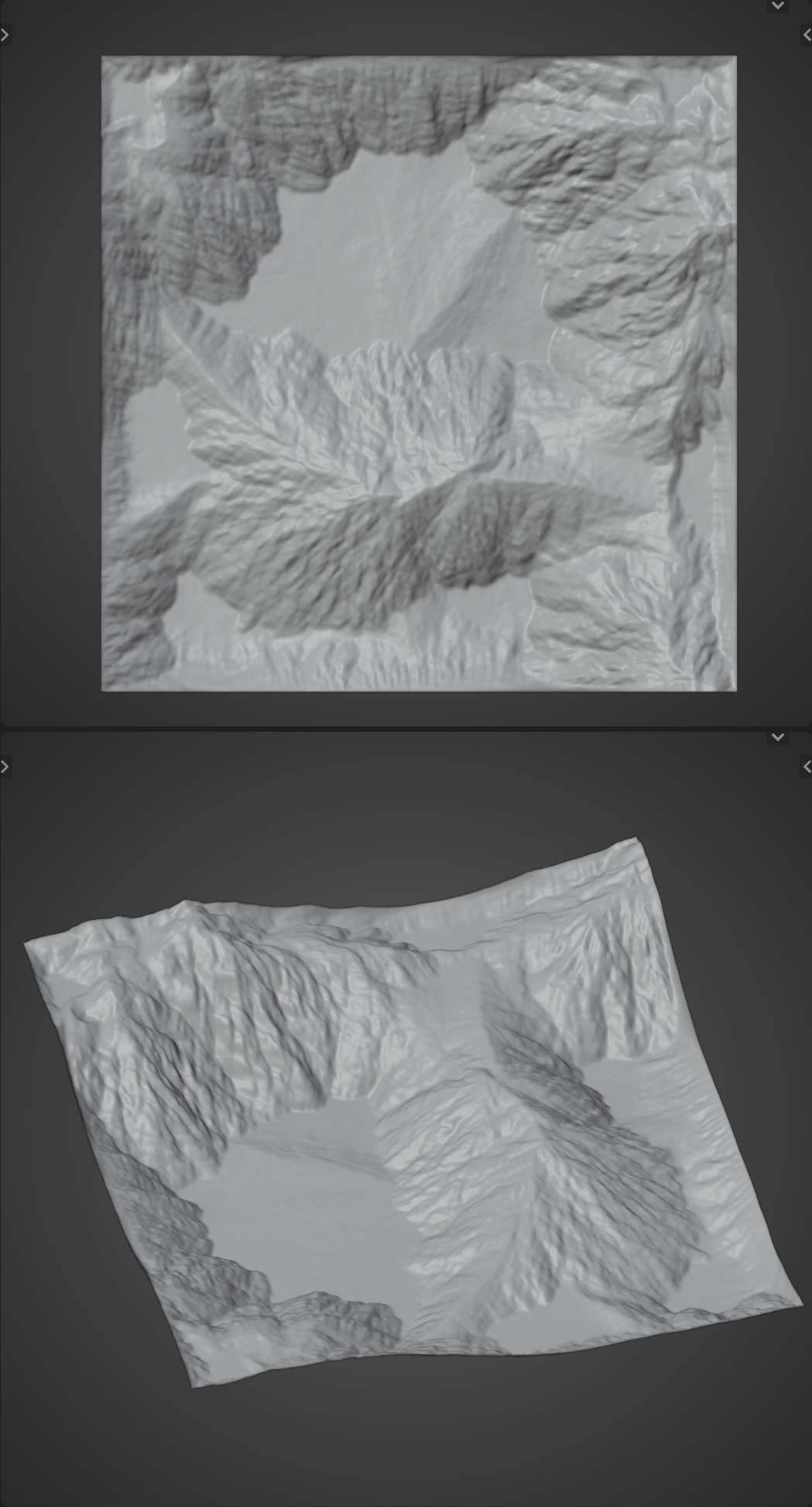
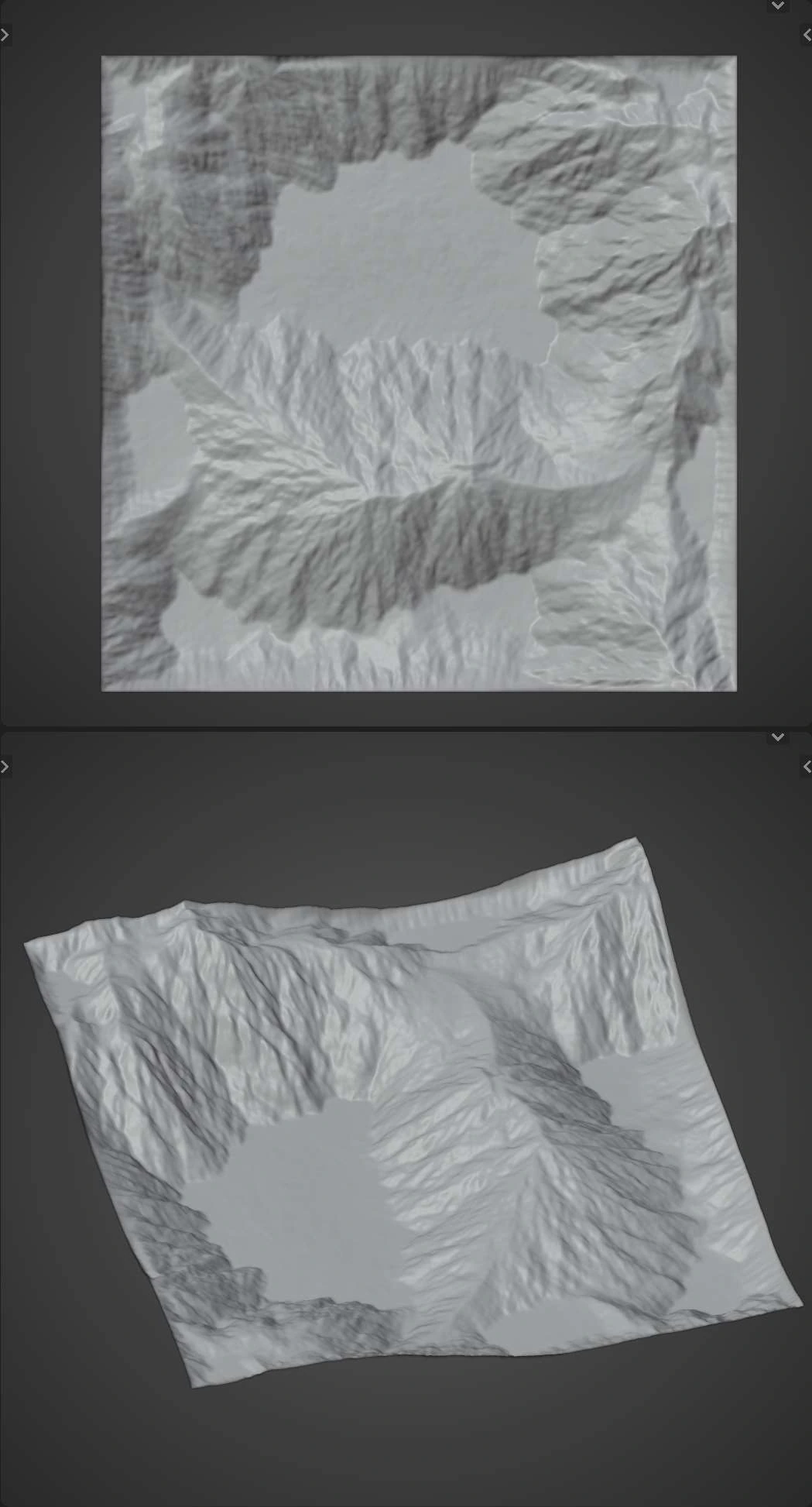
Erosion Speed vs Number of Drops
Default Settings used unless otherwise stated
| Default Setting | Value |
|---|---|
| Number of Drops | 100,000 |
| Erosion Speed | 0.3 |
| Max Lifetime | 60 |
| Inertia | 0.5 |
| Sediment Capacity Factor | 4 |
| Minimum Sediment Capacity | 0.01 |
| Deposit Speed | 0.3 |
| Evaporation Speed | 0.01 |
| Gravity | 4 |
| Initial Water Volume | 1 |
| Initial Speed | 1 |
Number of Drops
| Erosion Speed | 1,000 Drops | 10,000 Drops | 100,000 Drops | 1,000,000 Drops |
|---|---|---|---|---|
| 0.01 | 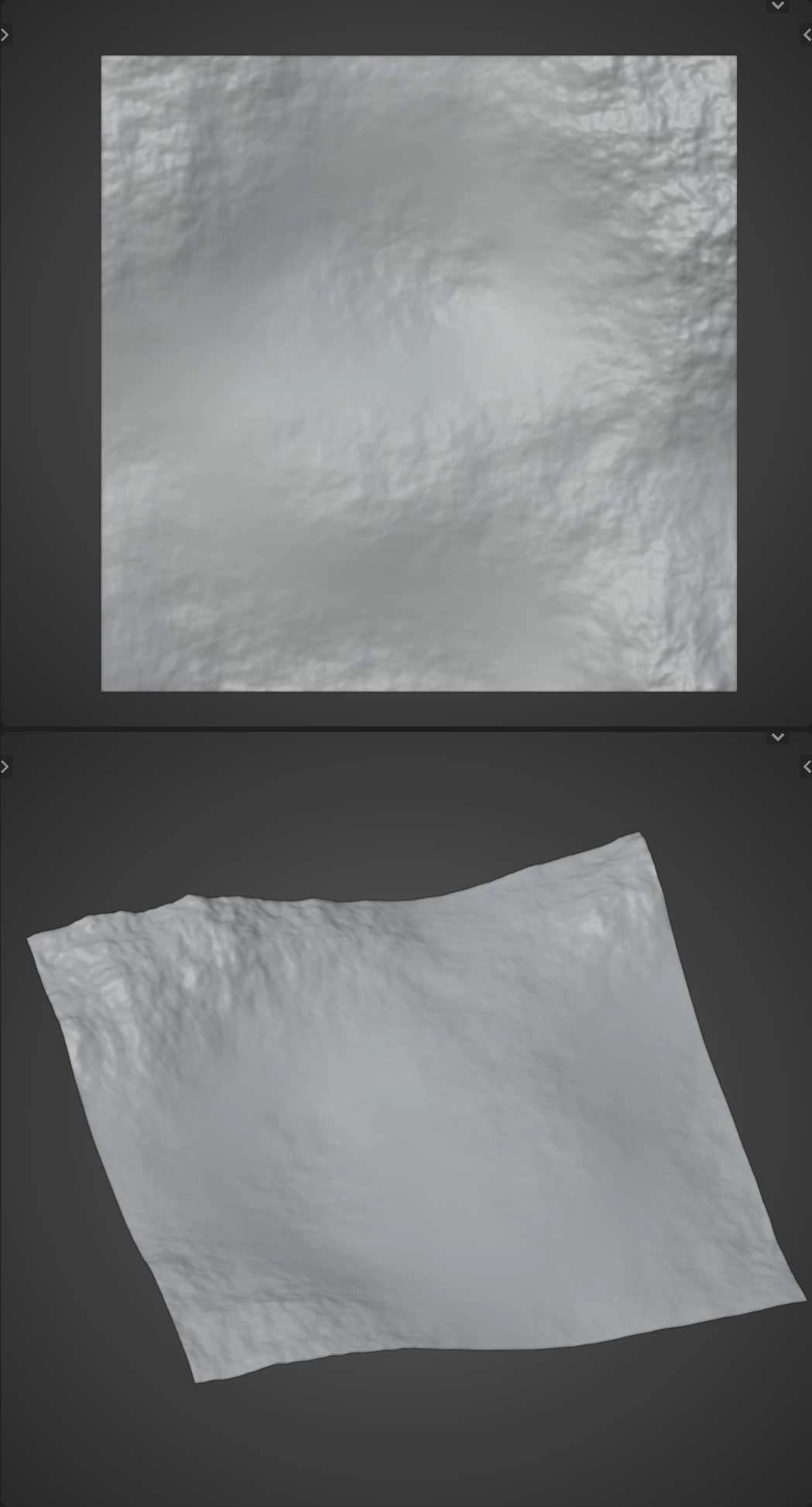 |
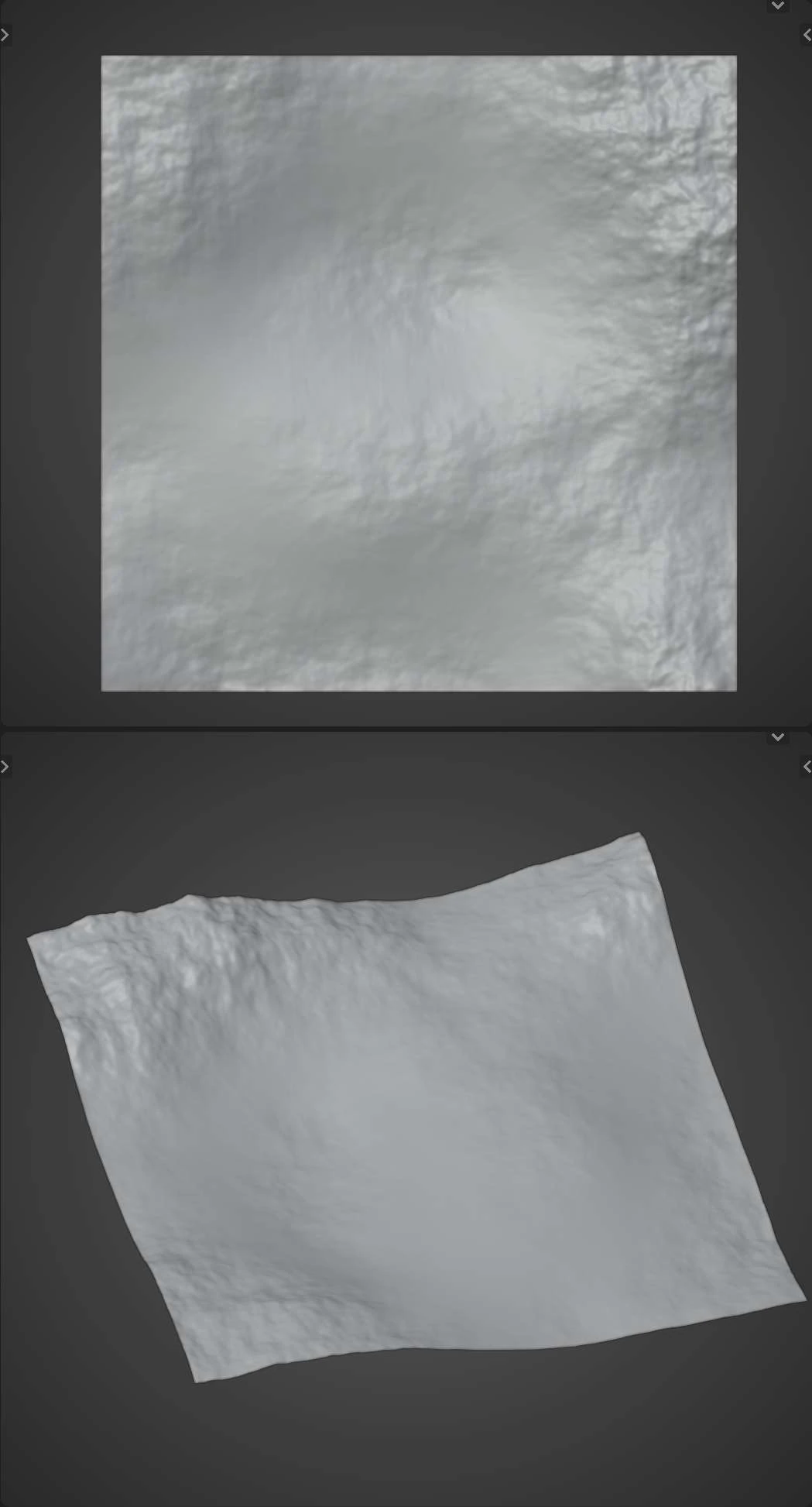 |
 |
 |
| 0.05 | 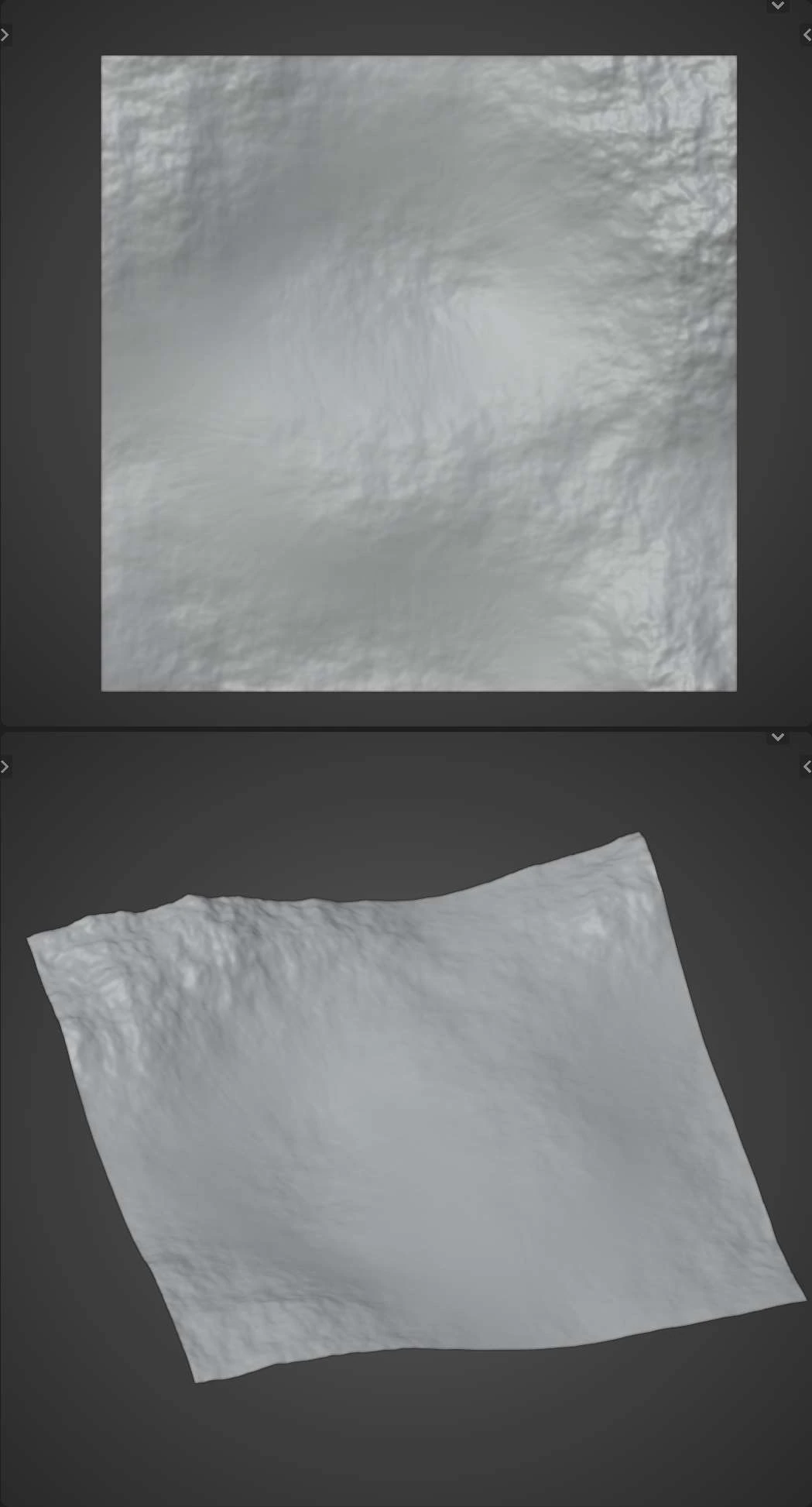 |
 |
 |
 |
| 0.1 | 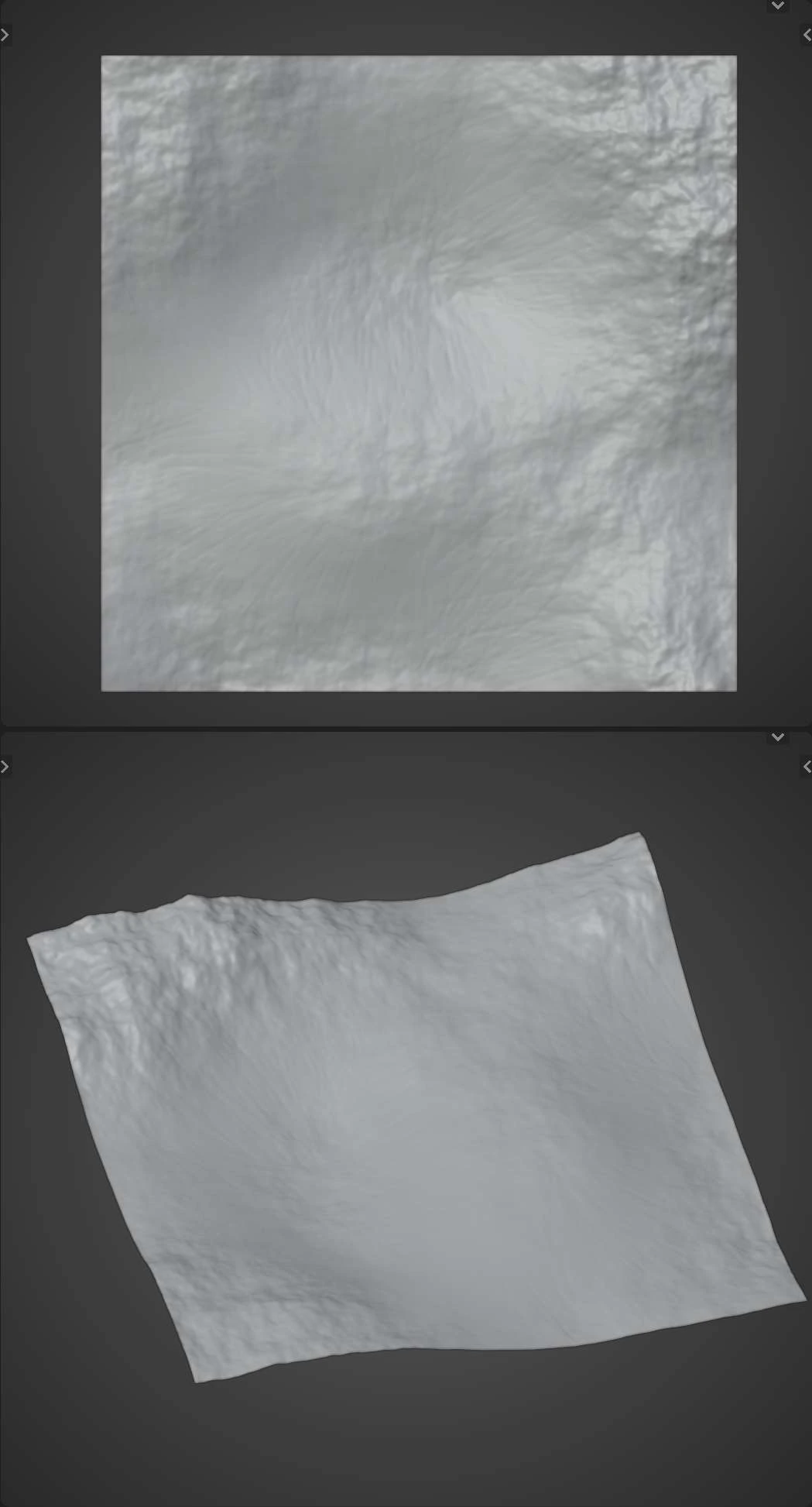 |
 |
 |
 |
| 0.3 | 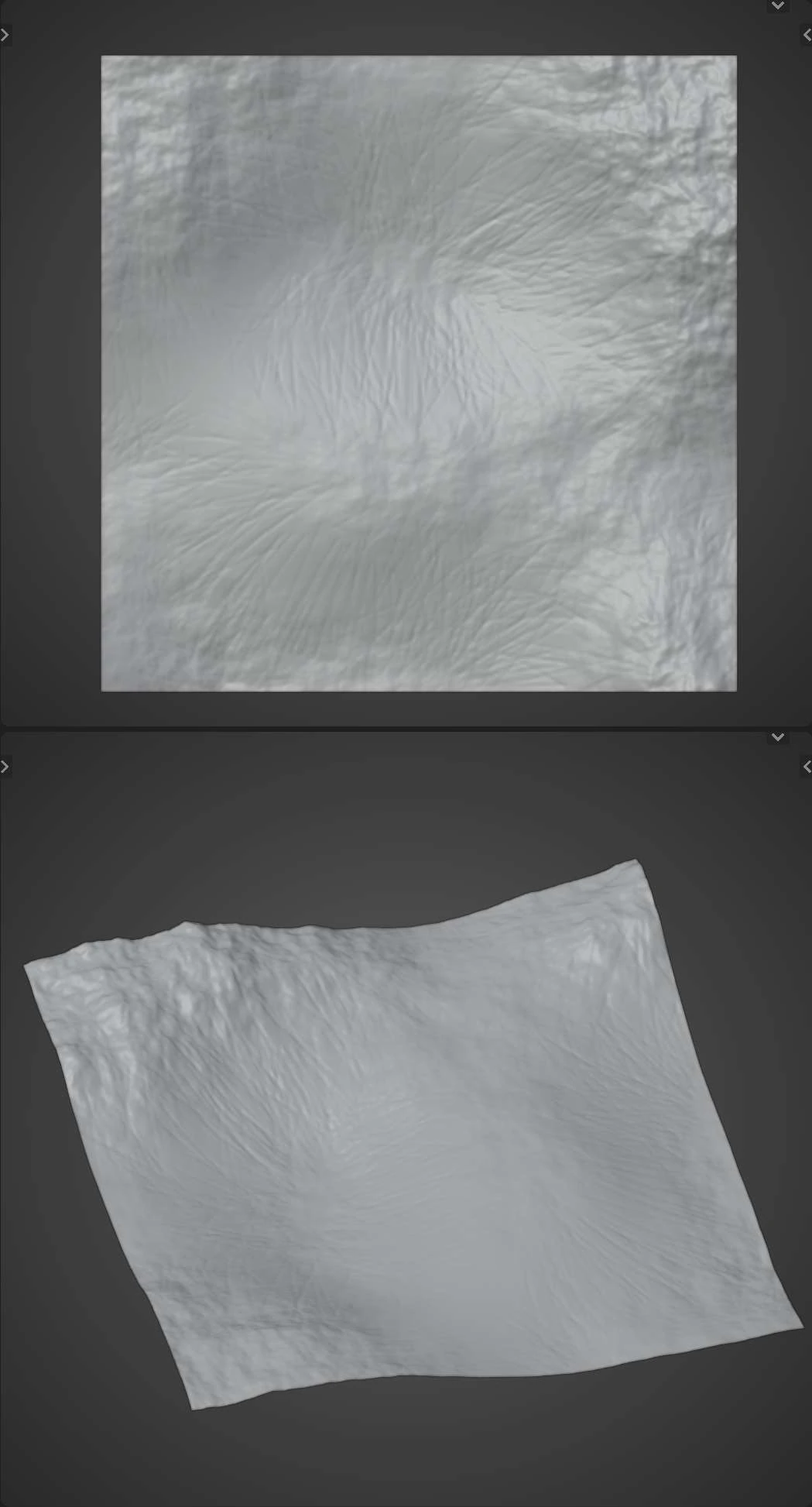 |
 |
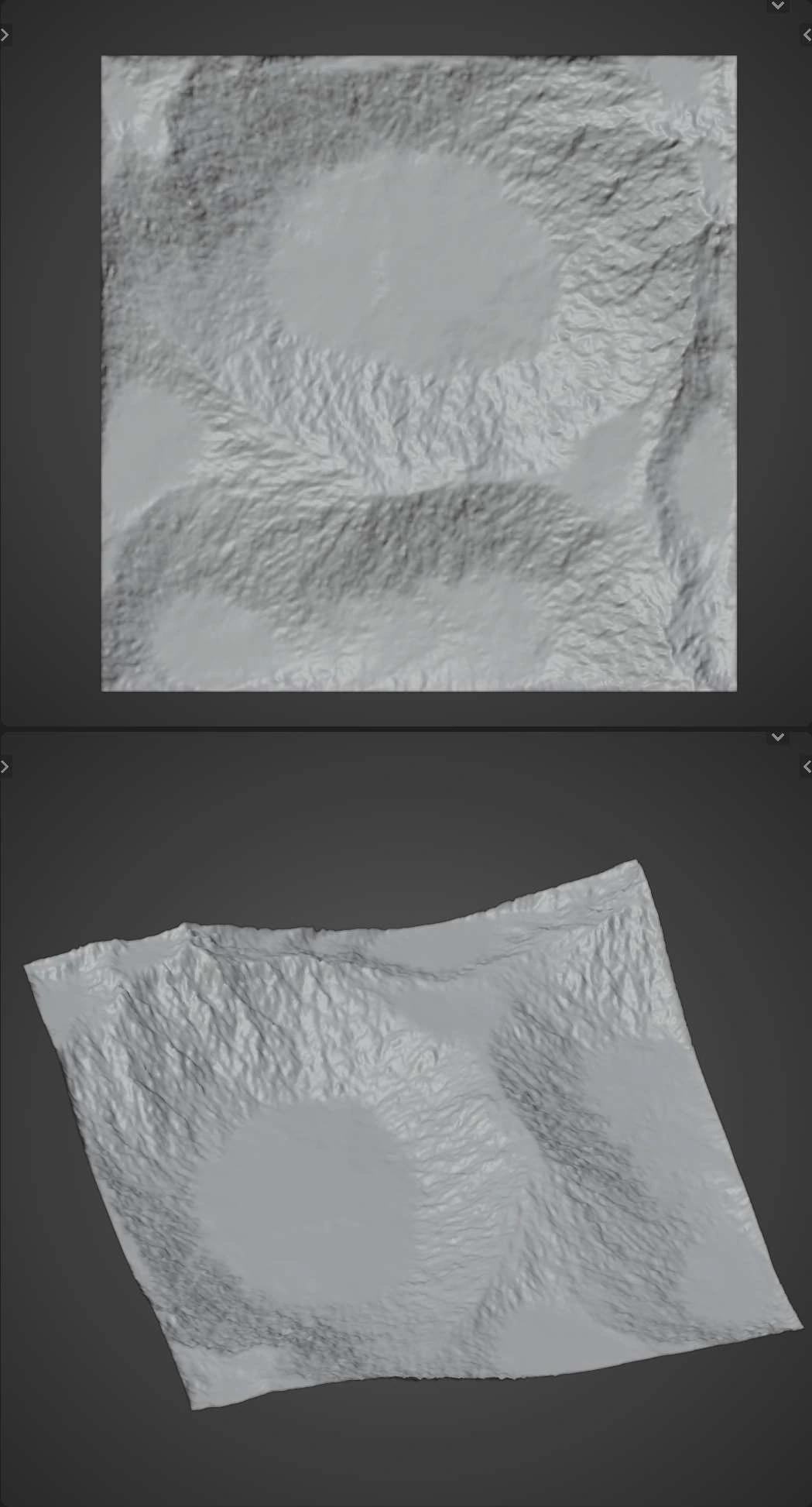 |
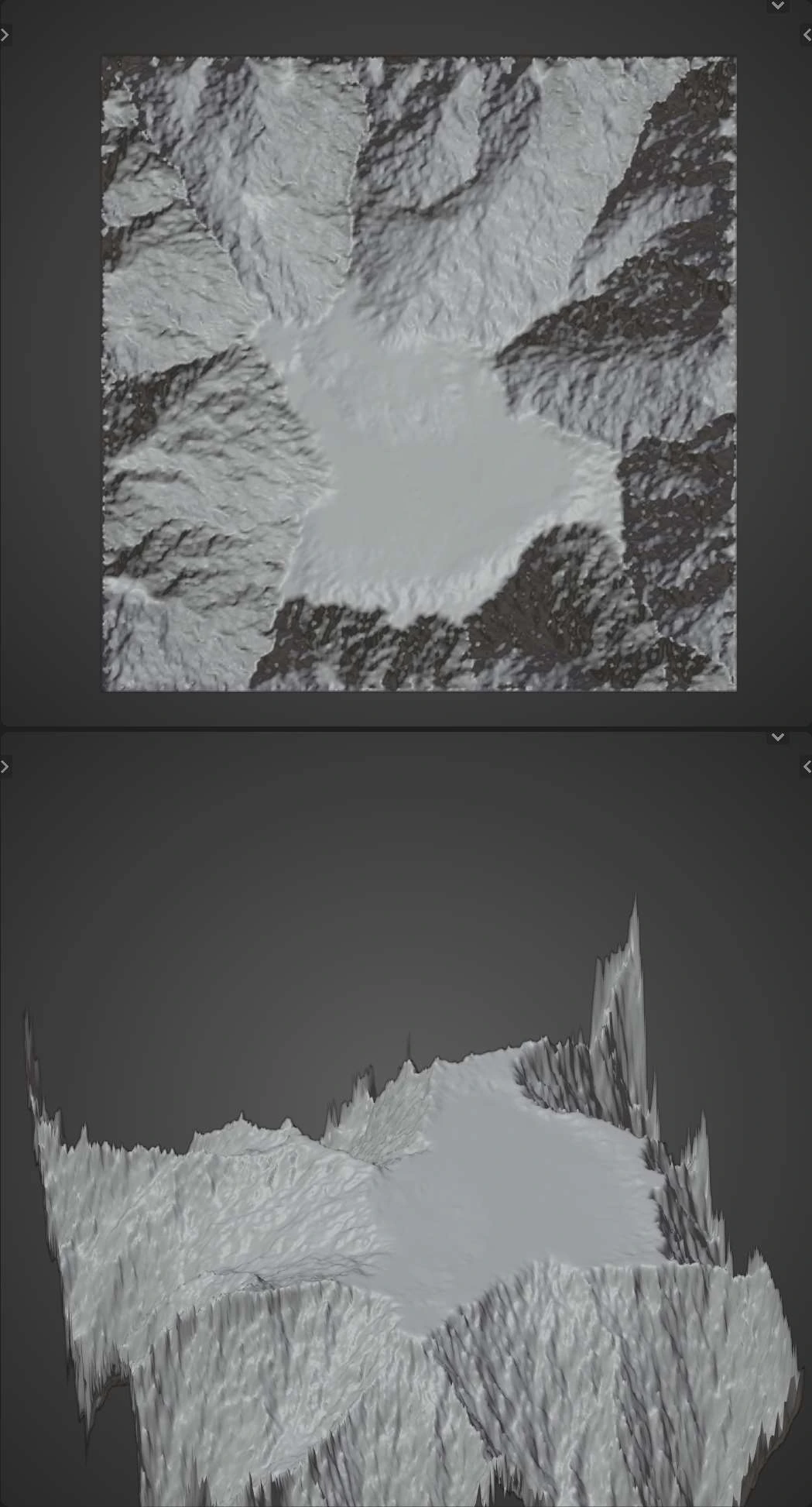 |
| 0.5 | 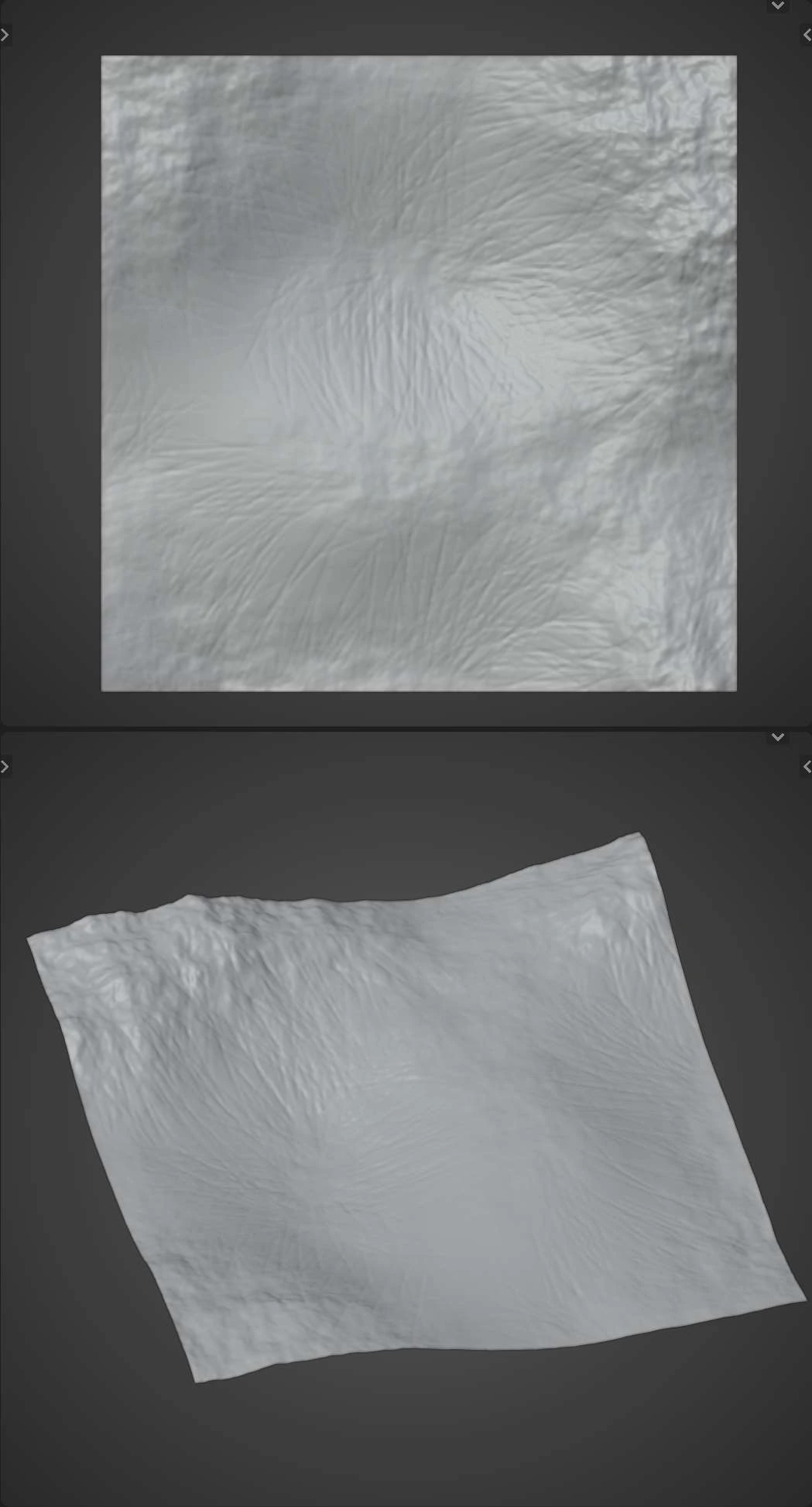 |
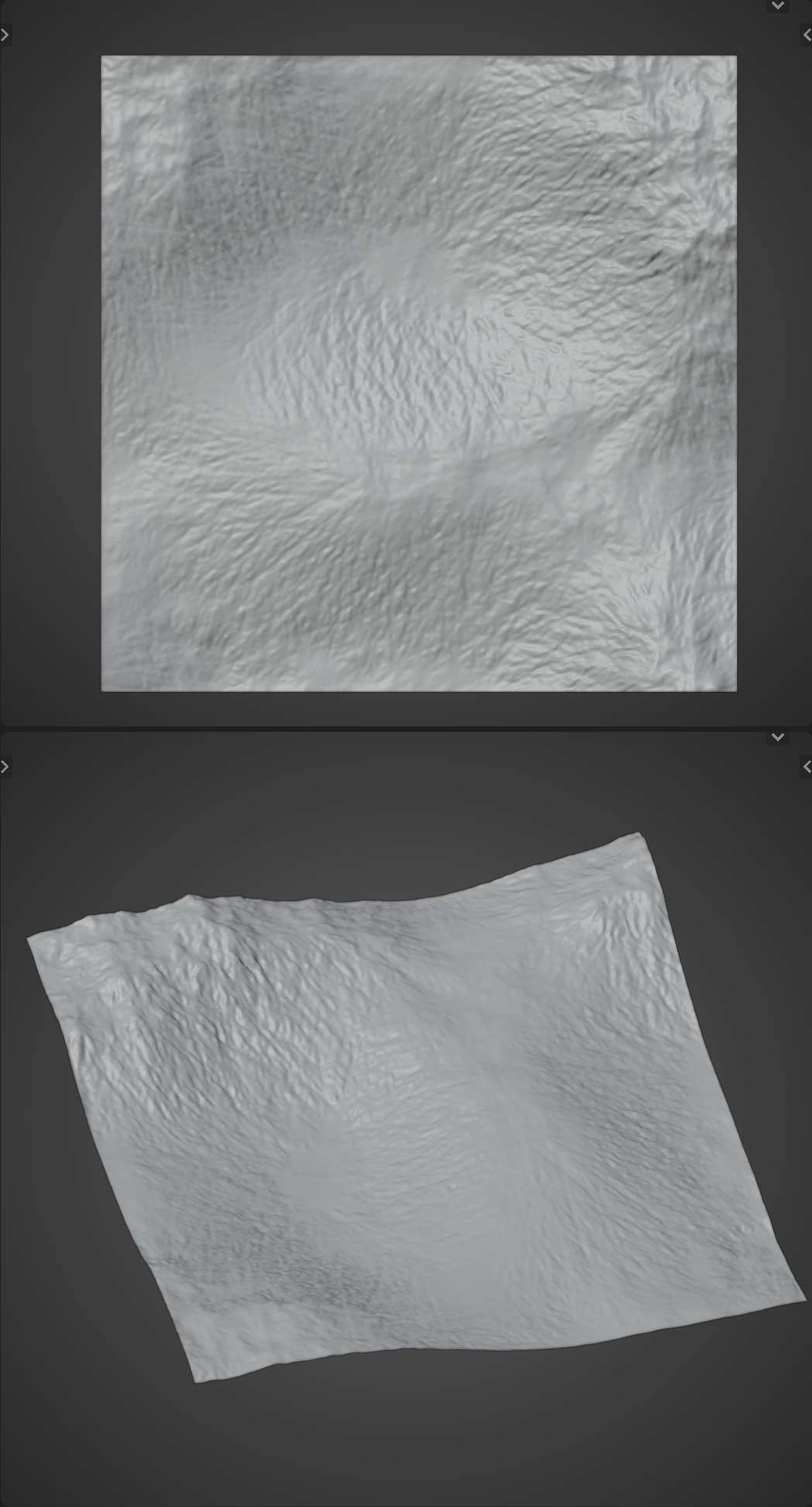 |
 |
 |
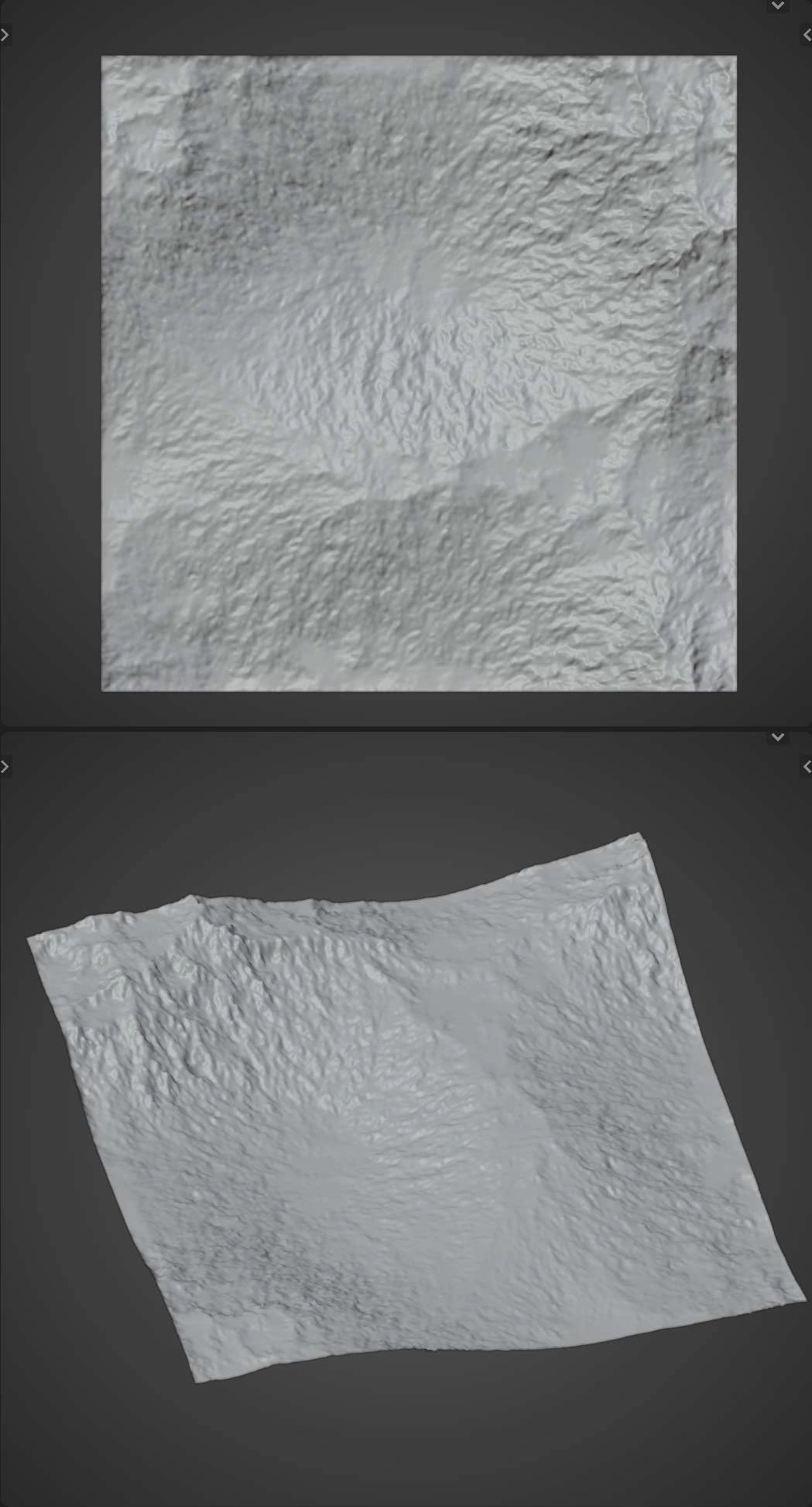
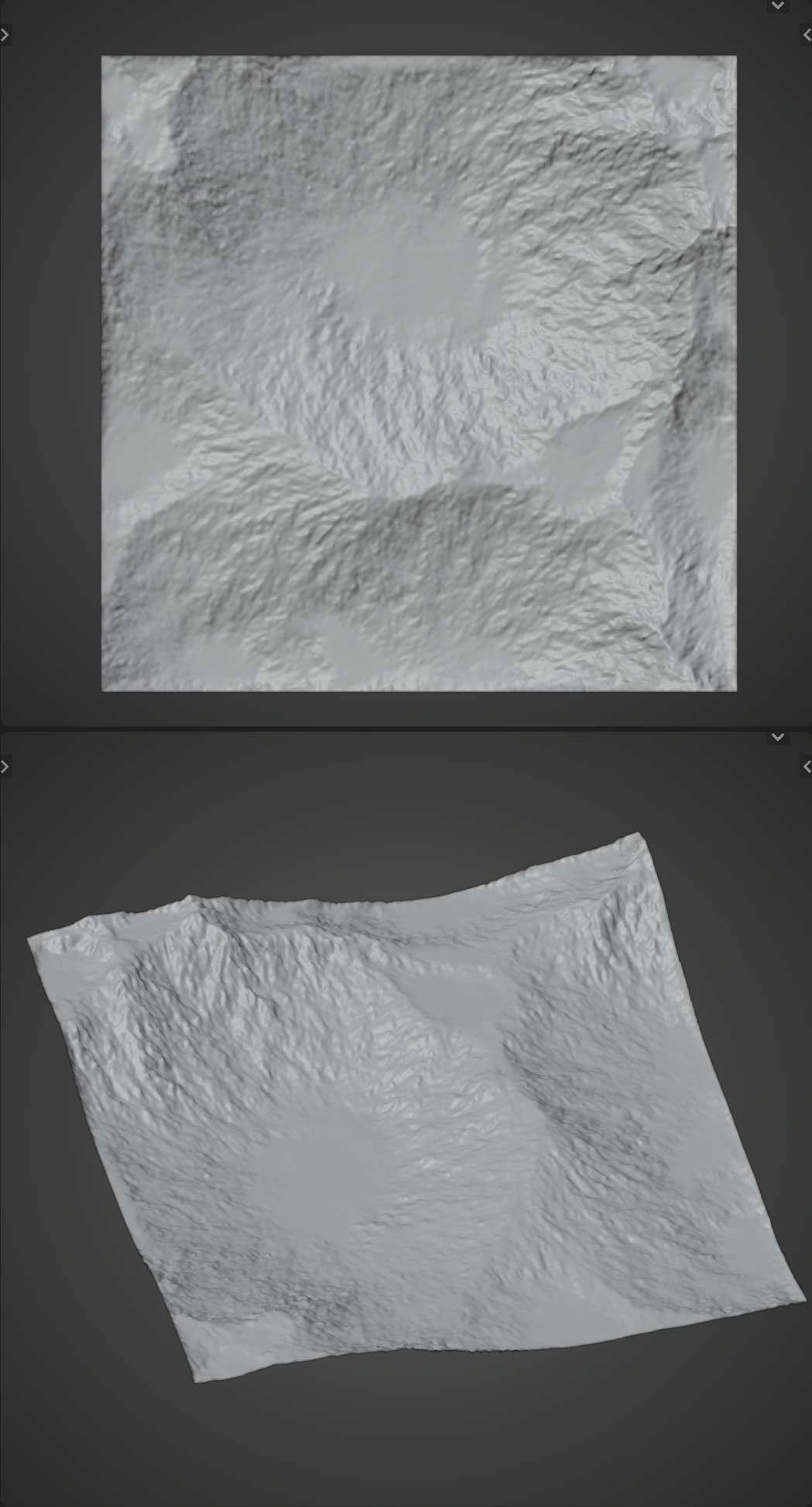
Lifetime
| 10 | 30 | 60 | 200 | 1000 |
|---|---|---|---|---|
 |
 |
 |
 |
 |
Inertia
| 0.0 | 0.15 | 0.3 | 0.5 | 0.75 | 0.99 |
|---|---|---|---|---|---|
 |
 |
 |
 |
 |
 |
Sediment Capacity Factor
| 0 | 2 | 4 | 6 | 8 |
|---|---|---|---|---|
 |
 |
|
 |
 |
Minimum Sediment Capacity
| 0 | 0.01 | 0.02 | 0.03 | 0.05 | 0.1 |
|---|---|---|---|---|---|
 |
|
 |
 |
 |
 |
Deposit Speed
| 0 | 0.01 | 0.1 | 0.3 | 0.6 | 1 |
|---|---|---|---|---|---|
 |
 |
 |
|
 |
 |
Evaporation Speed
| 0 | 0.01 | 0.1 | 0.2 | 0.5 | 1 |
|---|---|---|---|---|---|
 |
|
 |
 |
 |
|
Gravity
| 0 | 2 | 4 | 6 | 10 | 100 |
|---|---|---|---|---|---|
 |
 |
|
 |
 |
 |
Initial Water Volume
| 0 | 0.5 | 1 | 1.5 | 2 |
|---|---|---|---|---|
 |
 |
|
 |
 |
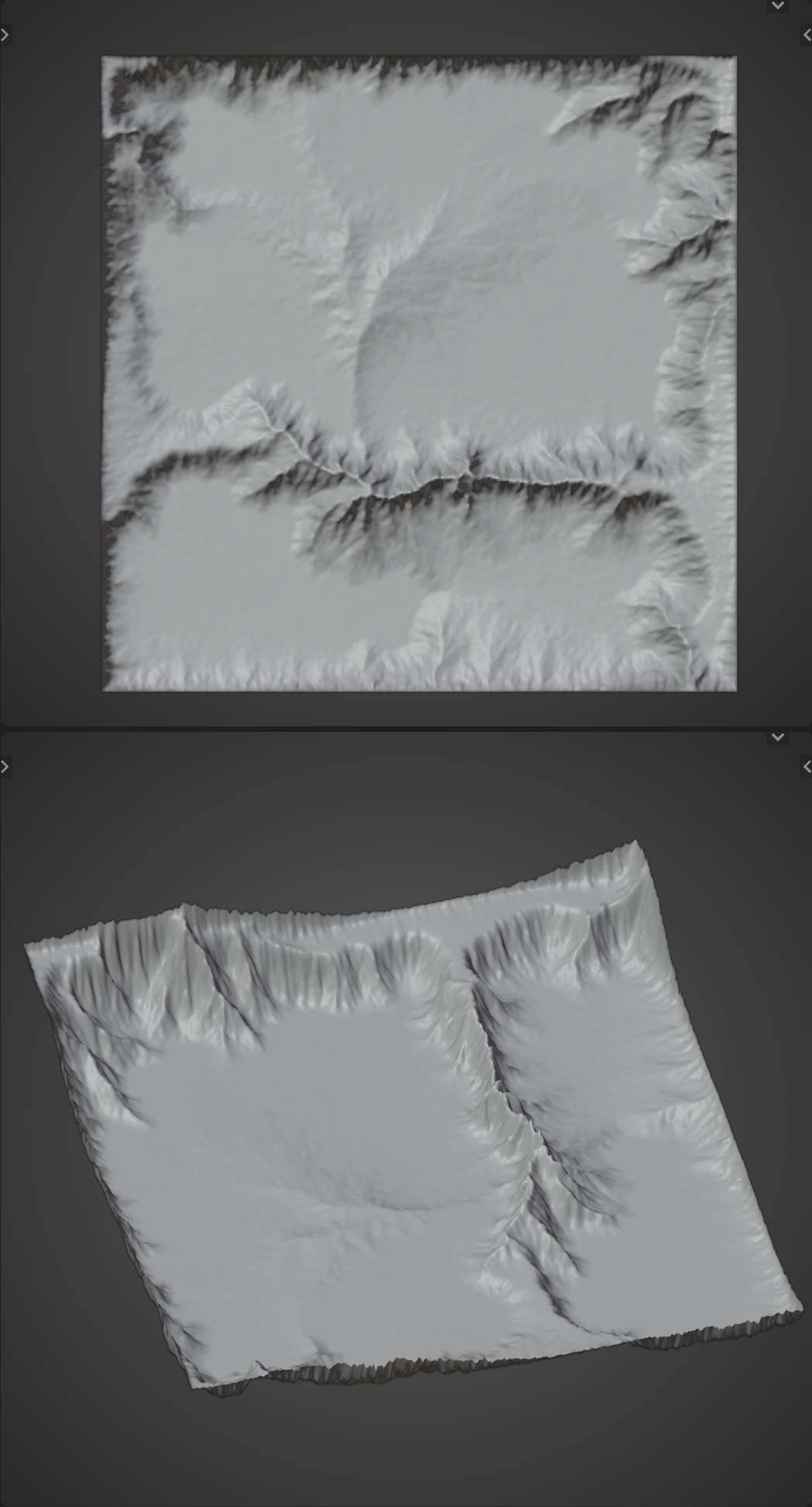
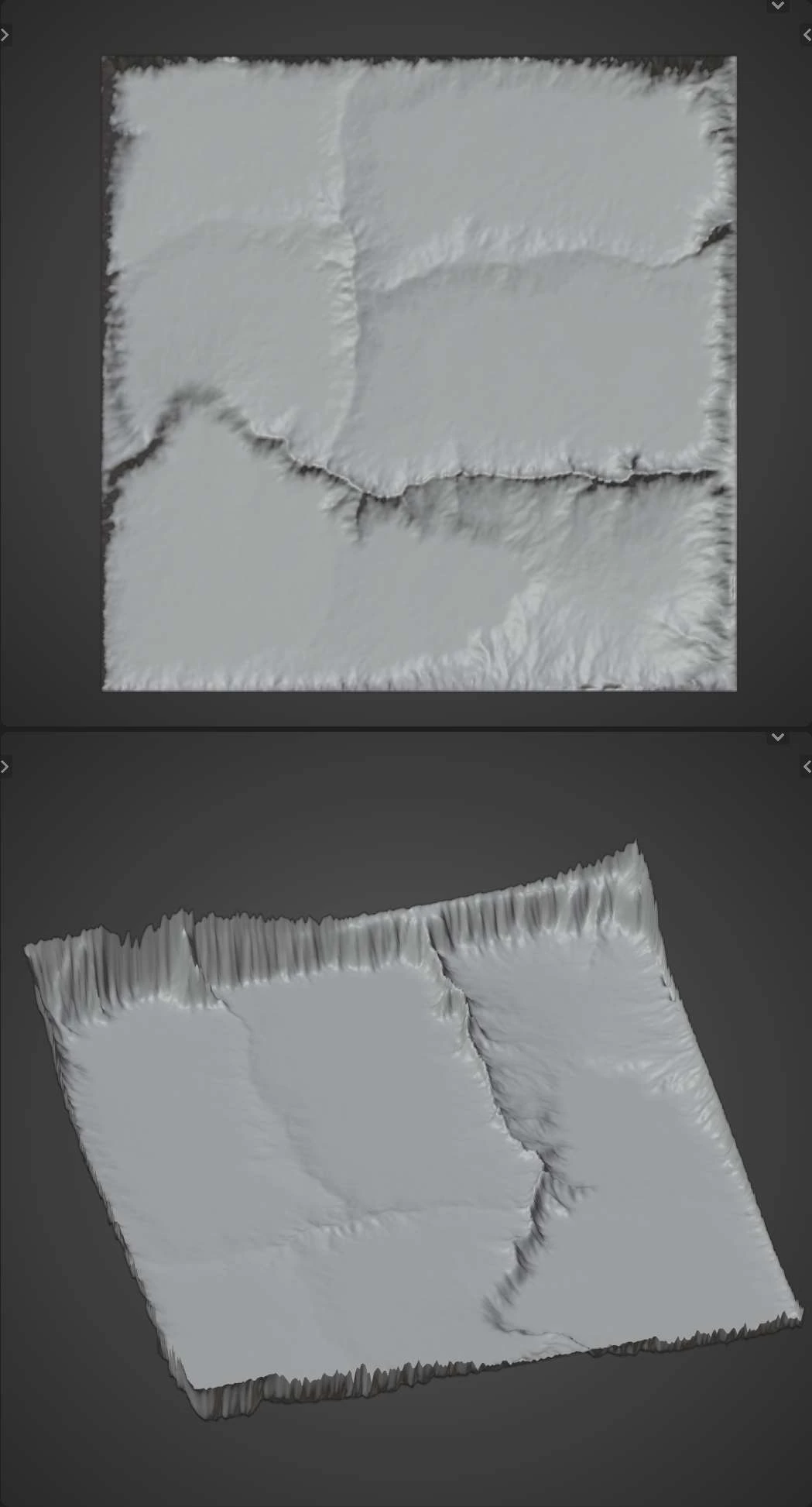
Initial Speed
| 0 | 0.5 | 1 | 1.5 | 2 |
|---|---|---|---|---|
 |
 |
|
 |
 |
Placement of Math Nodes
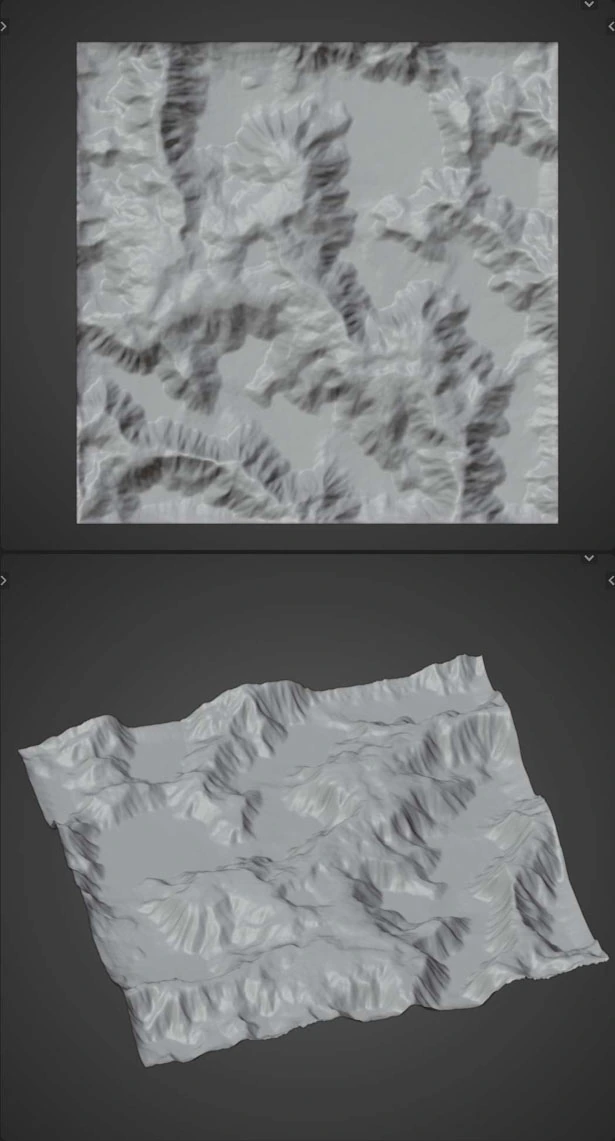
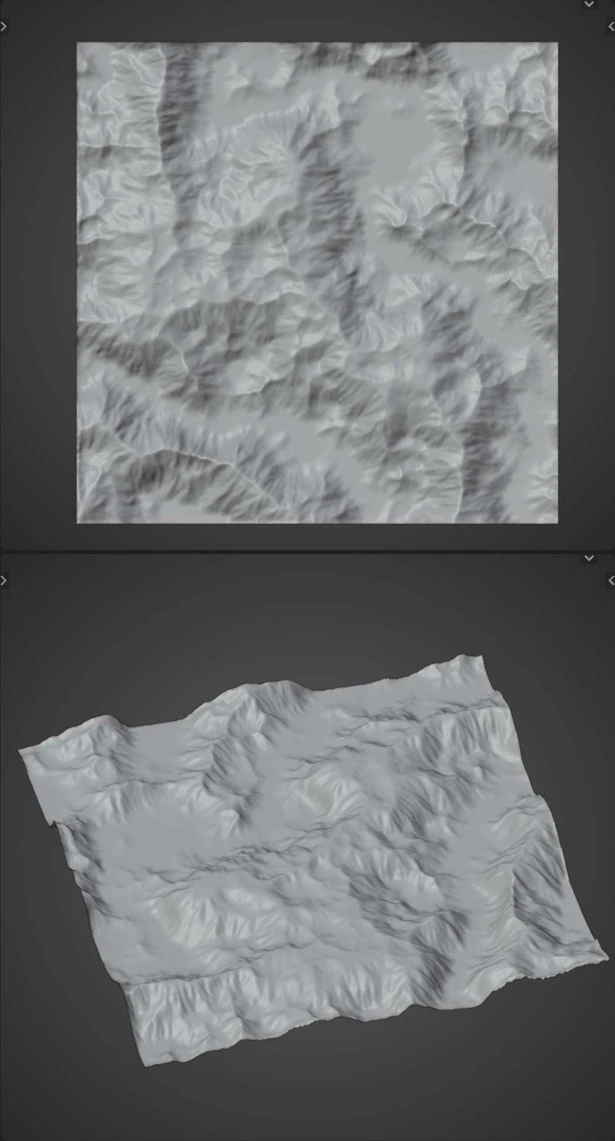
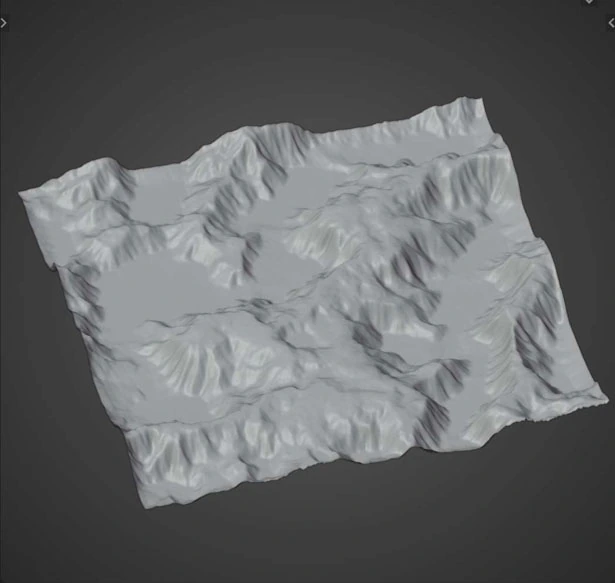
Shrinking the height of your plane often makes eroded meshes look more realistic. Here are examples of the differences when you place your multiply node (or other shortening node) before and after the erosion node:
| Multiply Before | Multiply After |
|---|---|
 |
 |
| Multiply Node before Erosion Node Layout | Multiply Node after Erosion Node Layout |
 |
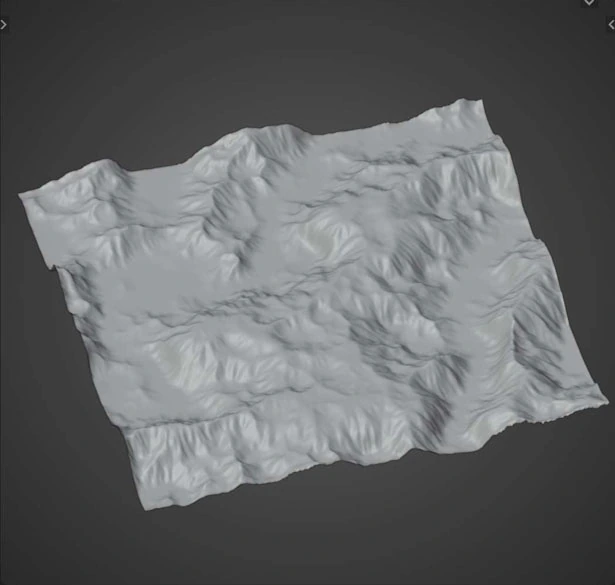 |
| Multiply Node before Erosion: angled | Multiply Node after Erosion: angled |
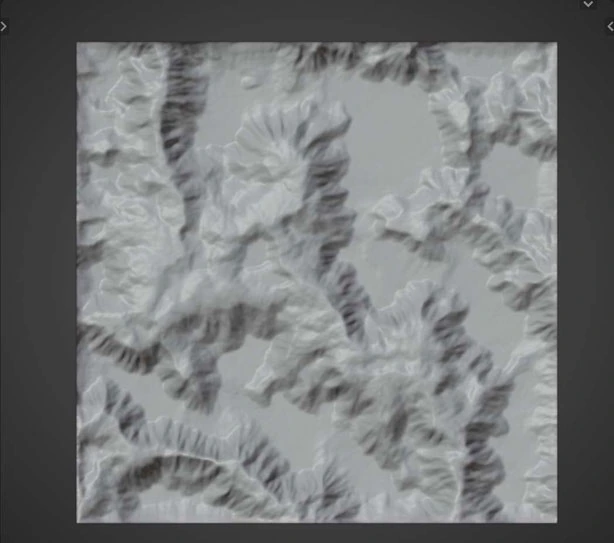 |
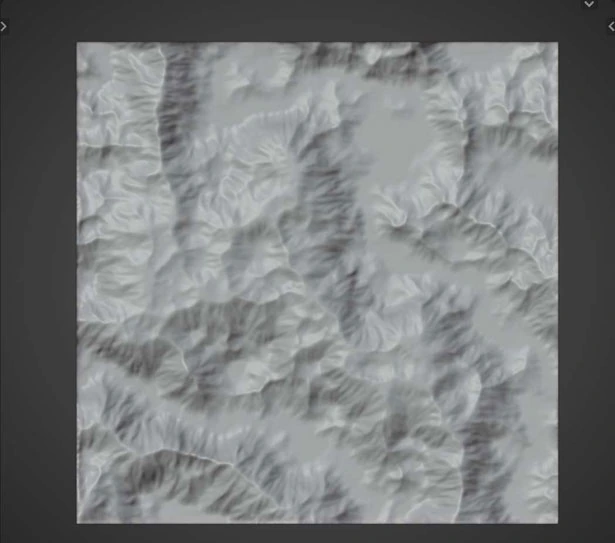 |
| Multiply Node before Erosion: top | Multiply Node after Erosion: top |
Smooth
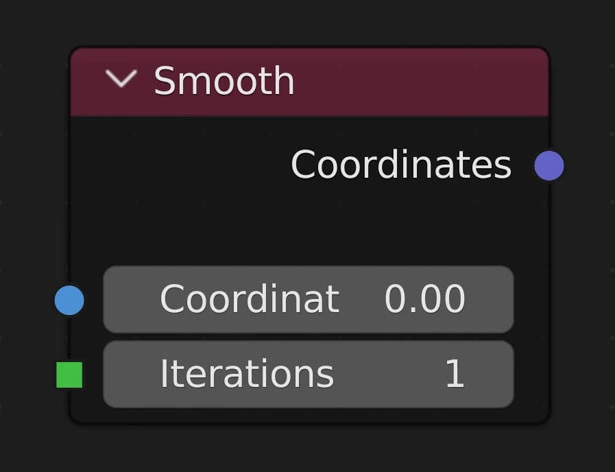
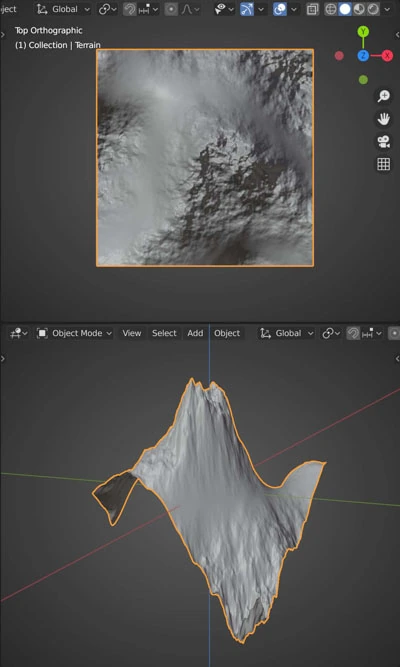
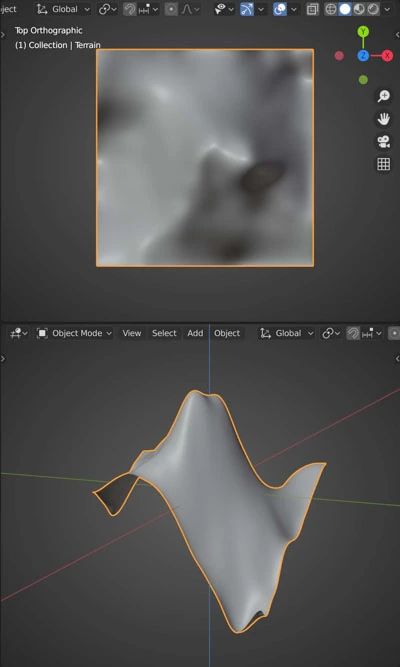
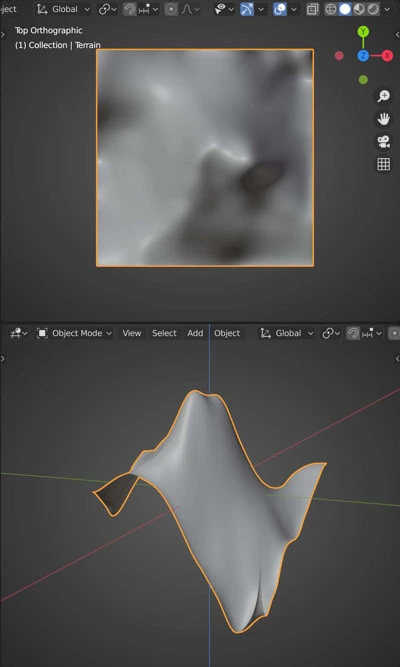
Average surrounding values for each Value once per Iteration
Iterations
The amount of times to go through and average the heights
Example
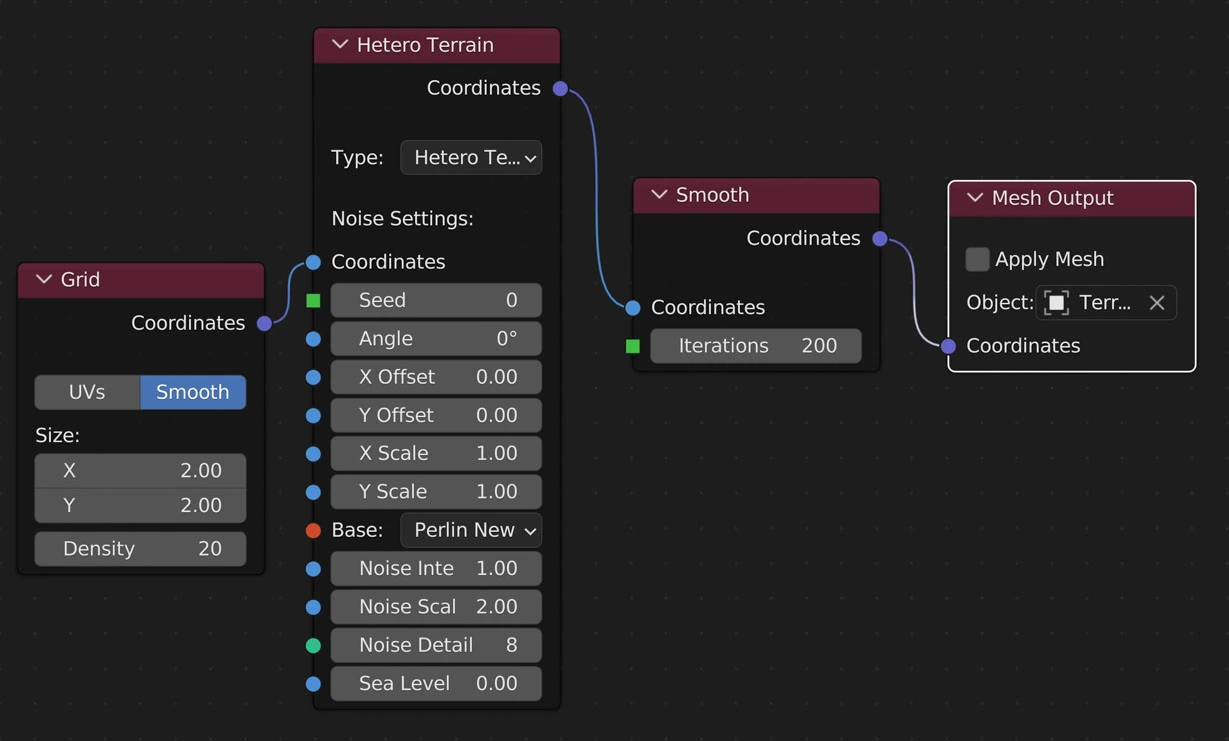
Node Layout
| Base Geometry | Smoothed Edge: 200 | Smoothed Grid: 200 |
|---|---|---|
 |
 |
 |
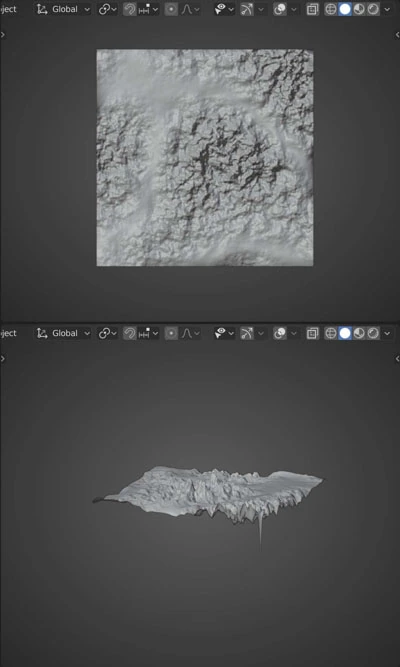
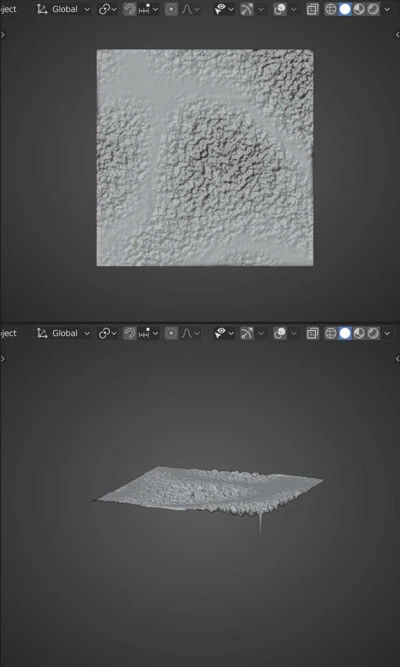
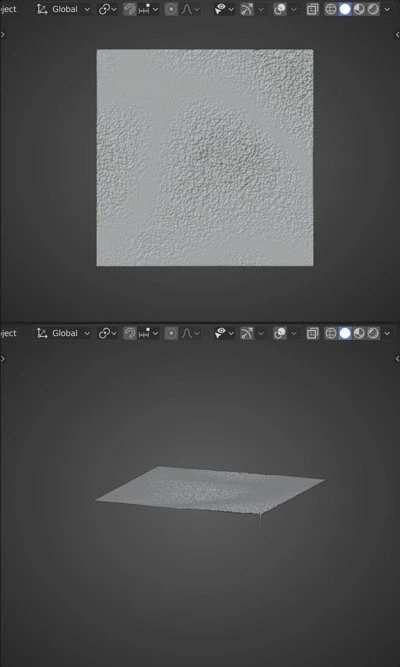
High Pass Filter
Grabbing just the details. You then can add the result to other geometry to add details you wouldn’t normally have
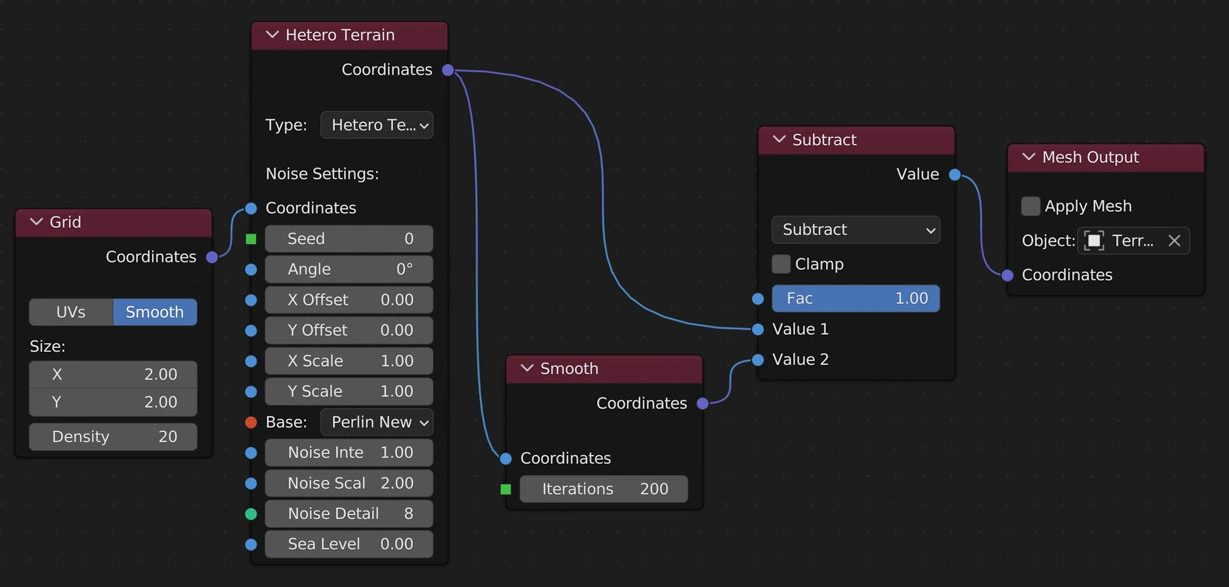
Node Layout
| Smooth 200 | Smooth 20 | Smooth 2 |
|---|---|---|
 |
 |
 |
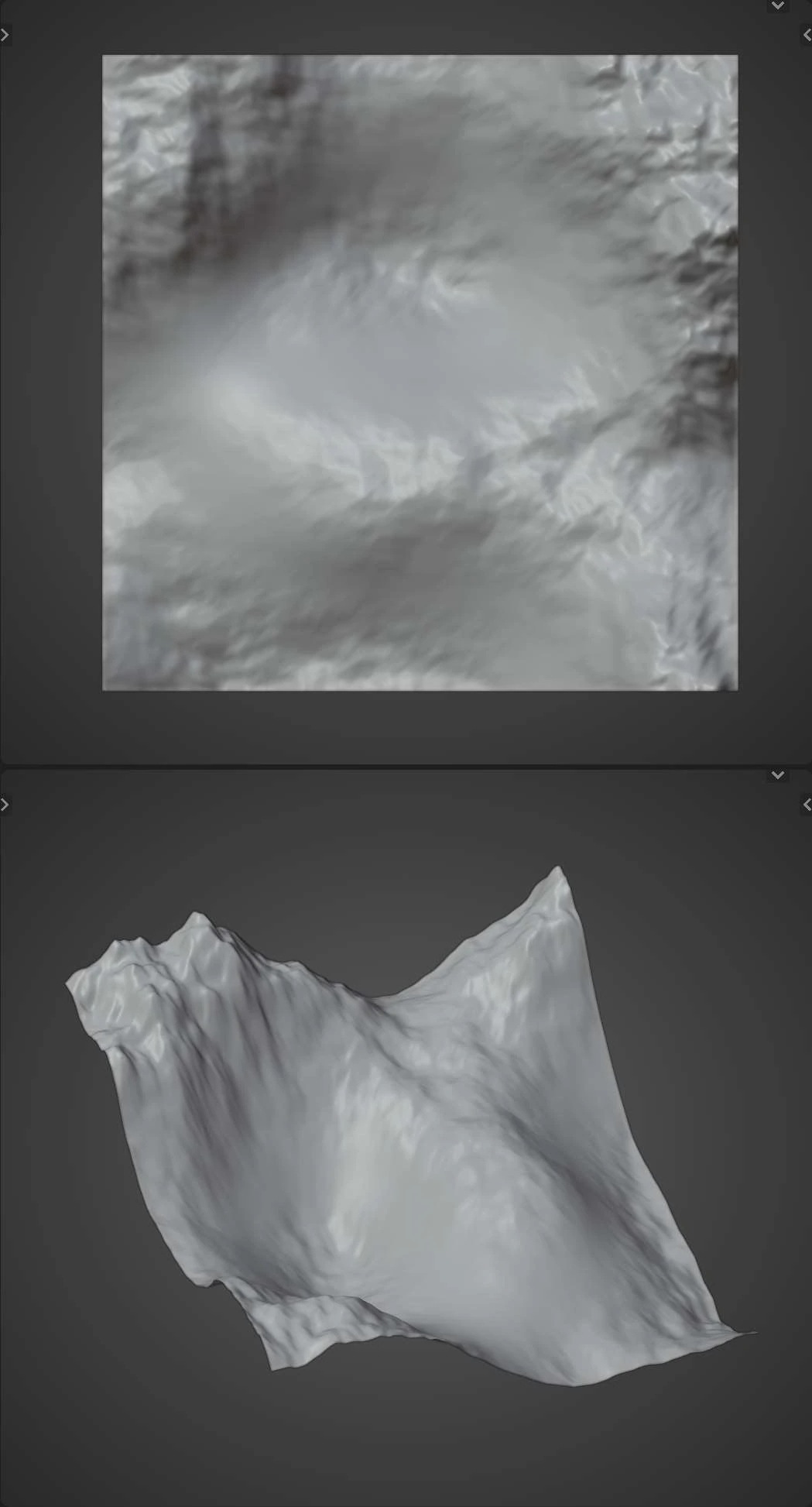
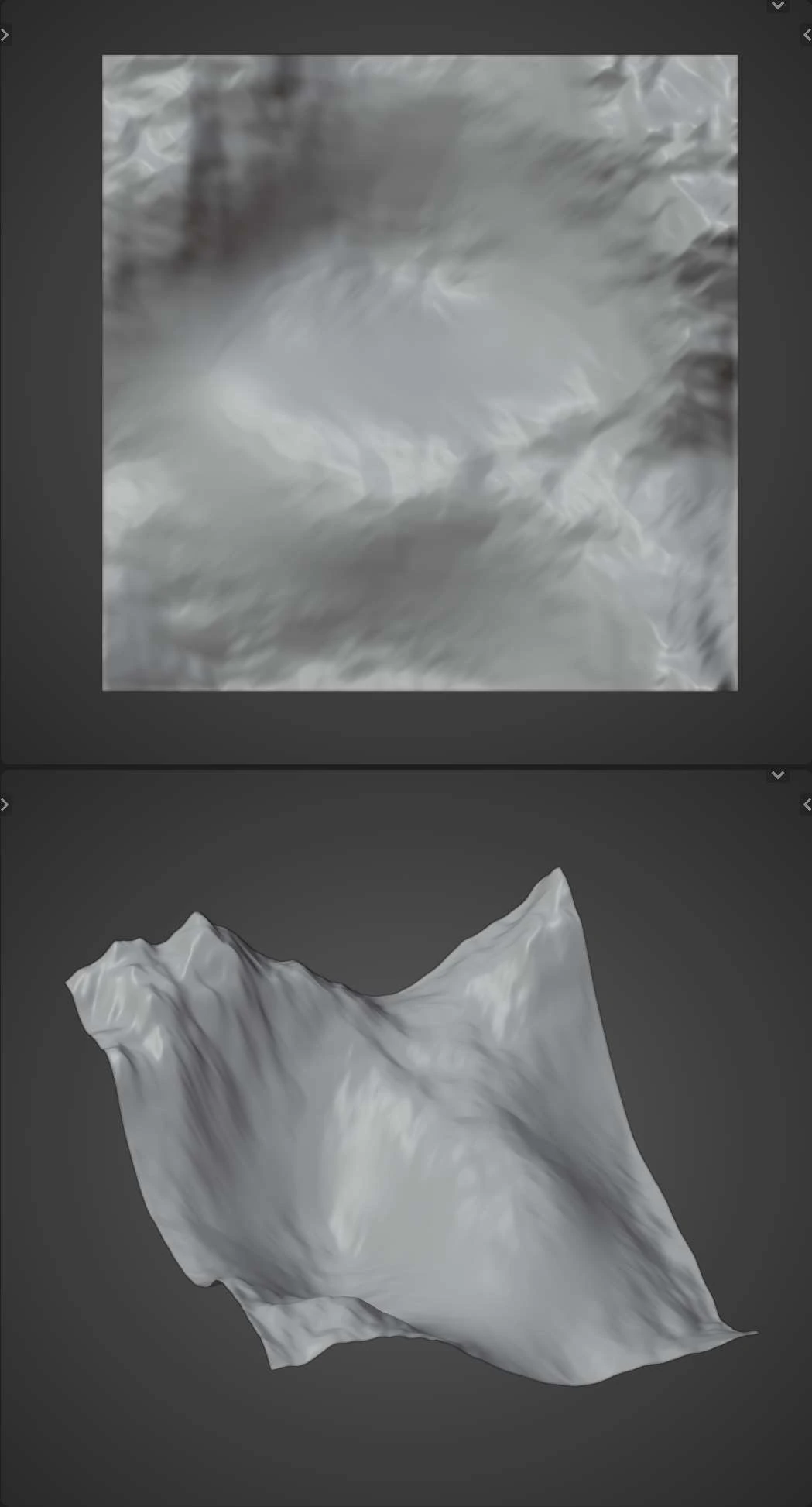
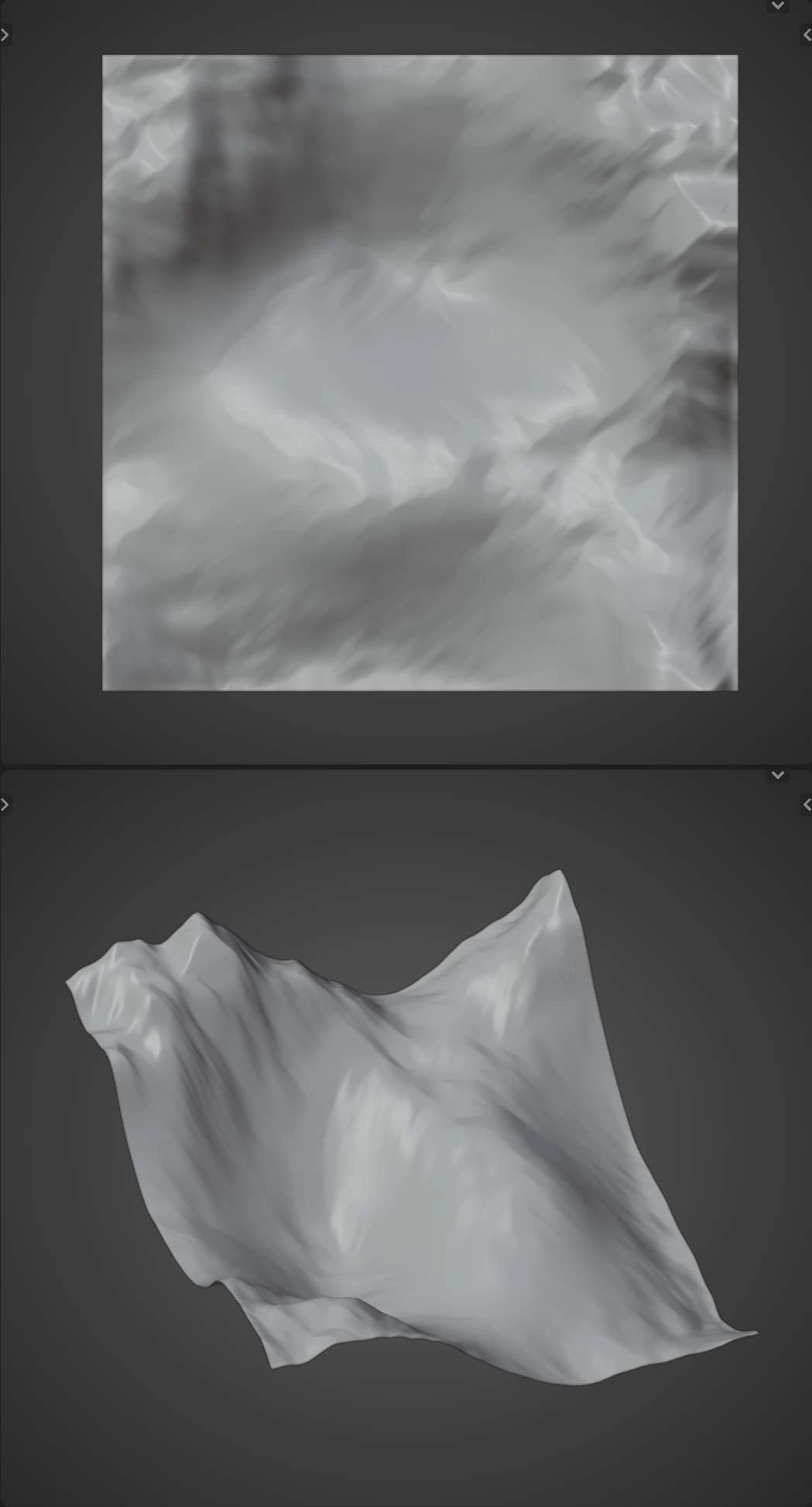
Thermal Erosion
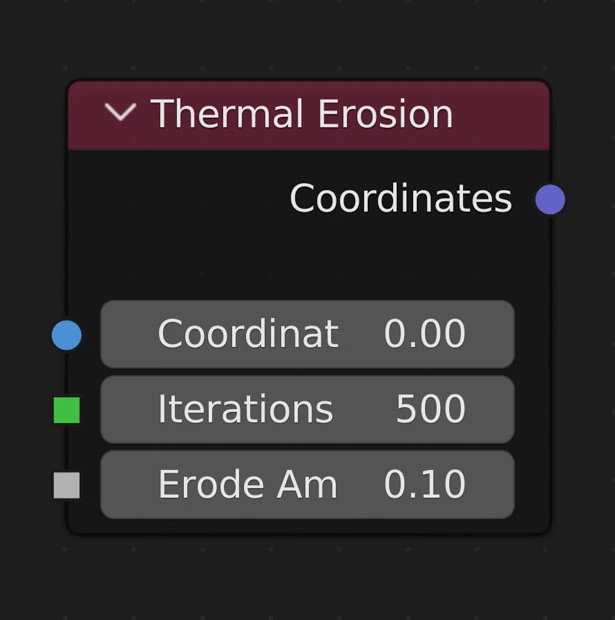
Simulates erosion of ice-bearing permafrost by the thermal action of moving water. Basically, this node goes through the surrounding vertices of each vertex and moves sediment from the current vertex to the lowest vertex.
Thermal Erosion’s speed is dependent on the resolution of the plane and the number of iterations.
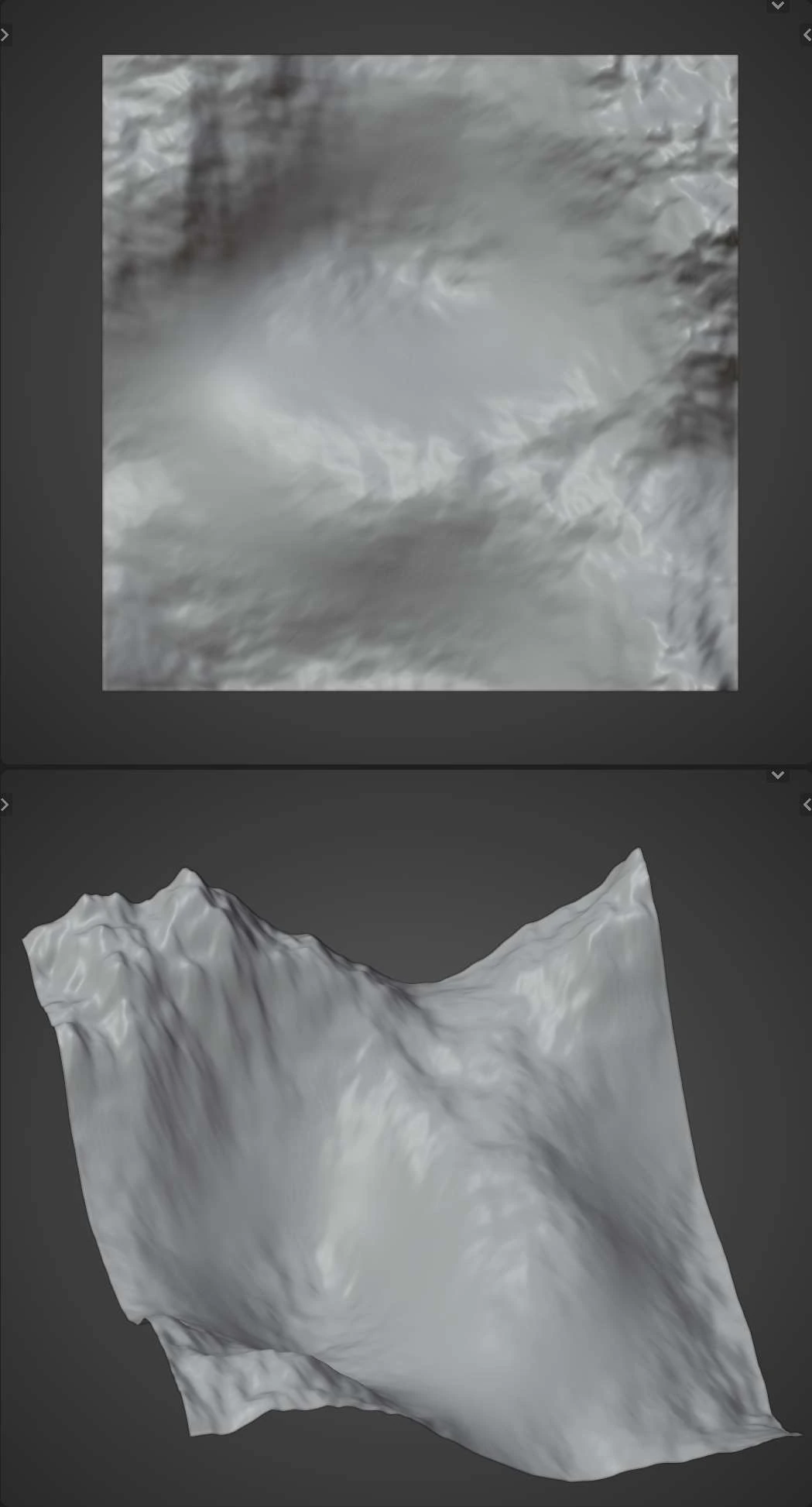
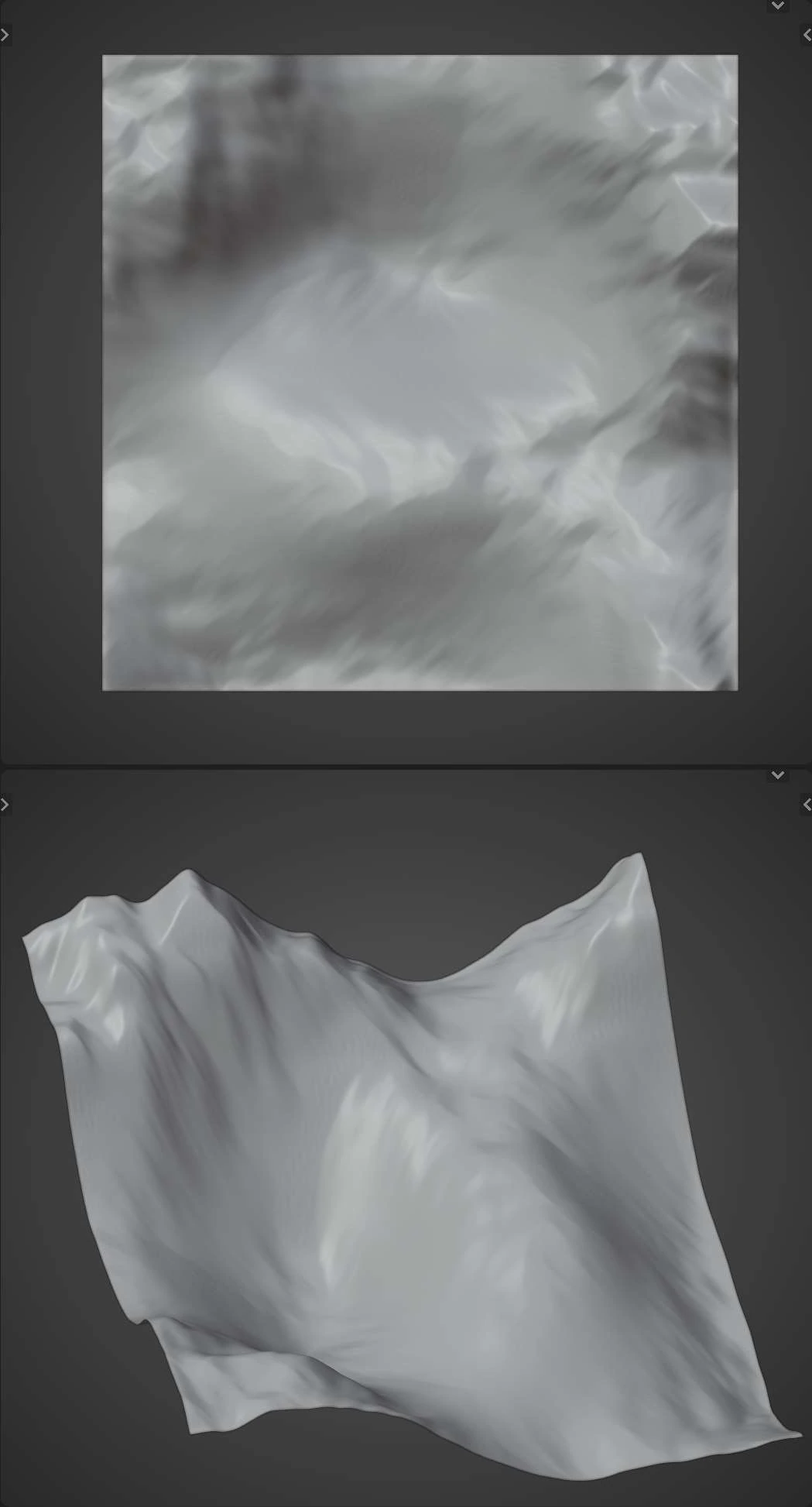
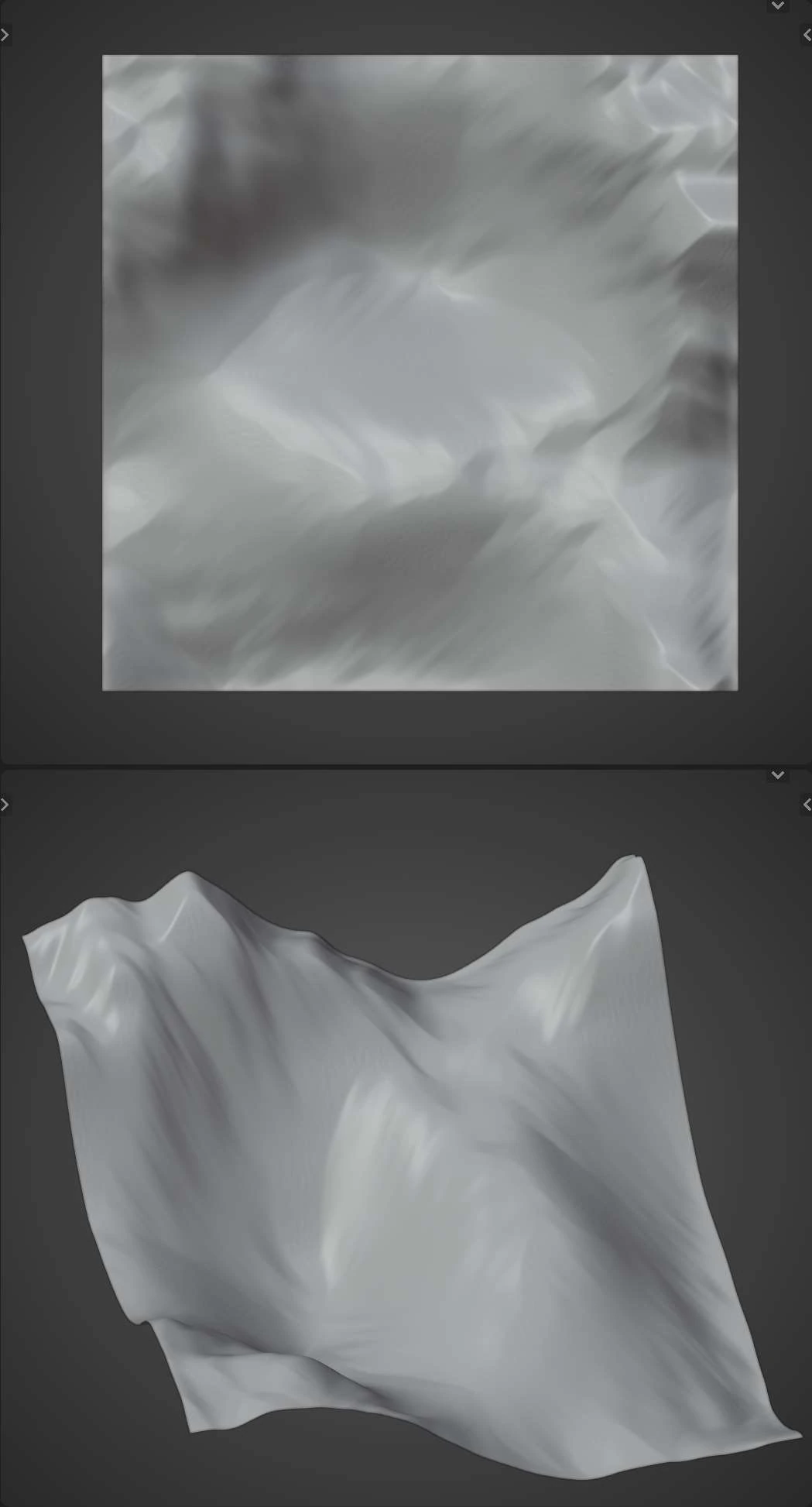
Iterations
Number of times to go through all vertices
Erode Amount
Amount to move from the current vertex to the lowest
Example
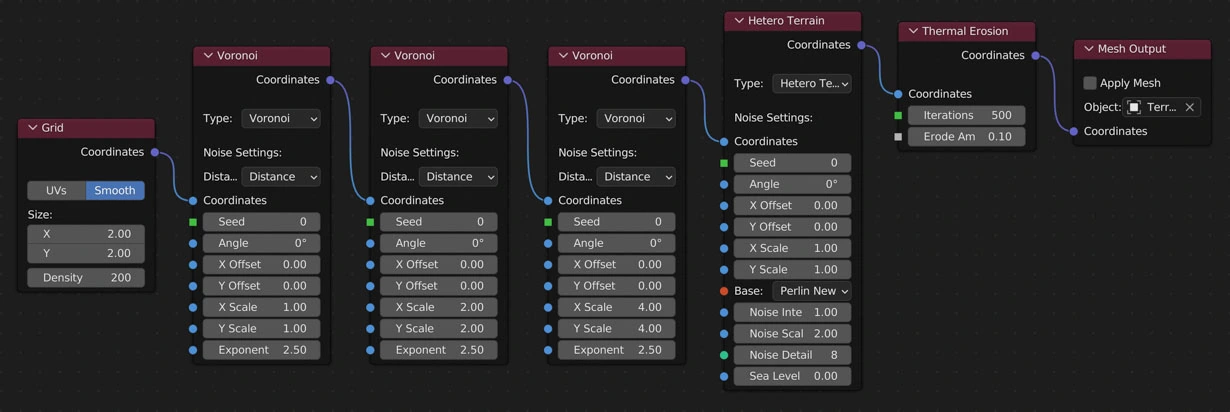
Node Layout
| Base Geometry | Eroded Geometry |
|---|---|
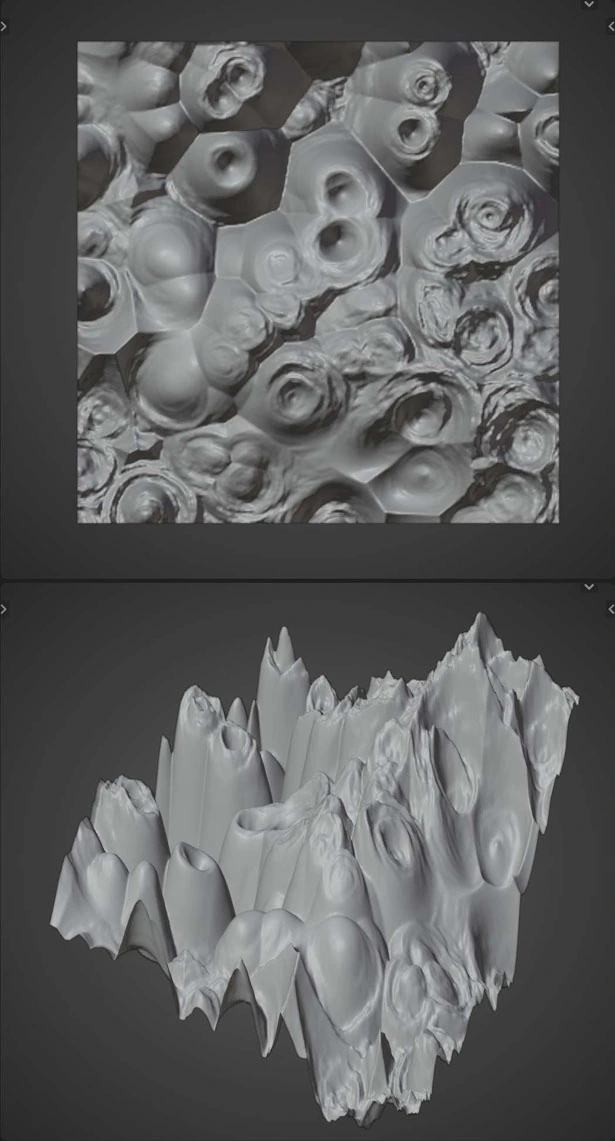 |
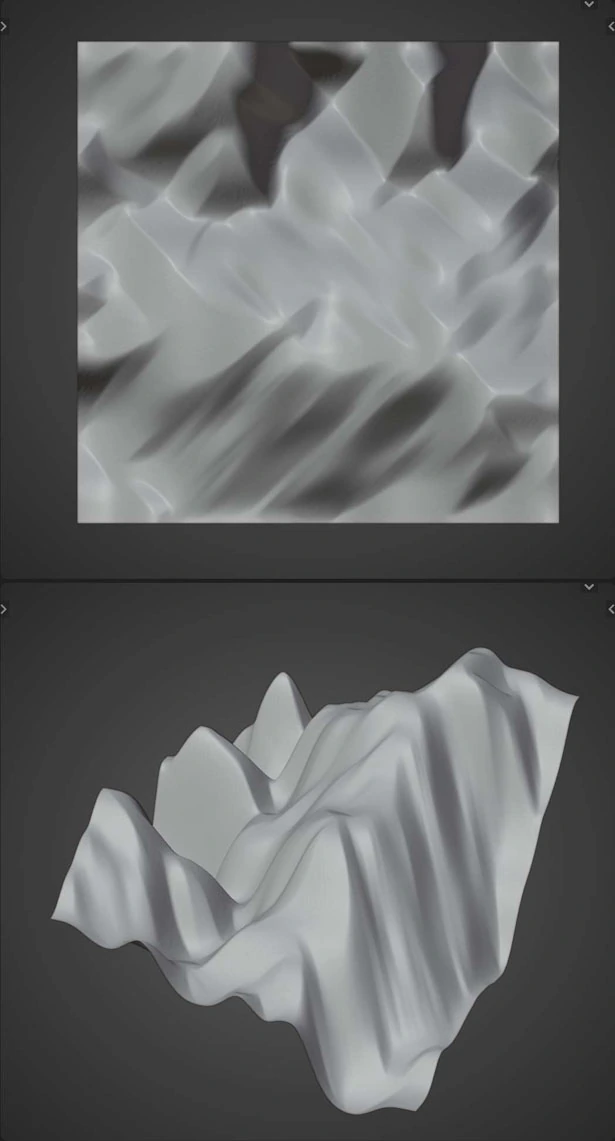 |
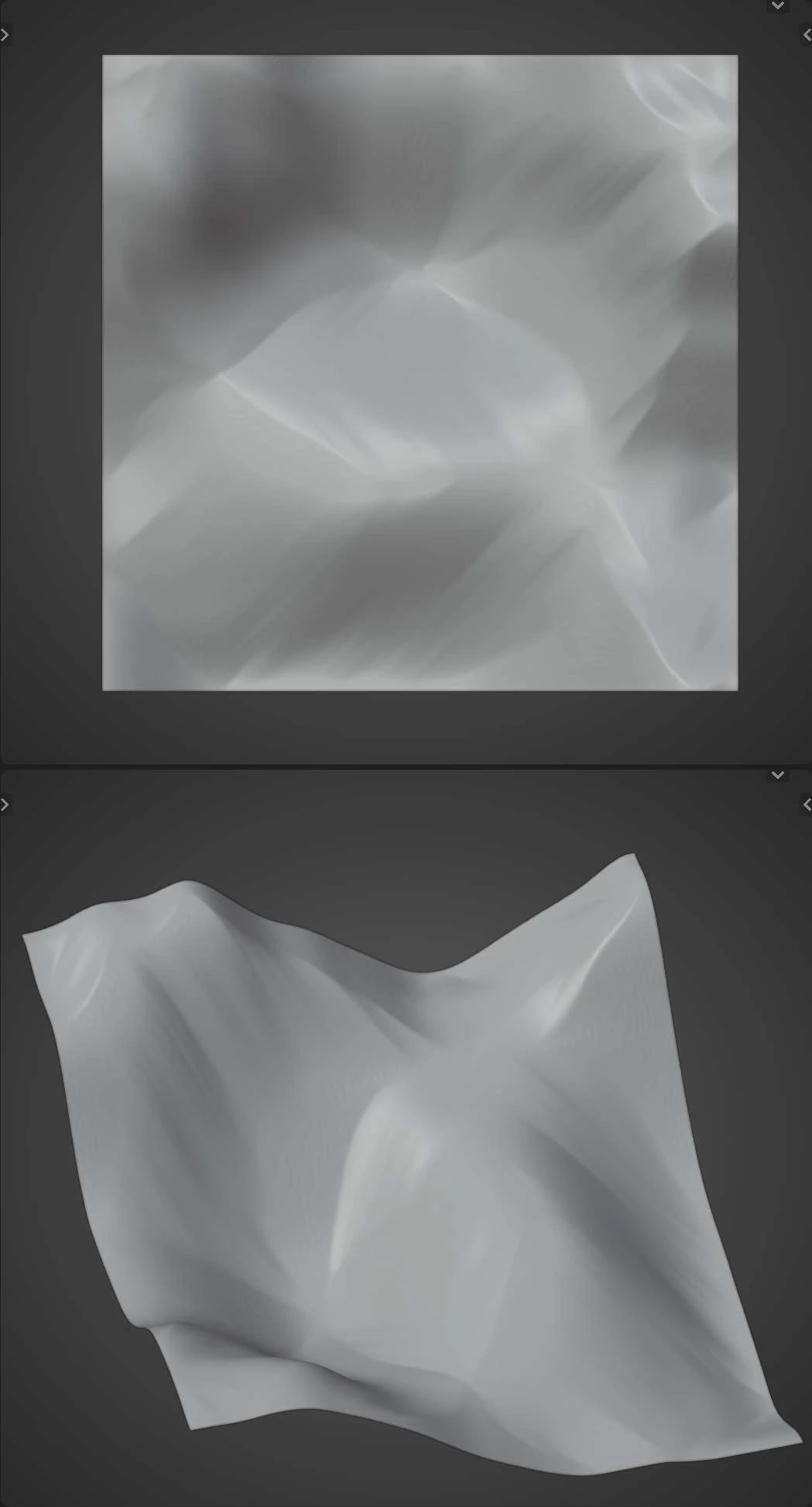
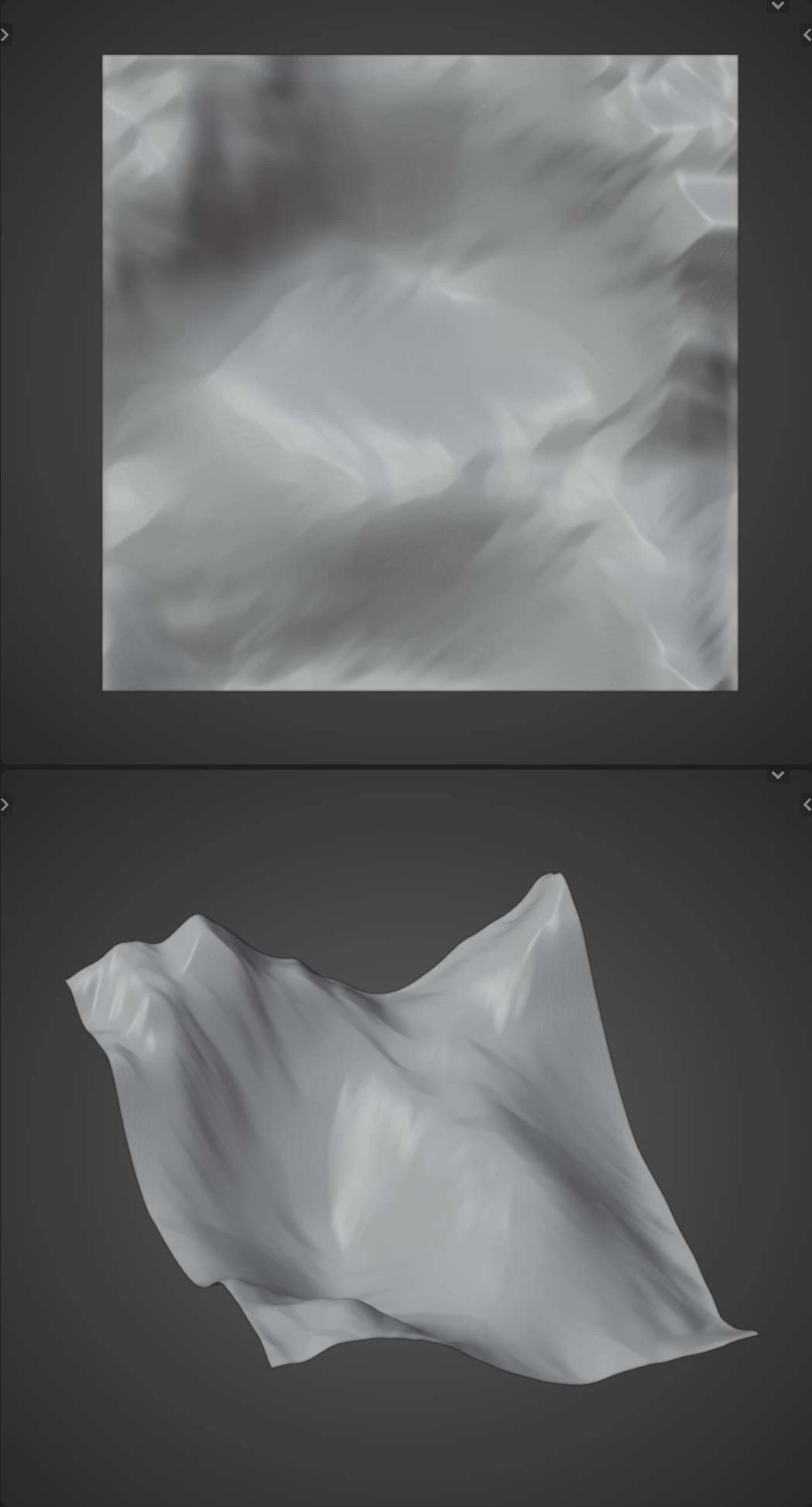
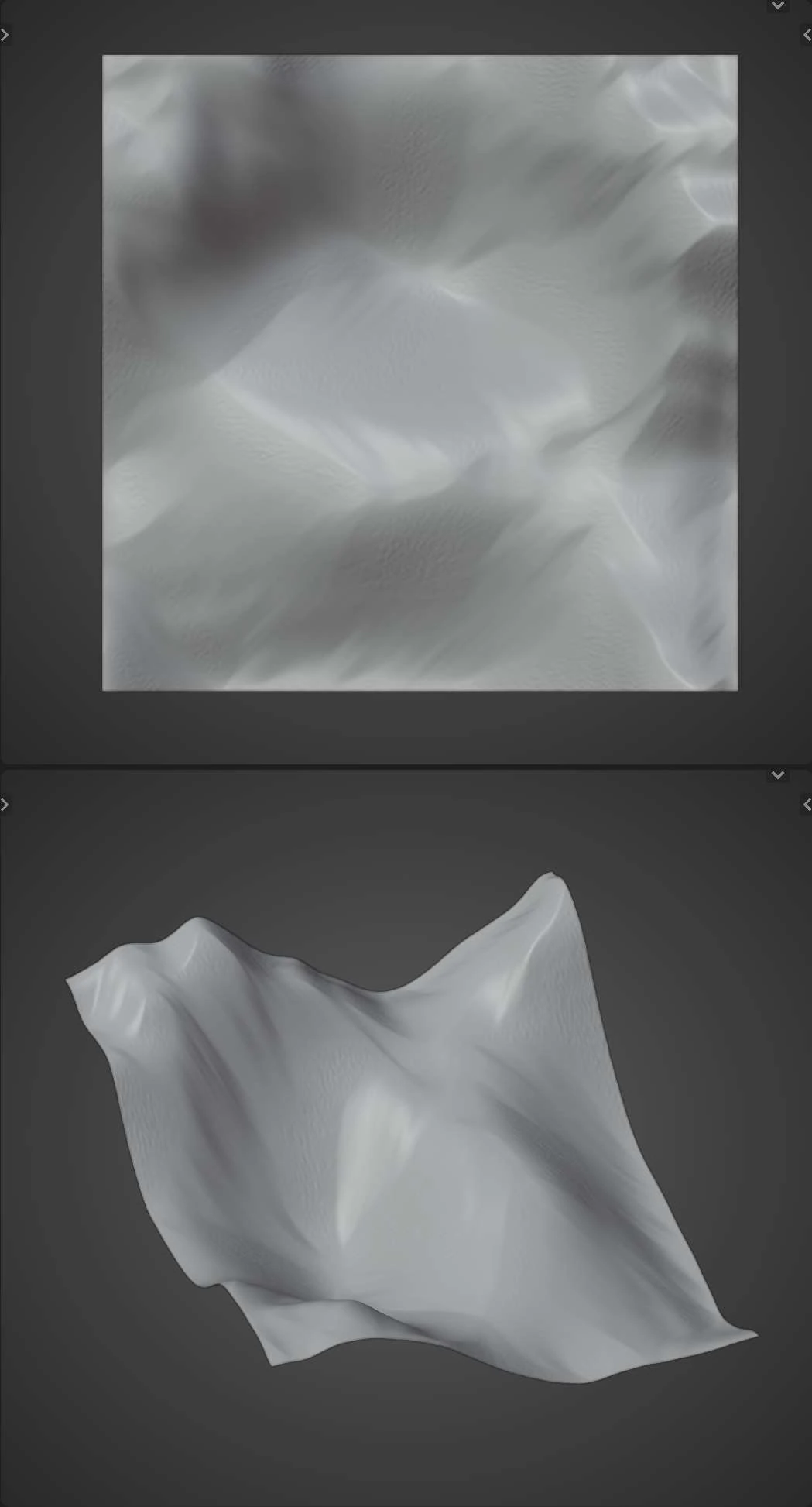
Understanding Erosion Settings
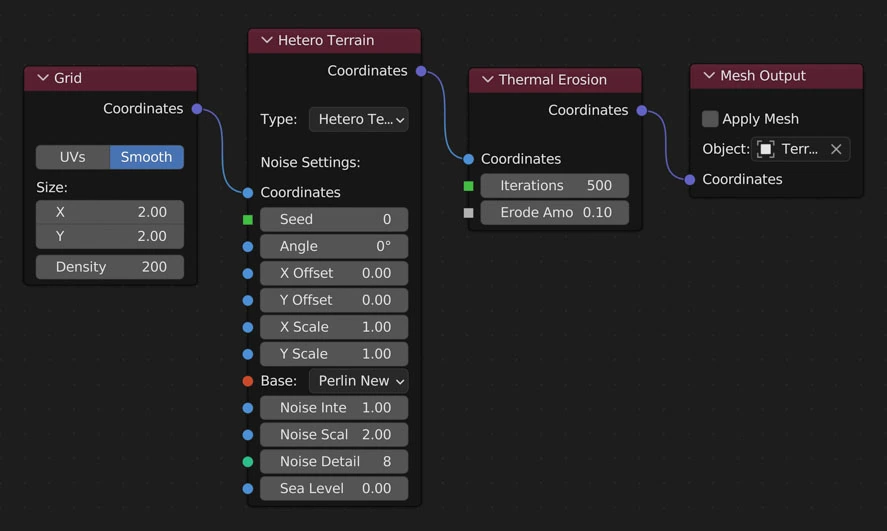
Node Layout
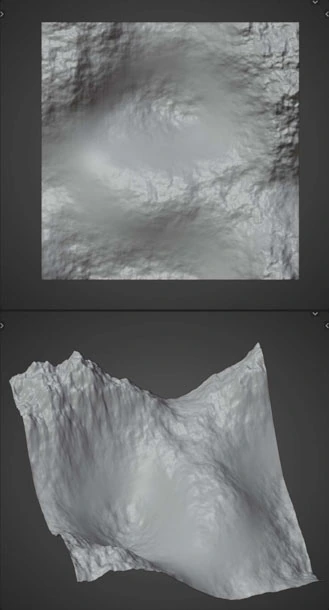
Geometry before Erosion
Iterations
| 10 | 50 | 100 | 500 |
|---|---|---|---|
 |
 |
 |
 |
Erode Amount
| 0.01 | 0.025 | 0.05 | 0.1 | 0.2 |
|---|---|---|---|---|
 |
 |
 |
 |
 |